

AI-generated illustration
TL;DR
- Two official documents sit behind this week’s diesel headlines. Executive Order 14435, signed Oct. 5 and published Oct. 9, tells the Treasury to decide whether it can defer, not cancel, certain federal diesel excise taxes incurred from Oct. 5 through Dec. 31, 2026, and to have the IRS announce it will not impose federal tax penalties under 26 U.S.C. 6715(a)(1) and (a)(2) when dyed diesel, normally sold untaxed for off-road use, is sold for use or used on the highway in that period.
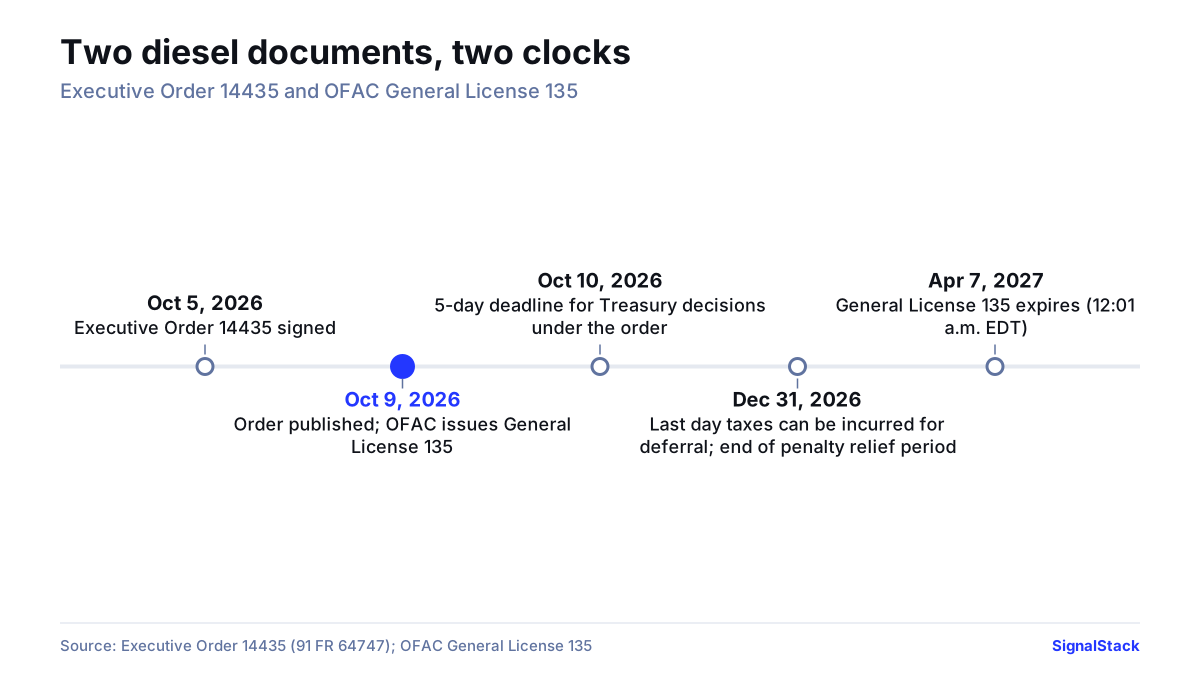
- On Oct. 9, the Treasury’s Office of Foreign Assets Control issued General License 135. It authorizes transactions tied to the sale, delivery, offloading and importation of Russian-origin diesel until 12:01 a.m. EDT on April 7, 2027. It does not authorize any debit to an account at a U.S. financial institution belonging to Russia’s central bank, its National Wealth Fund or “the Ministry of Finance.”
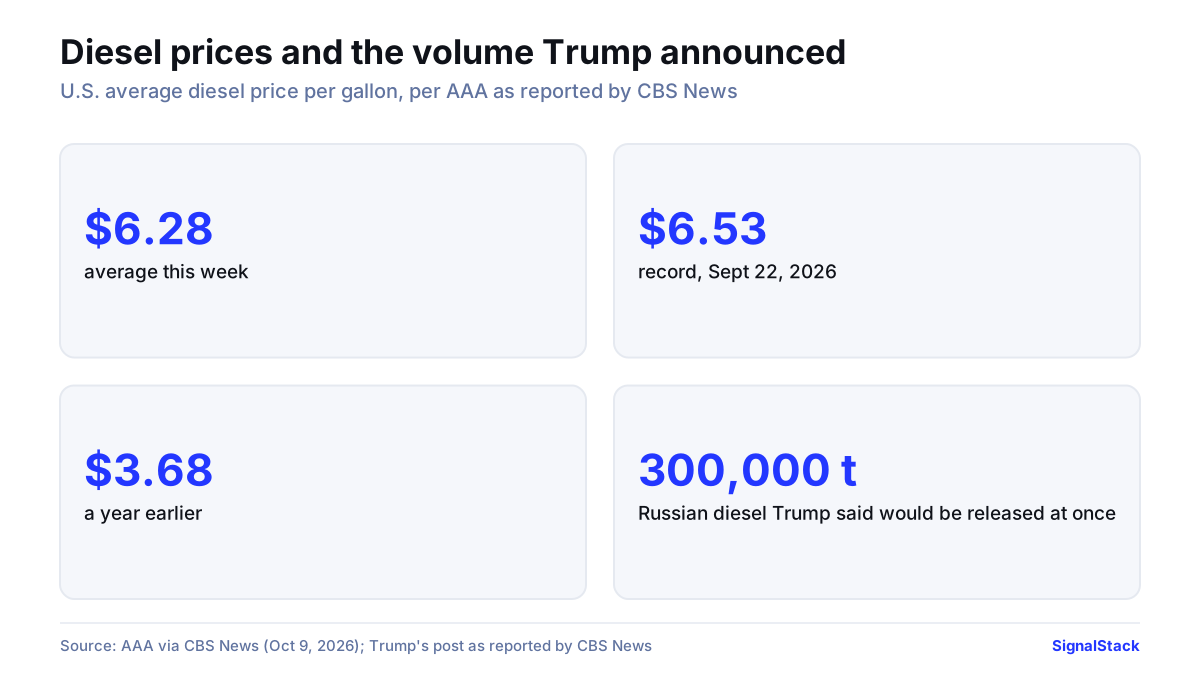
- President Trump said Russia would release 300,000 tons of diesel immediately and more in the following months. Ukraine’s President Volodymyr Zelensky called the move “not fair and not honest.” The order gave the Treasury 5 days from Oct. 5 (to Oct. 10) to make its findings and direct the IRS; as of 12:31 p.m. ET on Oct. 10, the IRS’s October news releases, its statements and announcements page, its disaster tax relief page and the Treasury’s press releases showed no announcement under the order. The order sets no date for the IRS announcement itself, and the 5-day window had not closed at the time of the check.
What happened
Diesel prices set repeated all-time records this autumn, NBC News reports. CBS News, citing AAA, put the average at $6.28 a gallon this week, up from $3.68 a year ago, after a record $6.53 on Sept. 22. NBC News reports that diesel has risen almost 70% since the start of the Iran war in February.
The administration responded twice in five days:
- Oct. 5: President Trump signed Executive Order 14435, “Emergency Tax Relief on Diesel Fuel.” The Federal Register published it on Oct. 9.
- Oct. 9: After a call with Russian President Vladimir Putin, Trump announced in a social media post that Russia would release diesel onto the global market, according to CBS News, NBC News and RFE/RL. The same day, the Treasury said on X that OFAC was issuing “a temporary general license” so Russian diesel could reach the global market, as quoted by NBC News.
What Executive Order 14435 actually says
The order’s stated purpose is relief for “farmers and truckers,” who it says have been “particularly hard hit” by rising prices from restricted global diesel supply. Its operative parts:
| Section | What it directs |
|---|---|
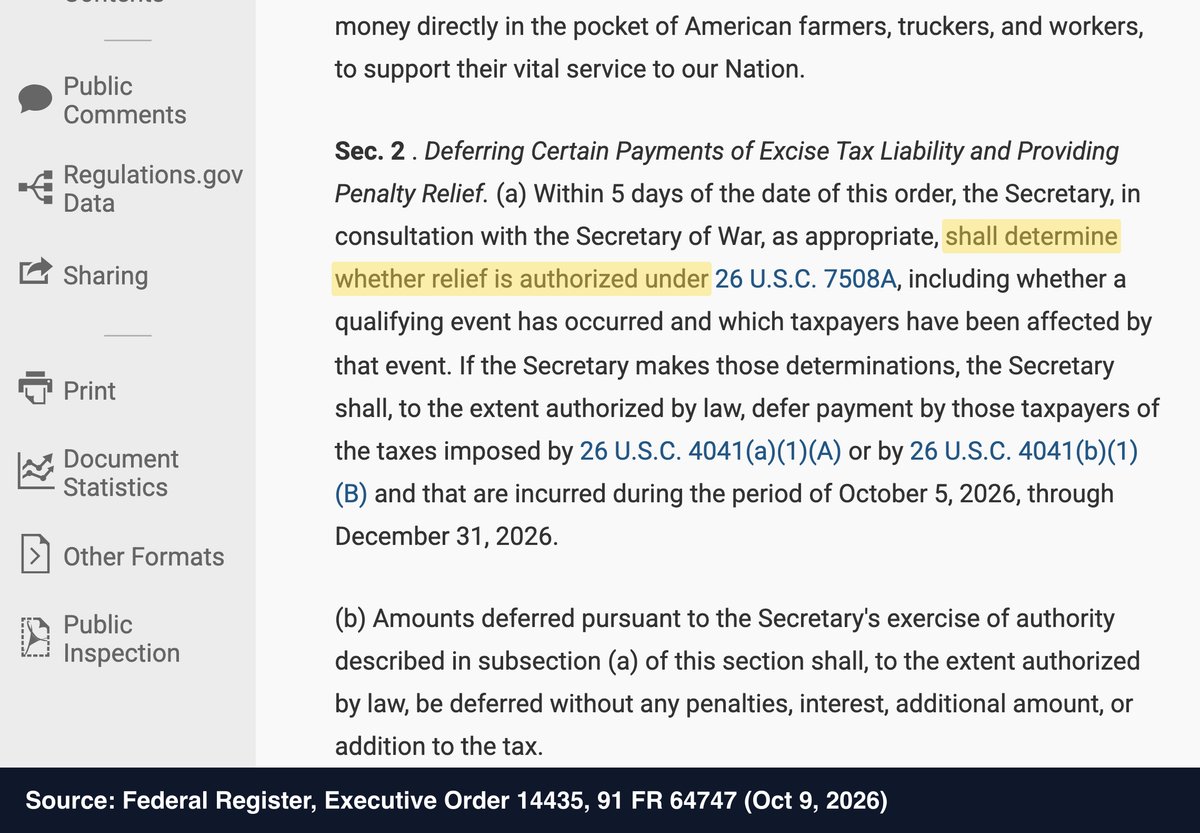
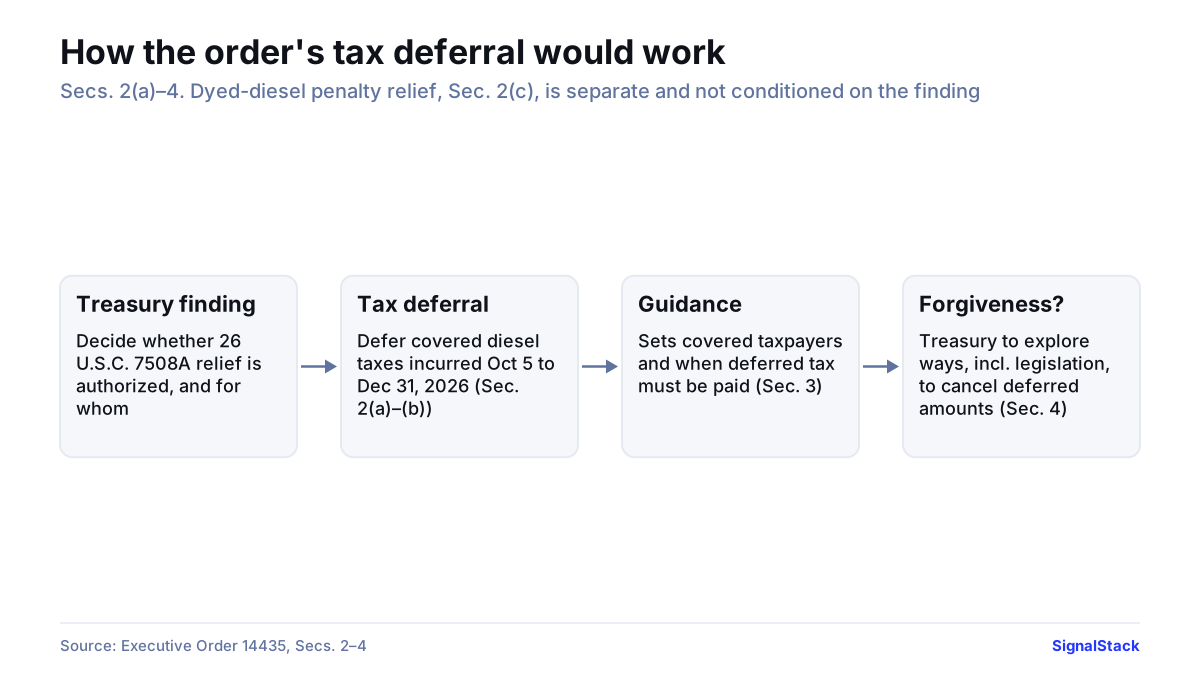
| Sec. 2(a)–(b) | Within 5 days, the Treasury Secretary, in consultation with the Secretary of War as appropriate, decides whether 26 U.S.C. 7508A permits relief: whether a qualifying event happened and who is affected. If so, the Treasury defers payment of taxes under 26 U.S.C. 4041(a)(1)(A) or 4041(b)(1)(B) incurred Oct. 5 – Dec. 31, 2026, without penalties or interest, “to the extent authorized by law” |
| Sec. 2(c) | Within 5 days, the Treasury Secretary is to direct the IRS to announce it will not impose penalties under 26 U.S.C. 6715(a)(1) or (a)(2) when dyed diesel is sold for use or used on the highway Oct. 5 – Dec. 31, 2026; the announcement is also to address penalties for missed semimonthly deposits |
| Sec. 3 | The Treasury issues guidance naming covered taxpayers, conditions, periods and the date the postponed taxes must be paid |
| Sec. 4 | The Treasury is to “explore avenues, including legislation,” to eliminate the obligation to pay the deferred amounts |
| Sec. 5 | The Treasury assesses how the IRS should allocate fuel-tank inspection and fuel-sampling resources during the relief |
| Sec. 6 | The Transportation Secretary, acting through the FMCSA Administrator, engages with states, industry and labor to encourage coordination, and continues “all compliance enforcement measures” as provided for by law |
| Sec. 7–8 | Sec. 7: the Agriculture Secretary works with farm co-ops, rural fuel distributors, farm supply groups and other agricultural stakeholders so that dyed diesel reaches them “for their use in high-demand areas,” and encourages corresponding state action. Sec. 8: the Director of the White House Office of Intergovernmental Affairs engages with states to encourage policies that “correspond to” the Treasury’s Sec. 2 actions, “in accordance with applicable law” |
Three points follow from the text:
- It is a deferral, not a cut. If the Treasury makes the required findings, the order directs it to postpone when the covered taxes are due. Making them disappear is left to future steps, possibly including legislation (Sec. 4). NBC News notes that the order does not waive the federal taxes, because only Congress can do that.
- It depends on a Treasury finding. Relief under Sec. 2(a) applies only if the Secretary determines that 26 U.S.C. 7508A authorizes it and identifies a qualifying event and affected taxpayers.
- The penalty relief is a separate directive. NBC News describes dyed diesel as fuel sold for off-road uses such as farming. Sec. 2(c), which covers 6715(a)(1)–(2) penalties for its highway use through Dec. 31, is not conditioned on the 7508A finding that the tax deferral needs. It covers penalties only and does not waive any tax. The taxes Sec. 2(a) would defer are 26 U.S.C. 4041(a)(1)(A), a tax on diesel and other non-gasoline fuel sold for use or used in a diesel-powered highway vehicle (or train), which under 4041(a)(1)(B) does not apply to fuel on which the section 4081 tax was imposed and not credited or refunded, and 4041(b)(1)(B), which applies when fuel that went untaxed because it was for an “off-highway business use” is used otherwise. The whole order is to be carried out “consistent with applicable law” (Sec. 9(b)).
The order does not mention the Environmental Protection Agency. White House spokeswoman Taylor Rogers told NBC News the action “will quickly cut diesel costs” and save truckers “over $100 every time they refill.” The Energy Marketers of America warned gas stations that the order does not “resolve EPA or state restrictions” on dyed diesel, according to NBC News, and two trade groups, the Society of Independent Gasoline Marketers of America (SIGMA) and NATSO, which represents truck stop owners, told members they did not expect “most reputable” retailers and fuel marketers to start selling dyed fuel “in non-traditional ways,” adding that “the tax is still owed.” A White House official told NBC News the IRS would announce its determination soon on whether it will enforce the deferred diesel tax.
What General License 135 says
General License 135 is a one-page authorization signed by OFAC Director Bradley T. Smith and dated Oct. 9, 2026. It covers transactions otherwise prohibited by two sets of rules, the Russian Harmful Foreign Activities Sanctions Regulations (31 CFR part 587) and the Ukraine-/Russia-Related Sanctions Regulations (31 CFR part 589), when they relate to selling, delivering, offloading or importing diesel of Russian origin, including imports into the United States.
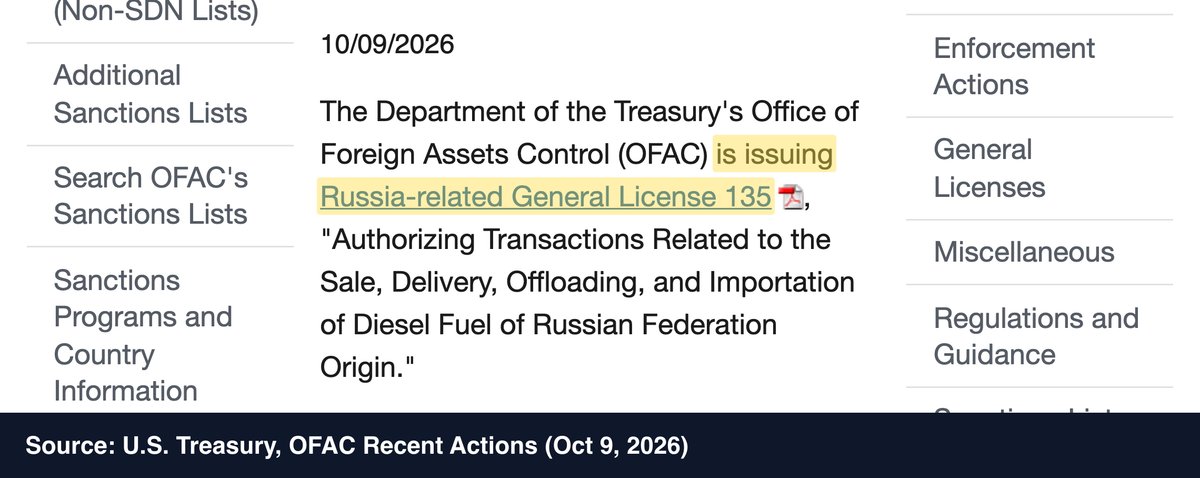
- Duration: through 12:01 a.m. eastern daylight time, April 7, 2027.
- Carve-out: it does not authorize any debit to an account “on the books of a U.S. financial institution” of Russia’s central bank, its National Wealth Fund or “the Ministry of Finance.”
- Scope: diesel only. The license does not mention crude oil or other petroleum products.
The license does not contain any volume figures. The 300,000-ton and later amounts come from the president’s post.
Who said what
| Who | What they said | Reported by |
|---|---|---|
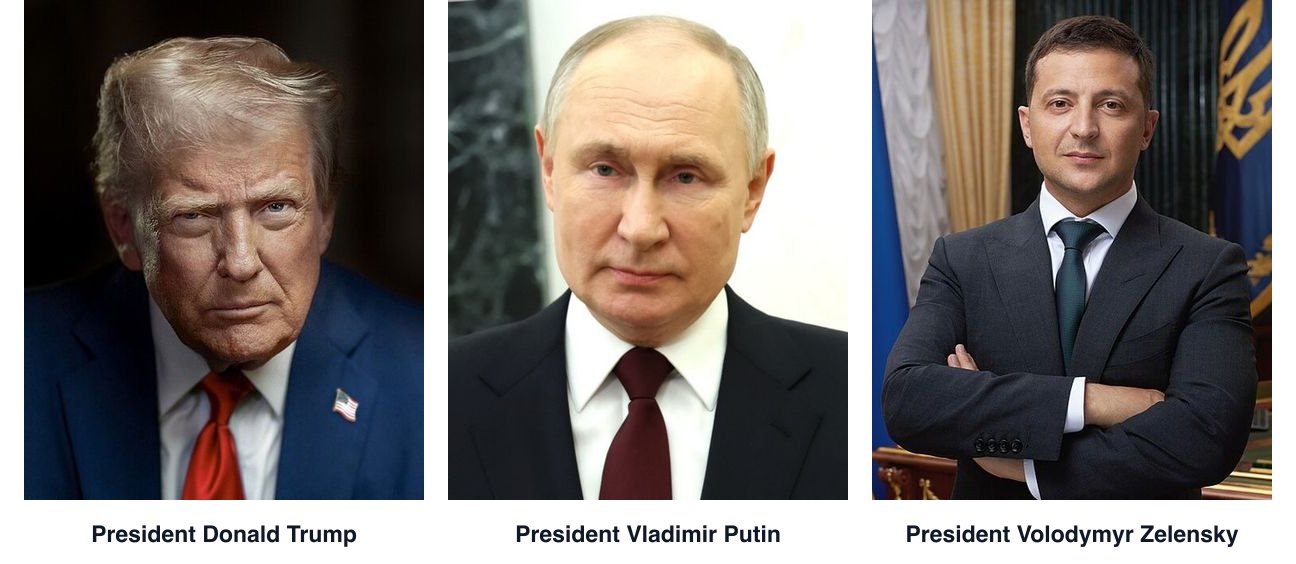
| President Trump | Putin agreed to release 300,000 tons of diesel immediately, 500,000 tons in November and another 1 million tons after that; a further 3 million tons would follow “within a short period of time,” depending on “the condition of their Diesel Refineries” | CBS News, RFE/RL |
| Kremlin | Putin said Russia was ready “to supply oil and petroleum products” to U.S. and global markets; NBC notes he gave no volumes or timing | CBS News, NBC News |
| President Zelensky | The decision was “not fair and not honest”; “it looks like a happy birthday present for Putin”; in a social media post: “Gifts to Putin will not bring peace or any benefit…” | Axios, CBS News |
| A U.S. official | Trump made the deal after Zelensky ignored his requests to stop strikes on Russian refineries (the strikes cause “pain for the U.S., too”); Axios reports U.S. envoys told Ukraine’s negotiators in Miami that a call with Putin and the sanctions move were expected | Axios |
| President Zelensky / Ukrainian officials | Zelensky told Trump and his envoys he was prepared to stop attacking Russian oil refineries if Russia halted attacks on Ukrainian power plants; a Ukrainian official claimed the U.S. envoys threatened that Trump could cut off U.S. intelligence, which the U.S. official denied | Axios, RFE/RL |
RFE/RL reports that lawmakers in both parties criticized the waiver. Republican Rep. Don Bacon told RFE/RL that “propping up Russia’s war economy is terrible,” and Democratic Sen. Richard Blumenthal, a co-author of bipartisan Russia sanctions legislation, called the decision an embarrassment. NBC News reports that the Kremlin imposed its own diesel export ban in July after Ukrainian attacks on Russian energy facilities and extended it through the end of October; Deputy Prime Minister Alexander Novak told the state news agency TASS that Russia would immediately begin lifting that ban as a result of the Trump–Putin agreement, NBC reports.
Background
Dyed diesel is not meant for highway vehicles. The IRS has waived dyed-diesel penalties before for limited areas after disasters: after Hurricane Milton in 2024 it announced relief for Florida from Oct. 9 to Oct. 30; for the operator of the highway vehicle, the relief was available only if the operator or the person selling the fuel paid the tax of 24.4 cents per gallon “normally applied to undyed diesel fuel for highway use.” Executive Order 14435’s Sec. 2(c) names no geographic limit, and Sec. 3 leaves covered locations to Treasury guidance; its period runs Oct. 5 – Dec. 31, nearly three months, and it adds a possible tax deferral if the Treasury makes the required findings.
For more, see the Politics & Government section and our Global Markets & Policy reports, including the Fed’s September rate decision, and how we covered tariff refunds in PepsiCo’s results.
What could go right
- The order says the relief will put money “directly in the pocket” of farmers, truckers and workers through deferred taxes and penalty relief.
- Trump presented the Russian supply as a way to cut prices, calling lower prices for farmers, ranchers and truckers his “Greatest Priority” in a Truth Social post quoted by CBS News.
- General License 135 authorizes, under OFAC’s Russia sanctions regulations (31 CFR parts 587 and 589), transactions tied to selling, delivering, offloading or importing Russian-origin diesel through April 7, 2027. It does not authorize any debit to an account at a U.S. financial institution belonging to Russia’s central bank, its National Wealth Fund or “the Ministry of Finance.”
What could go wrong
- The tax relief is conditional and temporary. Deferred taxes still come due on a date the Treasury’s guidance is to set, unless they are eliminated later.
- Gas stations were told to “proceed with caution” by the Energy Marketers of America, which said the order does not “resolve EPA or state restrictions,” per NBC News.
- Kyiv and lawmakers in Washington warned that easing restrictions could give Moscow more revenue for the war, RFE/RL reports; in a social media post quoted by CBS News and RFE/RL, Zelensky said Russia would “repay” the diesel with “further terror.”
FAQ
Q Did Trump cut the federal diesel tax?
A No. Executive Order 14435 directs the Treasury to decide whether it can defer certain federal diesel excise taxes incurred from Oct. 5 to Dec. 31, 2026, without penalties or interest, and to explore ways, including legislation, to eliminate the deferred amounts later.
Q Is red-dyed diesel legal on highways now?
A The order directs the Treasury to have the IRS announce it will not impose the tax-code penalties in 26 U.S.C. 6715(a)(1) and (a)(2) when dyed diesel is sold for use or used on the highway from Oct. 5 through Dec. 31, 2026; it does not change EPA or state rules (on state rules, the order only directs federal officials to encourage corresponding state action: Sec. 7(b) and Sec. 8). The order's 5-day window had not closed at the time of the check. As of 12:31 p.m. ET on Oct. 10, the IRS's October news releases and statements page showed no such announcement, and the Energy Marketers of America warned gas stations that the order does not "resolve EPA or state restrictions" on dyed diesel, NBC News reported. Two industry groups, SIGMA and NATSO, told members "the tax is still owed," NBC News reported.
Q What is OFAC General License 135?
A A Treasury license issued Oct. 9, 2026 that authorizes transactions related to the sale, delivery, offloading and importation of Russian-origin diesel until 12:01 a.m. EDT on April 7, 2027. It does not authorize any debit to an account at a U.S. financial institution belonging to Russia's central bank, its National Wealth Fund or "the Ministry of Finance."
Q What did Zelensky say about the Russian diesel deal?
A In an Axios interview, Zelensky called it "not fair and not honest" and said it "looks like a happy birthday present for Putin." A U.S. official told Axios the deal followed Ukraine ignoring U.S. requests to stop attacking Russian refineries. According to RFE/RL, Ukrainian officials have said they are ready to halt their attacks on Russian refineries if Moscow stops striking Ukraine's energy and other civilian infrastructure.
Sources
- Executive Order 14435: Emergency Tax Relief on Diesel Fuel (91 FR 64747, Oct 9, 2026)
- Executive Order 14435 (PDF, 2026-20855)
- 26 U.S. Code § 4041: Imposition of tax (diesel fuel and special motor fuels)
- Russia-related General License 135 (Oct 9, 2026)
- Issuance of Russia-related General License (Recent Actions, Oct 9, 2026)
- IRS news releases for the current month (checked Oct 10, 2026, 12:31 p.m. ET)
- IRS: Tax relief in disaster situations (checked Oct 10, 2026, 12:31 p.m. ET)
- IRS statements and announcements (checked Oct 10, 2026, 12:31 p.m. ET)
- Treasury press releases (checked Oct 10, 2026, 12:31 p.m. ET)
- IR-2024-265: IRS granting dyed diesel penalty relief as a result of Hurricane Milton
- Trump announces Russia will release millions of tons of diesel
- Zelensky tells Axios Trump's diesel deal with Putin "not fair and not honest"
- U.S. official: Trump cut deal with Putin after Zelensky ignored his requests
- Trump eases Russia sanctions, says Putin will release diesel supplies amid unprecedented price spike
- Fuel industry warns truck stops against selling 'red dye' diesel after Trump lifts restrictions
- Trump Makes Deal With Putin On Diesel Exports. Ukraine Calls It A 'Gift'






.jpg)
.png)
