
AI-generated illustration
TL;DR
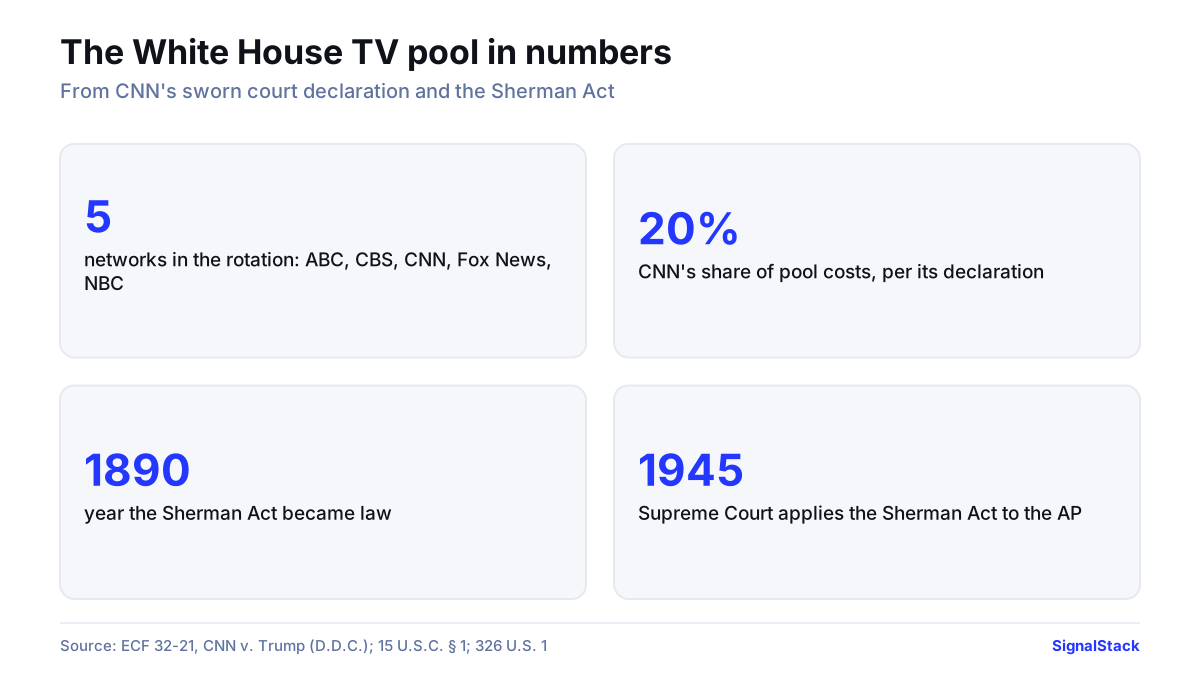
- The Justice Department’s Antitrust Division is investigating whether ABC, CBS, CNN, Fox News and NBC broke antitrust law when the White House TV pool stopped covering President Trump on Sept. 21, after the White House barred CNN, MS NOW and Politico and took CNN off the pool rotation. A DOJ spokesperson said “Group boycotts among commercial competitors can violate the Sherman Act.” The department sent civil investigative demands on Friday, Oct. 9, NBC News reported, citing a DOJ official.
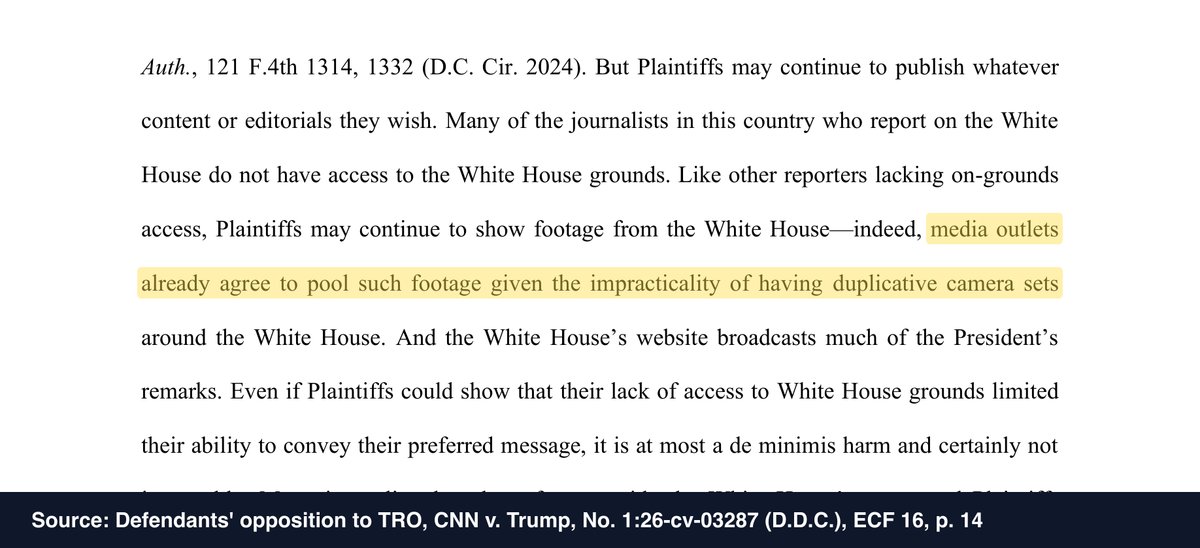
- In the lawsuit CNN, MS NOW and Politico filed over the ban, DOJ’s own lawyers described the pool as an agreement among outlets: “media outlets already agree to pool such footage given the impracticality of having duplicative camera sets around the White House,” they wrote in a Sept. 22 filing.
- The Supreme Court has held that news organizations are covered by the Sherman Act (Associated Press v. United States, 1945), and also that a “nonviolent, politically motivated boycott” can be protected speech (NAACP v. Claiborne Hardware, 1982). A judge is due to rule on the reporters’ access case by Tuesday, Oct. 13.
What happened
On Sept. 18, President Trump announced on Truth Social that he was banning CNN, MS NOW and Politico from the White House. Late on Sept. 20, the White House removed CNN from the next day’s TV pool schedule, and “No other network took CNN’s place,” CNN’s head of legal, David Vigilante, said in a sworn declaration. On Sept. 21, the pool’s chair at the time, Fox News bureau chief Bryan Boughton, told subscribers: “Effective today, the TV pool will not be covering events designated as pool coverage of the President,” Mediaite reported.
The three outlets and three of their reporters sued that day in Washington, D.C. On Sept. 24, Judge Timothy J. Kelly granted a temporary restraining order requiring the White House to “immediately return, reinstate, and restore” their hard passes for 14 days. CBS News reported that the order was extended through Tuesday, Oct. 13, by which date the judge expects to rule on a preliminary injunction.
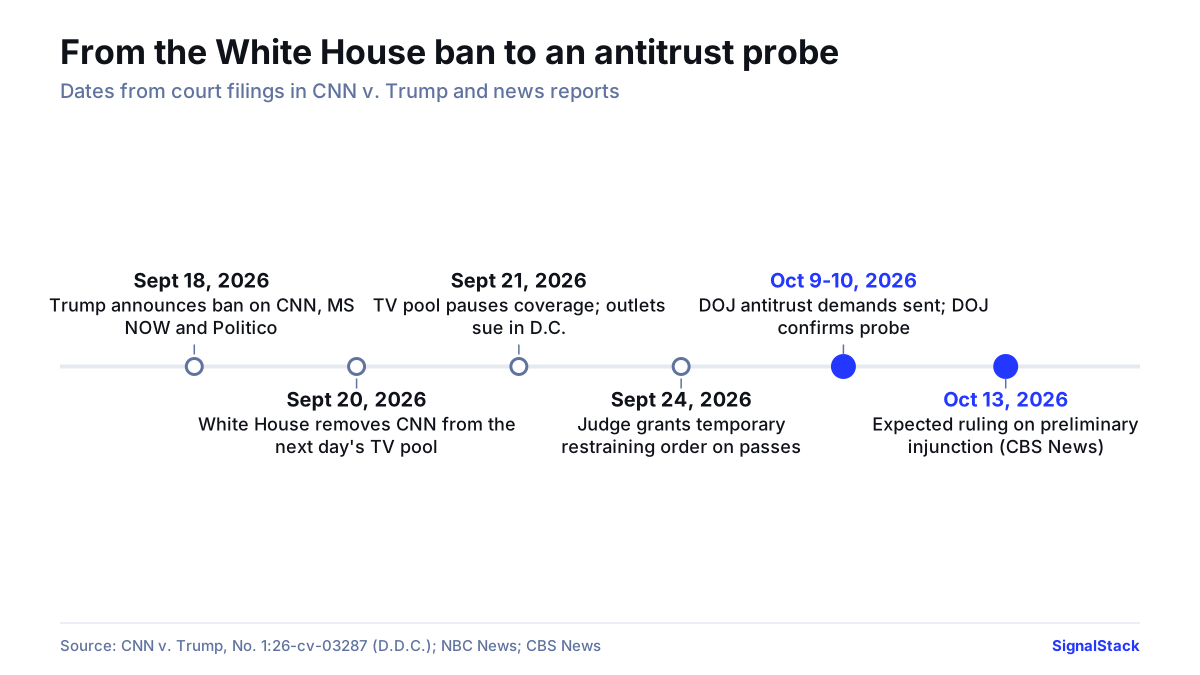
On Oct. 10, DOJ spokesperson Emily Covington said in a statement quoted by NBC News and CBS News (CNN quoted it from an unnamed spokesperson): “Members of the television press pool have boycotted covering White House events. Group boycotts among commercial competitors can violate the Sherman Act. The Antitrust Division is simply investigating to determine whether these news organizations have violated the antitrust laws.” ABC News said it had not been notified but expected to be, NBC News reported. CBS News reported that it was “not immediately clear” how DOJ defined the pause as a Sherman Act violation.
What the documents say
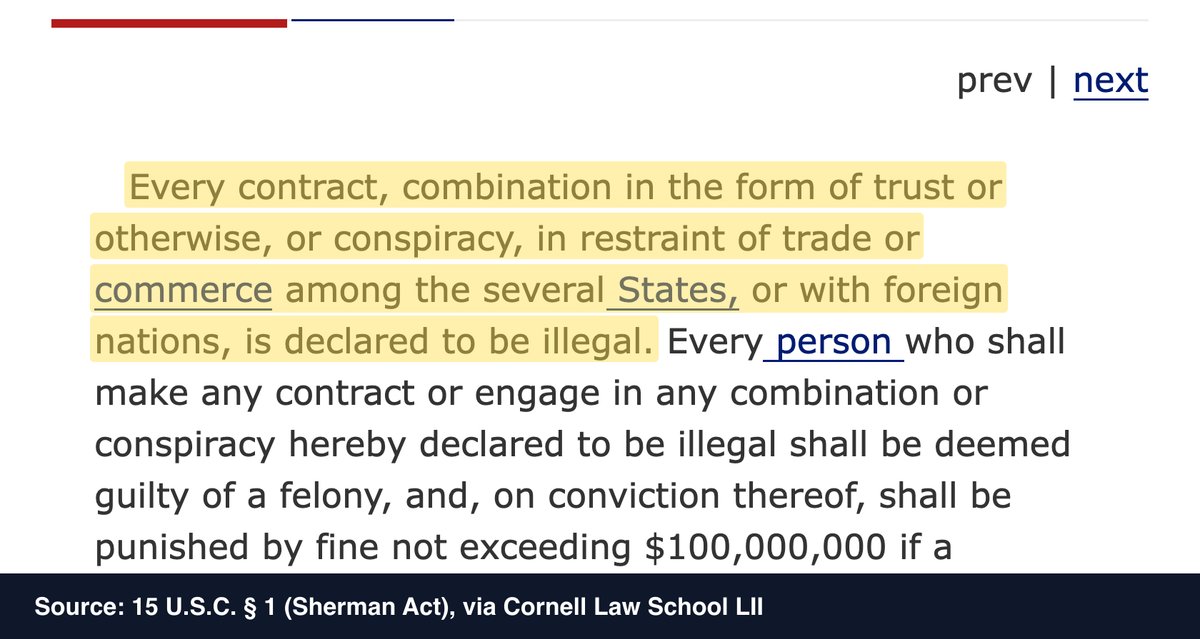
The statute. Section 1 of the Sherman Act, enacted in 1890 and codified at 15 U.S.C. § 1, reads: “Every contract, combination in the form of trust or otherwise, or conspiracy, in restraint of trade or commerce among the several States, or with foreign nations, is declared to be illegal.” The word “boycott” does not appear in it; the rule against group boycotts comes from court decisions. “The per se rules are, of course, the product of judicial interpretations of the Sherman Act,” the Supreme Court said in 1990.
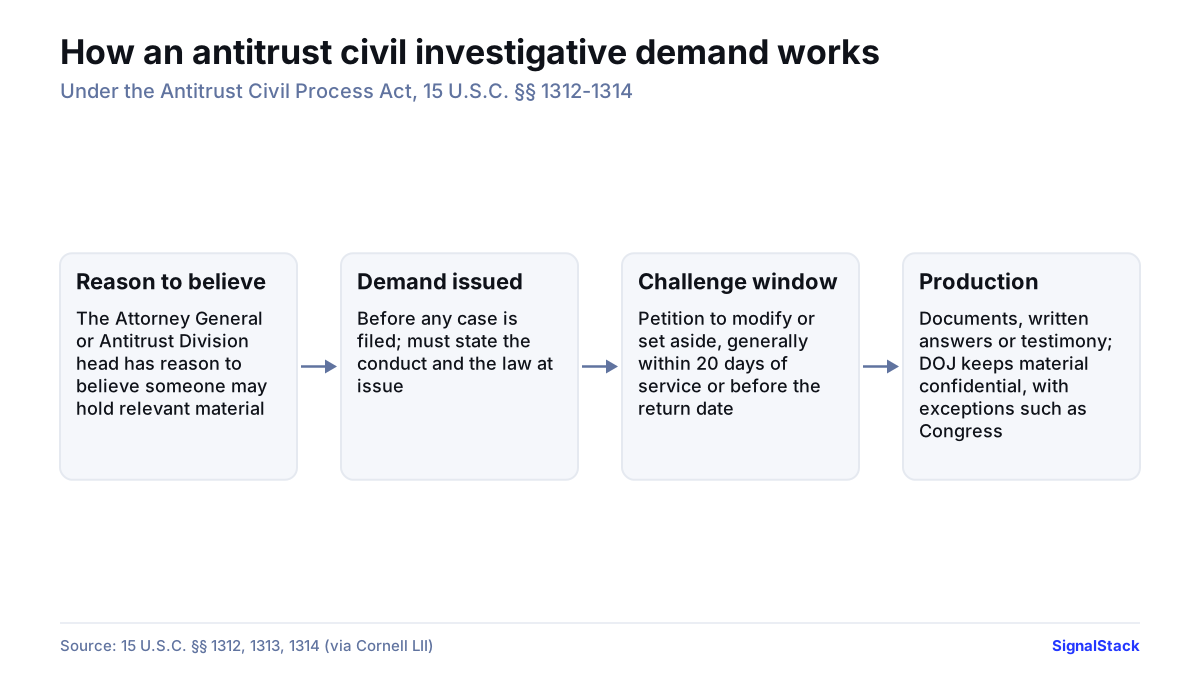
The demands. Civil investigative demands come from the Antitrust Civil Process Act. Under 15 U.S.C. § 1312, the Attorney General or the head of the Antitrust Division can issue one when they have “reason to believe that any person may be in possession” of material relevant to a civil antitrust investigation, before any case is filed. Each demand must state the conduct under investigation and the law that applies. A recipient can ask a court to modify or set it aside, generally within 20 days of service or before the return date, whichever is shorter (§ 1314). Material produced is kept confidential, with exceptions such as disclosure to Congress (§ 1313). The demands themselves have not been made public; CNN reported that they sought documents “relating to the pool, including its formation and its recent operations.”
DOJ’s other filing. In the CNN lawsuit, DOJ’s Civil Division argued that the outlets lost little by being kept off the grounds because footage is shared anyway: “media outlets already agree to pool such footage given the impracticality of having duplicative camera sets around the White House.” It repeated the line in a later filing. CNN’s head of legal said in his declaration that the five networks rotate the pool and “share the costs of pool coverage,” with CNN bearing 20 percent.
The case law. Three Supreme Court decisions frame the question:
| Case | What the Court said | Scope |
|---|---|---|
| Associated Press v. United States (1945) | “freedom to combine to keep others from publishing is not” protected; news businesses are covered by the Sherman Act | AP rules that let members block competing papers |
| NAACP v. Claiborne Hardware (1982) | The States’ right to regulate economic activity “could not justify a complete prohibition against a nonviolent, politically motivated boycott” aimed at governmental and economic change | A civil-rights boycott, sued over under Mississippi law; decided on First Amendment grounds, not under the Sherman Act |
| FTC v. Superior Court Trial Lawyers (1990) | A lawyers’ boycott for higher fees was illegal; “Those who joined the Claiborne Hardware boycott sought no special advantage for themselves” | Separates economic boycotts from political ones |
DOJ and the FTC withdrew their 2000 guidelines on collaborations among competitors in December 2024 and sought public comment on new guidance in February 2026, according to a DOJ release.
Who said what
| Who | What they said | Reported by |
|---|---|---|
| DOJ (Emily Covington) | “Group boycotts among commercial competitors can violate the Sherman Act.” | NBC News, CBS News, CNN |
| Five networks (Sept. 21) | “No administration should restrict a news organization because it objects to its reporting.” | CNN declaration, NBC News |
| Jonathan Kanter, former Antitrust Division head | ”This is not even in the same zip code of an antitrust violation” | CNN |
| Bruce Brown, Reporters Committee | The probe “appears to be a pretext for seeking records” about coverage | CNN |
| Seth Stern, Freedom of the Press Foundation | ”Depriving Trump of the attention he craves is not a competitive harm” | Washington Post |
| White House (earlier) | Covering the president is a “privilege – not a right” | Reuters |
The White House did not immediately respond to requests for comment on the probe, NBC News reported.
For another politics story told through the documents, see the Pentagon’s livestreamed-execution plan and the Army’s rules, and more in Politics & Government.
What could go right
- For the networks, Claiborne Hardware held that the States’ right to regulate economic activity “could not justify a complete prohibition against a nonviolent, politically motivated boycott designed to force governmental and economic change,” and Superior Court Trial Lawyers drew the line at boycotts seeking an economic advantage for those taking part. The networks’ joint Sept. 21 statement said “No administration should restrict a news organization because it objects to its reporting.”
- For DOJ, Associated Press holds that news businesses are subject to the Sherman Act, and its own court filing says “media outlets already agree to pool such footage.”
- The access case has a near-term marker: a ruling on the preliminary injunction is expected by Oct. 13, per CBS News.
What could go wrong
- Recipients of a civil investigative demand have a short window to challenge it in court, generally 20 days or the return date. The demands’ contents are not public, so it is unclear what conduct and law they cite.
- The Reporters Committee’s Bruce Brown said the probe “appears to be a pretext,” while DOJ says it is “simply investigating.” Which reading prevails may not be known until a court rules on a challenge, DOJ files a case or DOJ closes the investigation.
FAQ
Q Why is the DOJ investigating TV networks?
A The Antitrust Division is examining whether ABC, CBS, CNN, Fox News and NBC violated the Sherman Act when the White House TV pool stopped covering the president on Sept. 21, 2026. A DOJ spokesperson said "Group boycotts among commercial competitors can violate the Sherman Act."
Q What is the White House TV pool?
A A rotation in which ABC, CBS, CNN, Fox News and NBC take turns filming the president and share the footage and the costs, according to a sworn declaration by CNN's head of legal.
Q What is a civil investigative demand?
A A pre-suit demand for documents, written answers or testimony that DOJ's Antitrust Division can issue under 15 U.S.C. § 1312. Recipients can petition a court to modify or set it aside under § 1314.
Q Can a news boycott violate antitrust law?
A The Supreme Court held in 1945 that news businesses are covered by the Sherman Act, and in 1982 that a nonviolent, politically motivated boycott can be protected. Which applies here has not been decided by any court.
Q What happened in CNN's lawsuit over the White House ban?
A Judge Timothy J. Kelly ordered the White House on Sept. 24, 2026 to restore the hard passes of CNN, MS NOW and Politico employees for 14 days; CBS News reported the order was extended through Oct. 13, when a ruling on a preliminary injunction is expected.
Sources
- 15 U.S. Code § 1: Trusts, etc., in restraint of trade illegal; penalty
- 15 U.S. Code § 1312: Civil investigative demands
- 15 U.S. Code § 1314: Judicial proceedings
- Associated Press v. United States, 326 U.S. 1 (1945)
- NAACP v. Claiborne Hardware Co., 458 U.S. 886 (1982)
- FTC v. Superior Court Trial Lawyers Ass'n, 493 U.S. 411 (1990)
- Cable News Network, Inc. v. Trump, No. 1:26-cv-03287 (D.D.C.): complaint (ECF 1)
- Defendants' opposition to the TRO motion (ECF 16)
- Order granting temporary restraining order (ECF 24, Sept 24, 2026)
- Declaration of David Vigilante, CNN EVP and Head of Legal (ECF 32-21)
- DOJ and FTC seek public comment on guidance for business collaborations (Feb 23, 2026)
- Justice Department investigates TV networks for suspending pool coverage of Trump
- Justice Department investigating TV networks over suspension of press pool after Trump media ban
- Trump DOJ probing TV networks over White House pool
- DOJ says it's investigating whether White House TV pool's coverage halt violated antitrust law
- Trump's DOJ is investigating whether TV networks broke the law by suspending his pool coverage
- Justice Department probes TV networks over Trump pool boycott
- US Justice Department investigating five TV networks over White House pool coverage
- CNN, MS NOW and Politico's White House ban hearing




.jpg)