

AI-generated illustration
TL;DR
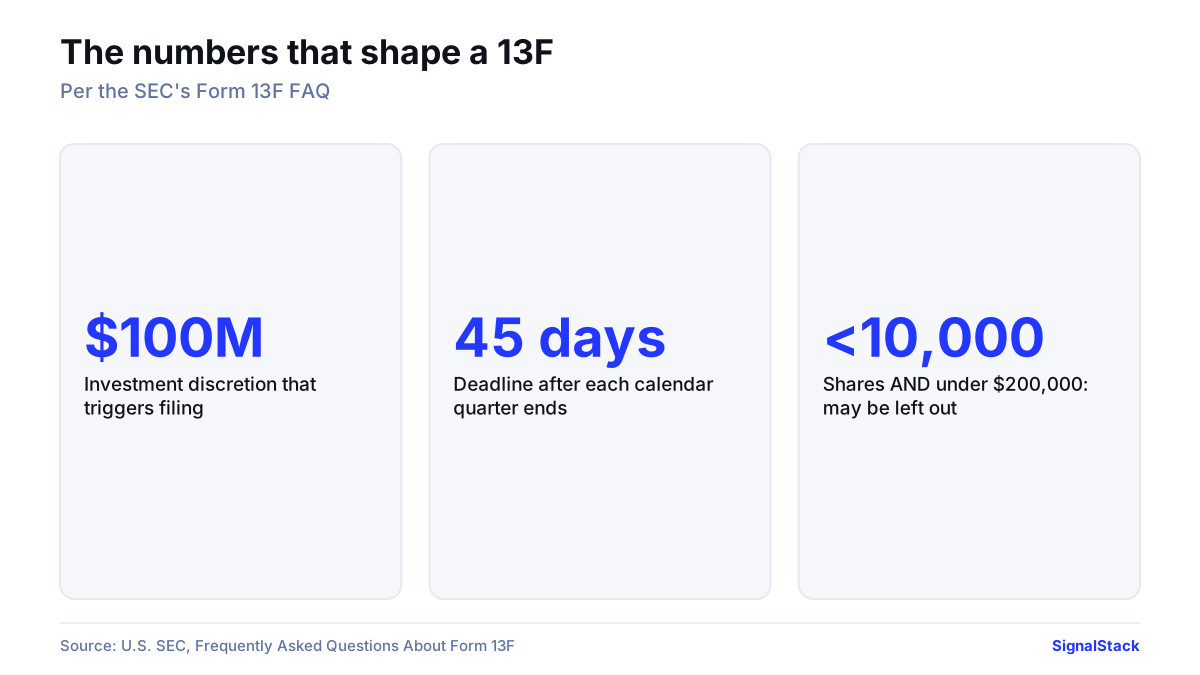
- Form 13F is a quarterly SEC report of the US-listed stocks, ETFs and certain options that large investment managers hold. Any manager whose investment discretion covers at least $100 million of those securities must file.
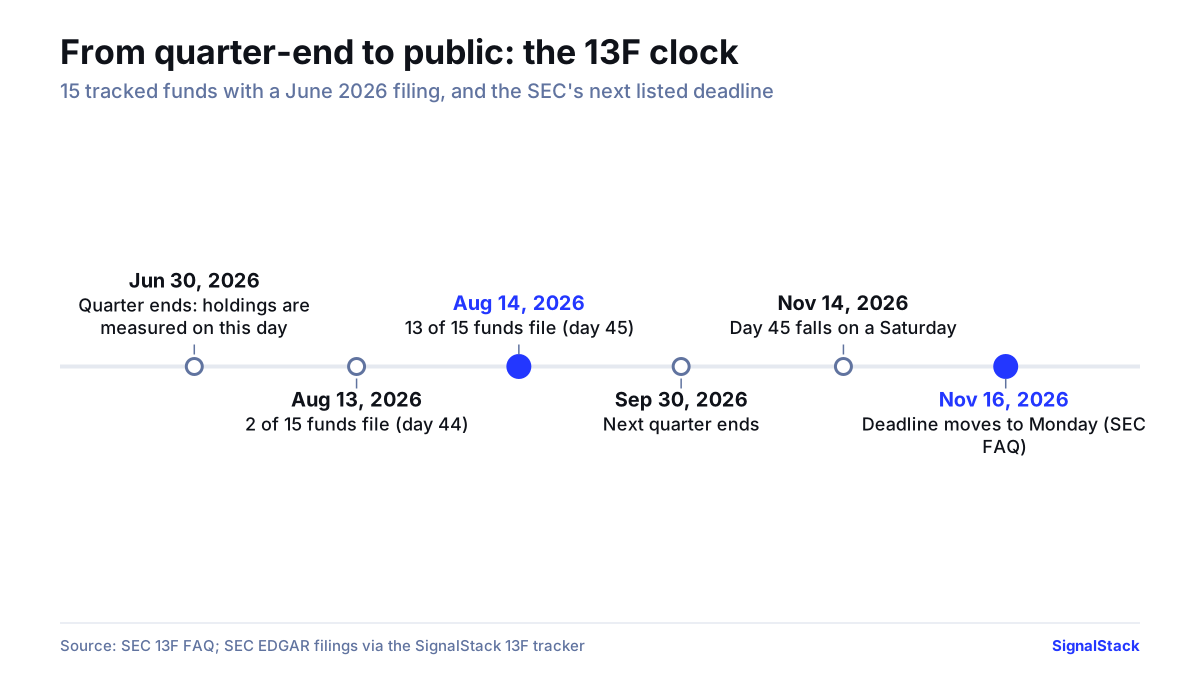
- It is due within 45 days after each quarter ends. Of the 15 funds in our 13F tracker with a June 30, 2026 filing on record, 13 filed on Aug. 14, the 45th day, and 2 on Aug. 13. The next 13F deadline is Nov. 16, 2026, per the SEC’s 13F FAQ.
- A 13F is a snapshot of long positions on one day. It does not show short positions, trades during the quarter, mutual funds, or holdings that the SEC lets a manager keep confidential for a time.
What a 13F is
Form 13F comes from Section 13(f) of the Securities Exchange Act of 1934. Congress added Section 13(f) in 1975 to make institutional investors’ holdings more public, the SEC says in its 13F FAQ.
Who files. An “institutional investment manager” whose investment discretion covers at least $100 million of what the SEC calls Section 13(f) securities. The SEC’s examples include advisers that manage private accounts or mutual fund and pension assets, bank trust departments, banks and broker-dealers, managers of accounts set up by government bodies, such as municipal pension funds, and foreign managers that do business in the US. It does not matter whether the manager is registered with the SEC. A person managing only their own money is not an institutional investment manager, the FAQ says.
What counts. The SEC publishes an Official List of Section 13(f) Securities after each quarter. It is mostly US exchange-traded stocks, closed-end funds and ETFs, plus some convertible bonds, equity options and warrants. Anything not on the list, such as ordinary mutual fund shares, should not be reported.
What each line shows. For each holding: the issuer, the class of security (common stock, a put or call option, and so on), the number of shares and the fair market value at the end of the quarter. Since January 2023, values are rounded to the nearest dollar rather than the nearest thousand.
When. A manager’s first 13F is for the December quarter of the year it crosses $100 million. After that it files every quarter, within 45 days of March 31, June 30, Sept. 30 and Dec. 31. If the 45th day falls on a weekend or holiday, the deadline moves to the next business day, under Rule 0-3(a). Meeting the threshold on the last trading day of any month in a year triggers four filings (that year’s December quarter and the next three quarters), even if holdings later fall below $100 million, the FAQ says.
How to read one: three real filings
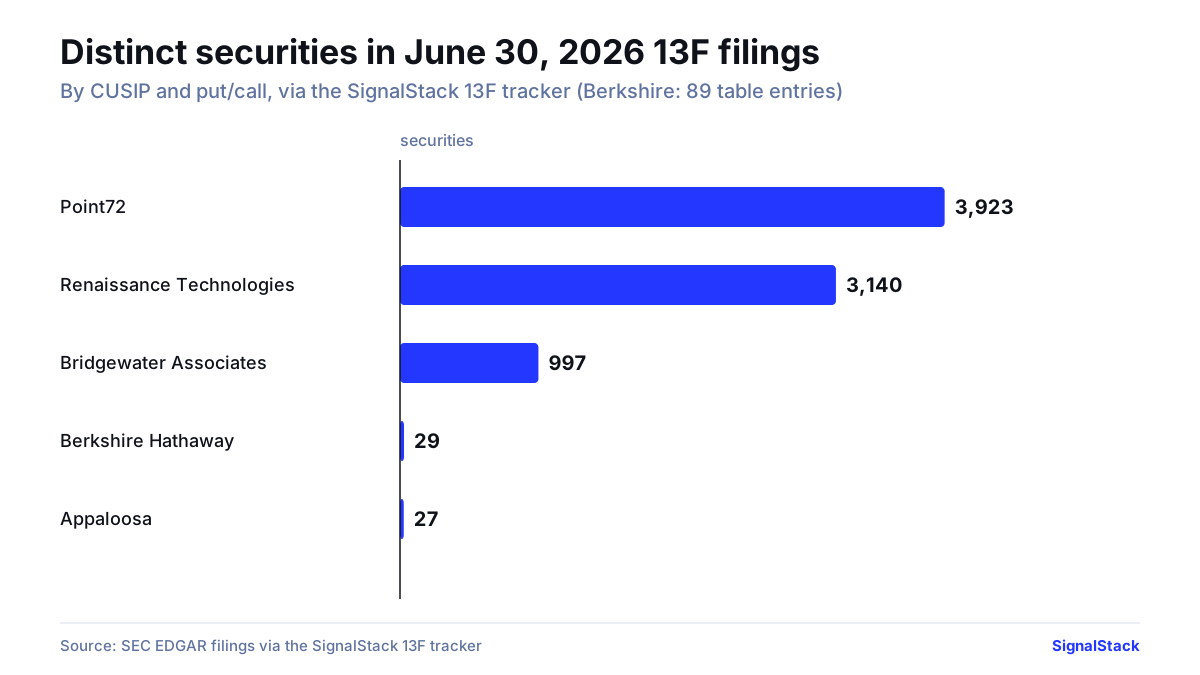
Berkshire Hathaway. Its 13F for the quarter ended June 30, 2026, filed Aug. 14, has 89 information-table entries covering 29 distinct securities, with a total reported value of about $299.3 billion. One holding can take several lines when investment discretion is shared with other managers, the SEC FAQ explains. Every line on a 13F is a long position, because the form excludes shorts.
Renaissance Technologies and Point72. The same quarter’s filings list 3,140 entries (Renaissance) and 3,923 (Point72).
Options lines. A 13F can include put and call options that are on the Official List. The SEC FAQ explains that for an option, most columns describe the underlying security rather than the option itself; the “PUT” or “CALL” label is what marks the line as an option. So when Appaloosa’s June 30 filing shows an Apple put line with a reported value of $241.6 million on 835,000 shares, those figures describe the Apple shares underlying the puts, not what the puts cost.
Point72’s filing shows another limit. It lists both a put line and a call line on the same S&P 500 ETF. The form does not say whether those positions are hedges, parts of a larger trade, or separate bets.
What a 13F can’t tell you
- What the fund holds today. The holdings are as of the last day of the quarter. They can be 45 days old or more when they appear, because the deadline moves later when day 45 falls on a weekend or holiday, and older still by the time of the next filing.
- Short positions. The SEC FAQ says managers should not include short positions, and should not net them against long positions. A fund that is short a stock can look only long, or not involved at all.
- When and at what price it traded. Values are quarter-end market values. Trades are reported on a trade-date basis, but the form shows no trade dates or prices.
- Everything outside the Official List. Mutual fund shares, most bonds, cash, and many foreign-listed shares are not reported. A 13F is not a fund’s whole portfolio.
- Small or confidential positions. A manager may leave out a holding if it is under 10,000 shares and under $200,000 in value; both conditions must be met. A manager can also ask the SEC to keep a position confidential for a time. Since Jan. 3, 2023, the public form has a checkbox showing when confidential treatment has been requested, and a position must be added by amendment within six business days if the request is denied or the confidential treatment expires.
How to use 13Fs well
Treat a 13F as a dated record, not a live portfolio. Compare two quarters of the same manager to see what was added or cut, as our 13F tracker does for 16 funds, such as Berkshire Hathaway. Read options lines as exposure to the underlying shares, and remember that the filing cannot show shorts. For insider trades, which must be reported within two business days, see our Form 4 guide. For company results filings, see earnings season explained. The glossary entry for Form 13F has a short definition.
What could go right / What could go wrong
What could go right
- Read across quarters, 13Fs show how large managers’ long holdings in US-listed stocks shift over time, from a source anyone can check on SEC EDGAR.
- Options labels and position counts help separate concentrated portfolios from broad ones.
What could go wrong
- Holdings can be 45 days old or more when they appear, so a position may already be gone.
- Without shorts, a hedged fund can look like a simple buyer.
- Confidential treatment can delay some positions until a later amendment.
FAQ
Q What is a 13F filing?
A Form 13F is a quarterly report to the SEC listing the US-listed stocks, ETFs and certain options held by investment managers whose discretion covers at least $100 million of those securities.
Q When are 13F filings due?
A Within 45 days after the end of each calendar quarter. For the quarter ended Sept. 30, 2026, the 45th day is Saturday, Nov. 14, so the deadline moves to Monday, Nov. 16, 2026, under Rule 0-3(a); the SEC's 13F FAQ lists that date.
Q Do 13F filings show short positions?
A No. The SEC FAQ says managers should not include short positions and should report only the long position.
Q Who has to file a 13F?
A Institutional investment managers, including foreign ones that do business in the US, whose investment discretion covers at least $100 million of Section 13(f) securities. SEC registration does not matter.
Q Why does a 13F show options at such large values?
A For options, most columns on Form 13F describe the underlying security, per the SEC FAQ. The value and share count reflect the underlying shares, not the price paid for the options.
Sources
- Frequently Asked Questions About Form 13F
- Official List of Section 13(f) Securities
- Berkshire Hathaway Form 13F-HR, quarter ended Jun 30, 2026
- Point72 Asset Management Form 13F-HR, quarter ended Jun 30, 2026
- Appaloosa Form 13F-HR, quarter ended Jun 30, 2026
- Bridgewater Associates Form 13F-HR, quarter ended Jun 30, 2026
- Renaissance Technologies Form 13F-HR, quarter ended Jun 30, 2026