

AI-generated illustration
TL;DR
- US public companies report profit under GAAP, the US accounting rules that Regulation G measures non-GAAP figures against (foreign private issuers may use other standards). Many also publish a second figure, called “adjusted,” “core” or “non-GAAP,” that adds back or removes items management says obscure the trend.
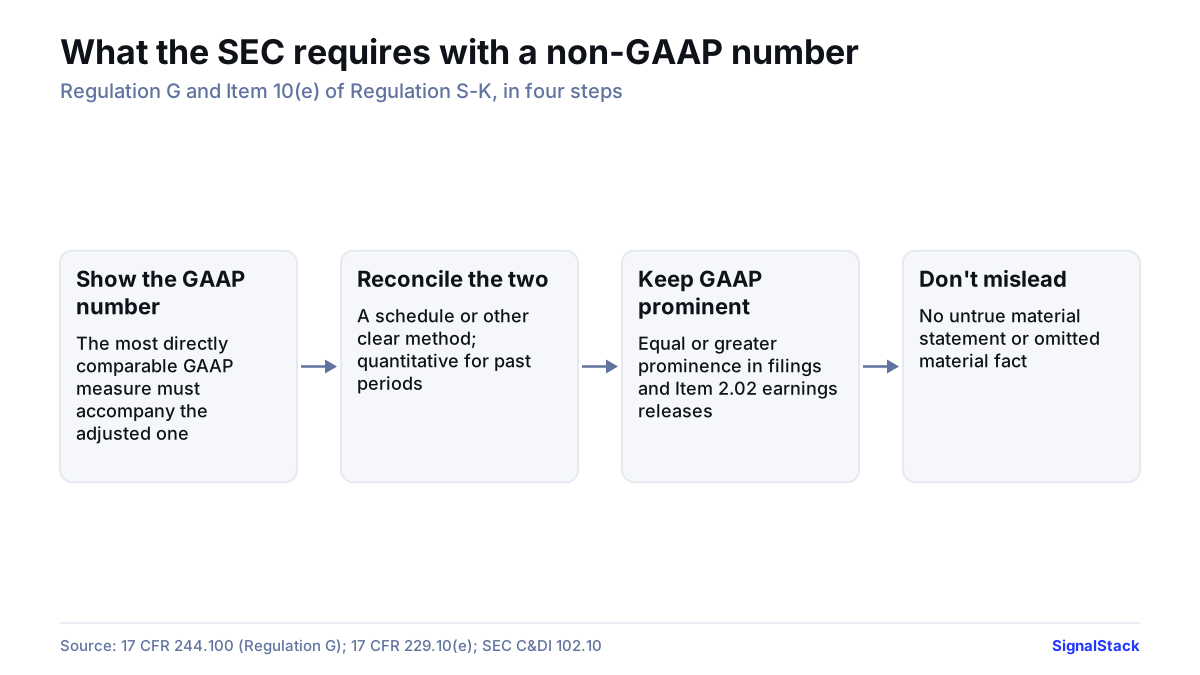
- SEC rules let them, with conditions. Regulation G generally requires the closest GAAP figure and a reconciliation whenever an SEC-registered company publicly discloses material information that includes a non-GAAP measure. Item 10(e) of Regulation S-K adds equal-or-greater prominence for the GAAP figure in SEC filings, and Form 8-K applies that rule to Item 2.02 earnings releases.
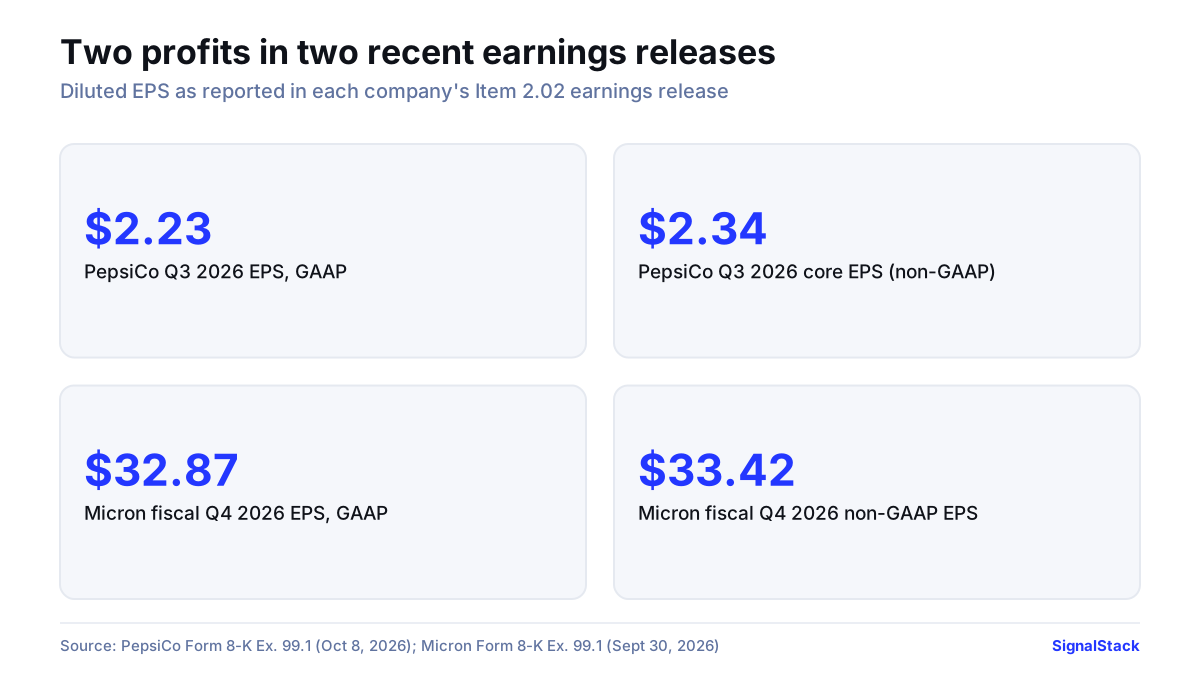
- The gap varies by company. PepsiCo’s third-quarter 2026 EPS was $2.23 under GAAP and $2.34 “core”; Micron’s fiscal fourth-quarter 2026 EPS was $32.87 under GAAP and $33.42 non-GAAP. Each release itemizes the difference.
What GAAP and non-GAAP mean
GAAP, generally accepted accounting principles, is the rulebook behind the income statement, balance sheet and cash flow statement in a company’s 10-Q and 10-K. Regulation G defines GAAP as US generally accepted accounting principles, with an exception for foreign private issuers that use other standards.
Regulation G defines a non-GAAP financial measure as a number about a company’s past or future performance, financial position or cash flows that excludes amounts the closest GAAP measure includes, or includes amounts that measure excludes. In practice the names vary by company: “adjusted EPS,” “core EPS” at PepsiCo, “non-GAAP net income” at Micron, “organic revenue,” “constant currency” growth, EBITDA or free cash flow.
Companies give their own reasons; for earnings releases furnished under Item 2.02, the SEC requires a statement of why management finds the measure useful, which can appear in the release, the 8-K, or the most recent annual report or a later filing, updated as needed. Micron’s release says its non-GAAP figures leave out “certain activities” that management excludes when analyzing results and trends. PepsiCo’s says it uses non-GAAP measures internally for its annual operating plan, to evaluate business performance and as a factor in some employees’ pay, and that they “may not be the same as or comparable to” similar measures at other companies.
What the SEC requires
Two sets of rules apply. Regulation G generally covers any public disclosure by an SEC registrant of material information that includes a non-GAAP measure, with narrow exceptions for some foreign private issuers and business-combination communications (registered investment companies fall outside its definition of registrant). Item 10(e) of Regulation S-K adds stricter conditions for SEC filings. Form 8-K’s Item 2.02 applies Item 10(e)‘s presentation and reconciliation requirements to earnings releases, and the SEC staff confirms the prominence requirement covers releases furnished under Item 2.02. Item 10(e)‘s prohibitions (next section) apply to filings, not to releases furnished under Item 2.02, unless the company treats the release as filed or incorporates it into a filing; Release 33-8176 says a company’s earnings releases “would no longer be subject to Item 10 prohibitions.” Among the requirements Item 2.02 does bring in is a statement of why management finds the measure useful.
- Show the GAAP number. The most directly comparable GAAP measure has to accompany the adjusted one.
- Reconcile them. A schedule or other clear method must show the differences. For past periods it must be quantitative; for forward-looking figures, quantitative “to the extent available without unreasonable efforts.”
- Equal or greater prominence. In filings and Item 2.02 releases, the GAAP figure must be presented at least as prominently as the non-GAAP one.
- Nothing misleading. Regulation G bars a non-GAAP measure that, with its accompanying discussion, contains an untrue material statement or omits a material fact needed to make it not misleading.
What the SEC rules out
In filings, Item 10(e) lists things a company must not do. Among them, it may not remove items from a performance measure by calling them non-recurring, infrequent or unusual when a charge or gain of that nature is reasonably likely to recur within two years, or a similar one occurred within the prior two years. It may not put non-GAAP measures on the face of the GAAP financial statements or in their notes, or give them titles that are the same as or confusingly similar to GAAP titles.
The SEC staff’s Compliance and Disclosure Interpretations add examples of measures that could mislead even if no rule names them:
- Excluding normal, recurring, cash operating expenses needed to run the business (Question 100.01).
- Adjusting a charge in one period but not similar charges in earlier periods, without disclosing and explaining the change (Question 100.02).
- “Individually tailored” adjustments that change GAAP’s recognition and measurement principles, such as recognizing revenue on a different pattern (Question 100.04).
Separately, the staff says adjustments should not be presented “net of tax”; income taxes “should be shown as a separate adjustment and clearly explained” (Question 102.11).
For how these rules fit into the wider reporting calendar, see our earnings season guide.
How to read a reconciliation: two real earnings releases
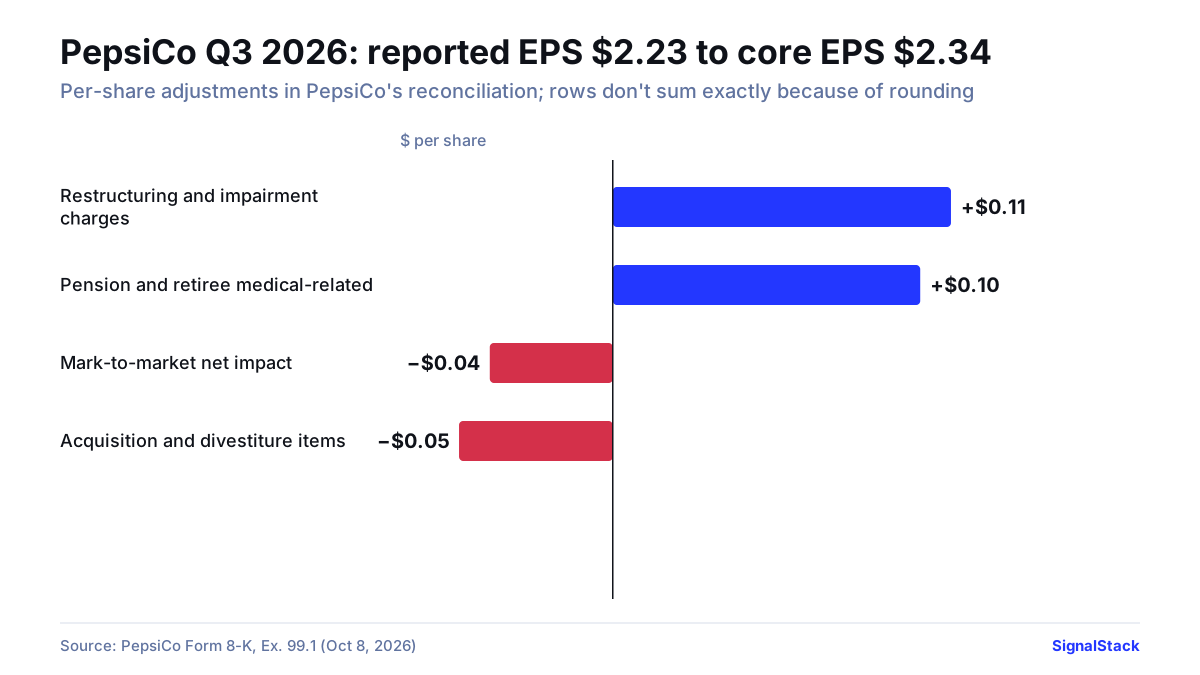
PepsiCo, third quarter of 2026. The reconciliation table in PepsiCo’s Oct. 8 release starts from reported EPS and lists each “item affecting comparability”:
| PepsiCo Q3 2026 (diluted EPS) | Amount |
|---|---|
| Reported, GAAP | $2.23 |
| Mark-to-market net impact | −$0.04 |
| Restructuring and impairment charges | +$0.11 |
| Acquisition and divestiture-related charges/credits | −$0.05 |
| Pension and retiree medical-related impact | +$0.10 |
| Core, non-GAAP | $2.34 |
The rows do not add to exactly $2.34 because of rounding. PepsiCo’s glossary describes the mark-to-market item as gains and losses on commodity derivatives recorded in corporate unallocated expenses, and the restructuring item as costs of a multi-year productivity plan first announced in 2019 and extended through the end of 2030. Growth rates diverge more than the levels: reported EPS rose 17% from a year earlier, core EPS 2%. Our PepsiCo results report covers why.
Micron, fiscal fourth quarter of 2026. Micron’s Sept. 30 release reconciles gross margin, operating expenses and operating income, then net income, then diluted shares and EPS. The net income step:
| Micron fiscal Q4 2026 | $ millions |
|---|---|
| GAAP net income | 37,701 |
| Stock-based compensation | +364 |
| Patent license charges | +500 |
| Loss on debt prepayments | +9 |
| Other | +22 |
| Estimated tax effects of the above and other tax adjustments | −198 |
| Non-GAAP net income | 38,398 |
Divided by diluted shares (1,147 million under GAAP; 1,149 million non-GAAP, adjusted for stock-based compensation), that gives GAAP diluted EPS of $32.87 and non-GAAP diluted EPS of $33.42, a difference of $0.55 per share. Micron shows taxes as a separate line, the format Question 102.11 describes. Stock-based compensation is added back in every period the table shows, while patent license charges appear in three of its five columns: $500 million in fiscal Q4 2026 (also counted in the fiscal 2026 total) and $57 million in fiscal 2025. Micron says its adjustments “may or may not be infrequent or nonrecurring in nature.” The SEC staff ties the two-year rule to how a charge is described (Question 102.03), and that rule applies to filings, not furnished releases. For the quarter itself, see our Micron results report.
Why some guidance is non-GAAP only
Forward-looking non-GAAP figures need a quantitative reconciliation only to the extent it is available “without unreasonable efforts.” PepsiCo uses that room: its release says it guides on a non-GAAP basis because it cannot predict certain items in reported results, including foreign exchange and commodity mark-to-market impacts, and that it is unable to reconcile those measures “without unreasonable effort.” The SEC staff says such a forecast would be considered more prominent than the GAAP measure unless the company discloses that it relies on the exception and names what it can’t estimate and how much it could matter, in a place at least as prominent (Question 102.10(b)). So when a company like PepsiCo “cuts guidance,” the number being cut can be an adjusted one with no GAAP forecast beside it. Micron, by contrast, gives a GAAP and a non-GAAP outlook for fiscal Q1 2027, including diluted EPS of $37.84 ± $1.00 (GAAP) and $38.15 ± $1.00 (non-GAAP).
How to read both numbers
- Start from the GAAP line, then read the reconciliation row by row. Ask whether each item is likely to come back.
- Compare the same measure over several periods. A company’s own definition can change, and the SEC staff says changes should be disclosed and explained.
- Don’t compare one company’s “adjusted EPS” with another’s without reading both definitions; PepsiCo’s release itself warns its measures may not match other companies’.
- Check growth rates on both bases. PepsiCo’s third quarter shows how far they can differ.
What could go right / What could go wrong
Right: both companies say their adjusted figures help readers see underlying trends (Micron calls its non-GAAP information “helpful in understanding trends”; PepsiCo says its measures “facilitate comparison of our historical operating results and trends”); in filings and Item 2.02 earnings releases, the SEC’s prominence rule keeps the GAAP number in view.
Wrong: adjustments are chosen by management. The SEC staff’s examples show where they can mislead, such as dropping recurring cash expenses or adjusting inconsistently between periods.
FAQ
Q What is the difference between GAAP and non-GAAP earnings?
A GAAP earnings follow the accounting rules behind a company's official financial statements. Non-GAAP earnings start from the GAAP figure and add back or remove items the company chooses, and SEC rules require registrants to show the GAAP figure and a reconciliation alongside.
Q Is non-GAAP EPS allowed by the SEC?
A Yes, with conditions. Regulation G generally requires a registrant that publicly discloses a non-GAAP measure to present the closest GAAP measure and a reconciliation, and it bars misleading presentations. Item 10(e) of Regulation S-K adds that the GAAP figure must have equal or greater prominence in SEC filings, and that requirement also applies to earnings releases furnished under Item 2.02 of Form 8-K.
Q What does "core EPS" mean at PepsiCo?
A It is PepsiCo's non-GAAP EPS. It excludes items PepsiCo lists as affecting comparability, such as mark-to-market impacts, restructuring and impairment charges, and acquisition and divestiture-related items. In the third quarter of 2026, core EPS was $2.34 against reported EPS of $2.23.
Q Why do companies give guidance only on a non-GAAP basis?
A SEC rules require a quantitative reconciliation for forward-looking non-GAAP figures only to the extent available without unreasonable efforts. PepsiCo, for example, says it cannot predict items such as foreign exchange and commodity mark-to-market impacts.
Companies in this report: PepsiCo , Micron
Sources
- 17 CFR Part 244: Regulation G
- 17 CFR 229.10: Item 10(e) of Regulation S-K, use of non-GAAP financial measures
- Non-GAAP Financial Measures: Compliance and Disclosure Interpretations
- Form 8-K General Instructions, Item 2.02
- Final Rule: Conditions for Use of Non-GAAP Financial Measures (Release 33-8176)
- Exhibit 99.1: PepsiCo Reports Third-Quarter 2026 Results (Oct 8, 2026)
- Exhibit 99.1: Micron fiscal fourth-quarter and full-year 2026 results (Sept 30, 2026)