

AI-generated illustration
TL;DR
- On Oct. 8, 2026, two U.S. bank regulators took separate actions against American Express over its anti-money laundering (AML) controls. The $350 million civil money penalty is in the Office of the Comptroller of the Currency’s (OCC) civil money penalty order against American Express National Bank. The Federal Reserve’s cease-and-desist order against the parent company and its TRS subsidiary contains no penalty.
- The OCC found that from about June 2014 to about May 2025 the bank processed roughly $13 billion in suspected trade-based money laundering, in some cases through accounts linked to bank insiders, and ordered an outside review of past suspicious-activity reporting. The bank neither admitted nor denied the findings.
- In an 8-K, American Express said part of the penalty was reserved in earlier periods, and that the penalty does not affect its full-year 2026 guidance, that the orders impose no asset cap, and that it does not expect the compliance costs to affect its 2027 guidance.
What happened
American Express disclosed the actions in a Form 8-K filed on Oct. 8. American Express Company and American Express Travel Related Services Company (TRS) consented to an order from the Federal Reserve Board, and American Express National Bank (AENB) consented to an order from the OCC, resolving what the filing calls “previously disclosed reviews” of certain aspects of its financial crimes compliance program. The bank also agreed to pay the $350 million penalty to the OCC.
The OCC’s release says the money will go to the U.S. Treasury. Its penalty order says it is payable when the order is executed. The Fed’s release, issued at 4:30 p.m. EDT, says the Board found significant deficiencies in how the company’s enterprise-wide AML program was carried out, “in particular at the firm’s subsidiary national bank,” and notes that the OCC is the bank’s primary federal regulator.
Some headlines, such as PYMNTS’s “OCC and Fed Fine American Express $350 Million,” describe a fine from both regulators. The documents show one penalty, from the OCC, and two cease-and-desist orders.
What the orders say
1. Who is covered. The orders split along American Express’s legal structure: the Fed supervises the holding companies, and the OCC charters and examines the bank.
| OCC (Oct. 8) | Federal Reserve (Oct. 8) | |
|---|---|---|
| Entity | American Express National Bank, Sandy, Utah | American Express Company and TRS, New York |
| Action | Consent cease-and-desist order plus a civil money penalty order | Consent order to cease and desist |
| Money penalty | $350 million, to the U.S. Treasury | None in the order |
| Main focus | The bank’s BSA/AML program, suspicious-activity reporting, a look-back review | Board oversight, the enterprise-wide AML program, sanctions (OFAC) compliance at TRS |
| Admission | The bank neither admits nor denies the findings | Without admitting or denying any allegation |
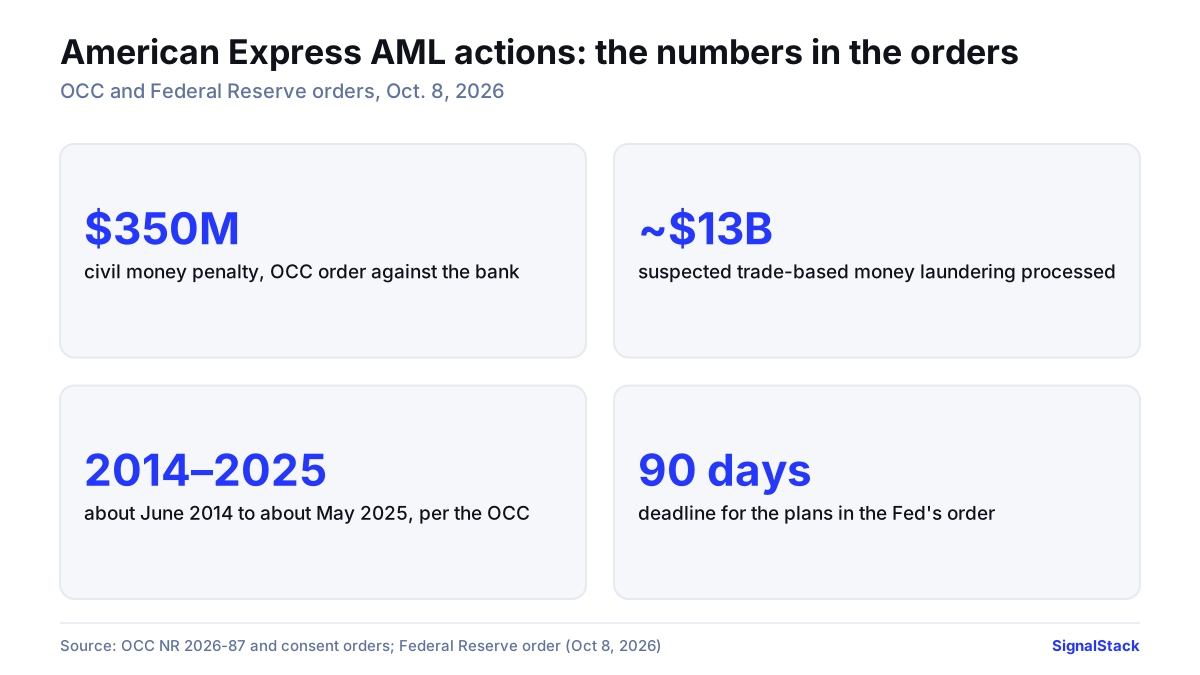
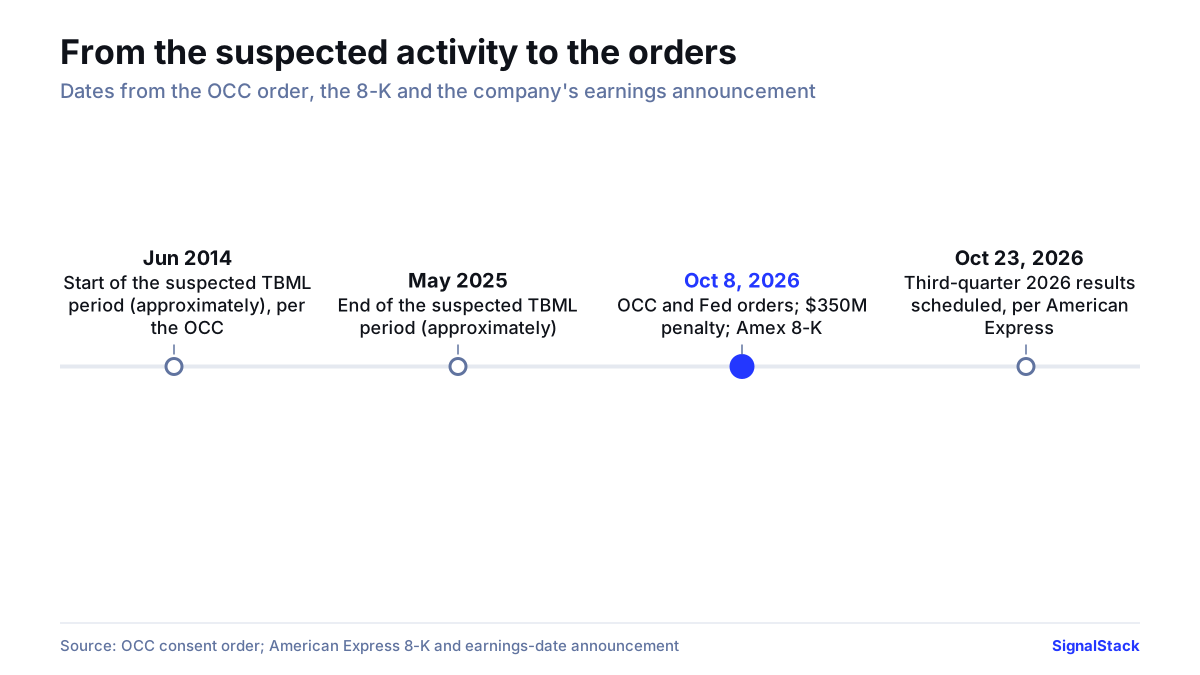
2. The OCC’s findings. The consent order lists the Comptroller’s findings. Among them: the bank’s risk assessment focused on its relatively narrow demand deposit products and insufficiently on its more dominant credit and charge card products; it failed to maintain an effective framework for ongoing customer due diligence, and its customer identification procedures had substantial gaps; it had “systemic breakdowns” in suspicious-activity monitoring that produced untimely, missed or incomplete suspicious activity reports (SARs); and independent testing, staffing and training were weak. The order says the bank processed about $13 billion in suspected trade-based money laundering (TBML), including suspicious card charges and the repayments of those charges, from about June 2014 to about May 2025. It adds that the bank did report suspicious activity periodically over that time but lacked the controls to catch the full scope.
Comptroller of the Currency Jonathan Gould said in the release that the bank’s failures meant it did not identify and report “significant missed suspicious activity” in time or “provide important information to law enforcement.”
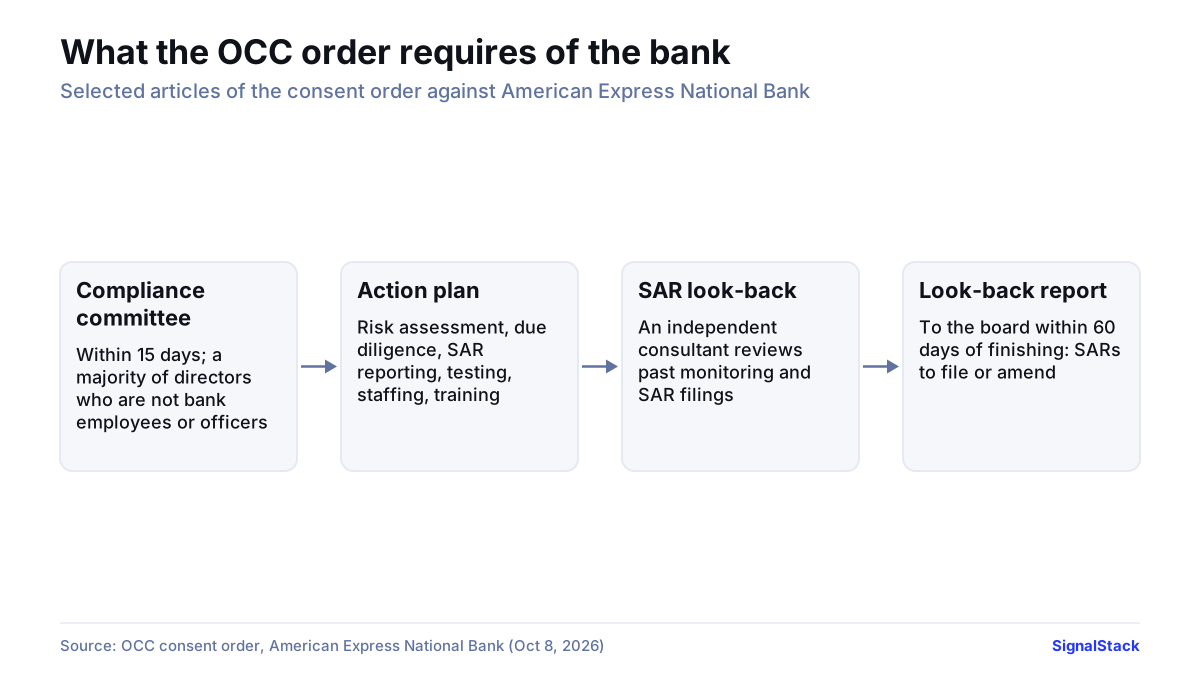
3. What the OCC order requires. Its articles set out work for the bank’s board and management:
- A compliance committee within 15 days, with a majority of directors who are not bank employees or officers.
- An action plan, due within 90 days, covering a new BSA/AML risk assessment, customer due diligence, financial crimes risk management, suspicious-activity reporting, independent testing, staffing and training.
- A SAR look-back: an independent consultant reviews past monitoring and reporting to find suspicious activity that should have been reported and SARs that need correcting, and reports to the board within 60 days of finishing.
- A program to monitor insider activity.
4. What the Fed order requires. Within 90 days, the parent’s board must submit a plan for overseeing the remediation, Amex must submit a plan to improve the enterprise-wide BSA/AML program, and TRS must submit a plan for its compliance with Treasury’s Office of Foreign Assets Control (OFAC) sanctions rules. Quarterly progress reports to the Federal Reserve Bank of New York follow. The order also bars the companies from retaining people who, based on the firm’s own investigative record from 2024 onward, took part in the misconduct, were formally disciplined for it, and left or were terminated in connection with it. The Fed says its New York bank found weaknesses in transaction monitoring, fraud referrals, third-party risk assessment and financial crimes risk management.
What American Express said
The 8-K is short. It says a portion of the penalty “was reserved for in prior periods” and that the penalty does not affect the full-year 2026 guidance the company gave earlier, that the orders “do not impose an asset cap,” and that costs of meeting the orders are “not anticipated” to affect its 2027 guidance. Its forward-looking-statement section lists the effectiveness of remediation and “potential additional fines, penalties, or judgments” among the risks. Chief Executive Stephen Squeri said in a statement quoted by Banking Dive that the company takes its responsibility to combat financial crimes seriously and will address both regulators’ concerns.
American Express has scheduled its third-quarter 2026 results for Oct. 23; see our American Express earnings page and its company hub.
Background
The OCC order cites the bank’s AML program rule (12 C.F.R. § 21.21) and its SAR-filing rule (12 C.F.R. § 21.11) among the regulations violated. In this case the suspected trade-based money laundering the OCC describes included suspicious card charges and the associated repayments of those charges.
According to Banking Dive, citing OCC data, this is the first civil money penalty the OCC has imposed on a bank since its $450 million penalty against TD in October 2024. Banking Dive notes that TD’s overall penalties were more than $3.5 billion and came with a $434 billion asset cap on its U.S. retail banking operations; American Express’s 8-K says its orders impose no asset cap.
For how companies disclose events like this, see our guide to Form 8-K and other Global Markets & Policy reports.
What could go right
- American Express says the penalty does not impact the full-year 2026 guidance it gave earlier, and that costs of meeting the orders are not anticipated to affect its 2027 guidance.
- The orders contain no asset cap, per the 8-K.
- The Fed’s order notes that Amex and TRS fully cooperated and have already taken remedial actions.
What could go wrong
- The OCC’s SAR look-back may identify past activity that should have been reported, and the consultant must list SARs to file or amend.
- The 8-K’s cautionary note lists “potential additional fines, penalties, or judgments” and the effectiveness of remediation among the risks.
- The Fed’s order says it does not prevent the Board or any other federal or state agency from taking other action against the companies or people involved.
- The OCC consent order reserves the OCC’s ability to bring further enforcement actions, including against individuals, and says it does not resolve any actions by other U.S. agencies, naming the Department of Justice.
FAQ
Q Why was American Express fined $350 million?
A The OCC assessed the $350 million penalty against American Express National Bank on Oct. 8, 2026, for deficiencies in its Bank Secrecy Act and anti-money laundering program. The OCC found the bank processed about $13 billion in suspected trade-based money laundering from about June 2014 to about May 2025.
Q Did the Federal Reserve fine American Express?
A No penalty appears in the Fed's Oct. 8 order. It is a consent cease-and-desist order against American Express Company and TRS requiring plans within 90 days and quarterly progress reports; the $350 million penalty is in the OCC's separate order against the bank.
Q Does the penalty change American Express's guidance?
A The company's 8-K says part of the penalty was reserved in prior periods and that the penalty does not affect its full-year 2026 guidance, and that compliance costs are not anticipated to affect 2027 guidance.
Q Is there an asset cap on American Express?
A No. The 8-K says the consent orders do not impose an asset cap on the company.
Companies in this report: American Express
Sources
- OCC Assesses $350 Million Civil Money Penalty Against American Express (NR 2026-87, Oct 8, 2026)
- Consent Order, American Express National Bank (AA-ENF-2026-46)
- Consent Order for a Civil Money Penalty, American Express National Bank (AA-ENF-2026-47)
- Federal Reserve Board announces enforcement action against American Express Company (Oct 8, 2026)
- Order to Cease and Desist, American Express Company and TRS (Docket No. 26-052-B-HC)
- American Express Form 8-K, Item 7.01 (Oct 8, 2026)
- American Express Plans Live Audio Webcast of Third-Quarter 2026 Earnings Conference Call
- OCC and Fed Fine American Express $350 Million Over AML Deficiencies
- Amex dinged by Fed, OCC; must pay $350M for AML failures