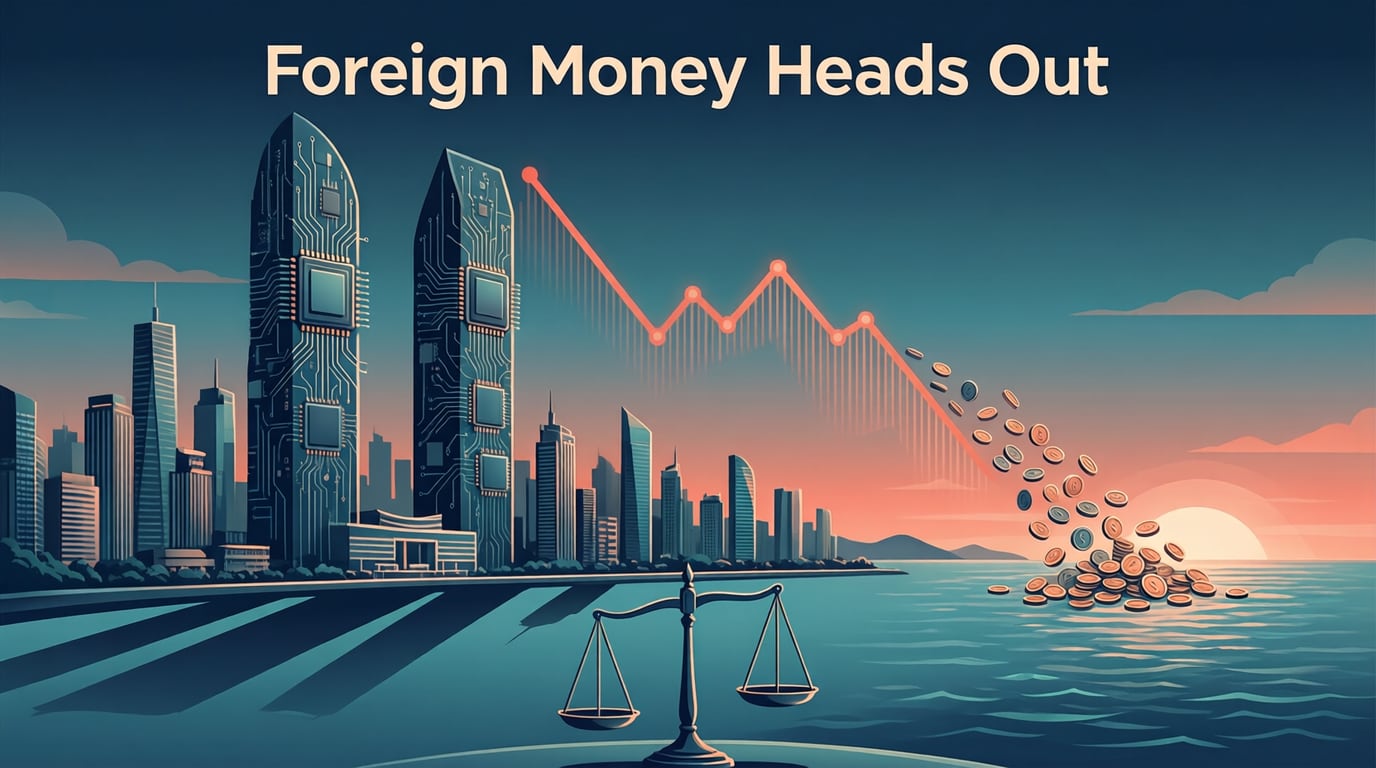
Foreign investors have been net sellers of Korean stocks through September 2026, and market reports tie the selling largely to a jump in US borrowing costs: the Federal Reserve raised rates on Sept 16 for the first time since 2023, and the 10-year Treasury yield moved above 5%. The selling has landed hardest on Samsung Electronics and SK hynix, which made up more than half of the KOSPI’s value in June and sit at the center of a debate over AI spending. On Sept 29, Aju Press reported net foreign selling of about ₩2.94 trillion ($2.17 billion at Aju Press’s conversion) as the index closed at 6,870.81, roughly 25% below its June 22 record.
TL;DR
- Rates: The Fed’s Sept 16 hike and 10-year Treasury yields above 5% lifted dollar yields and weakened the won to 1,382.2 per dollar on Sept 17 (Korea Times).
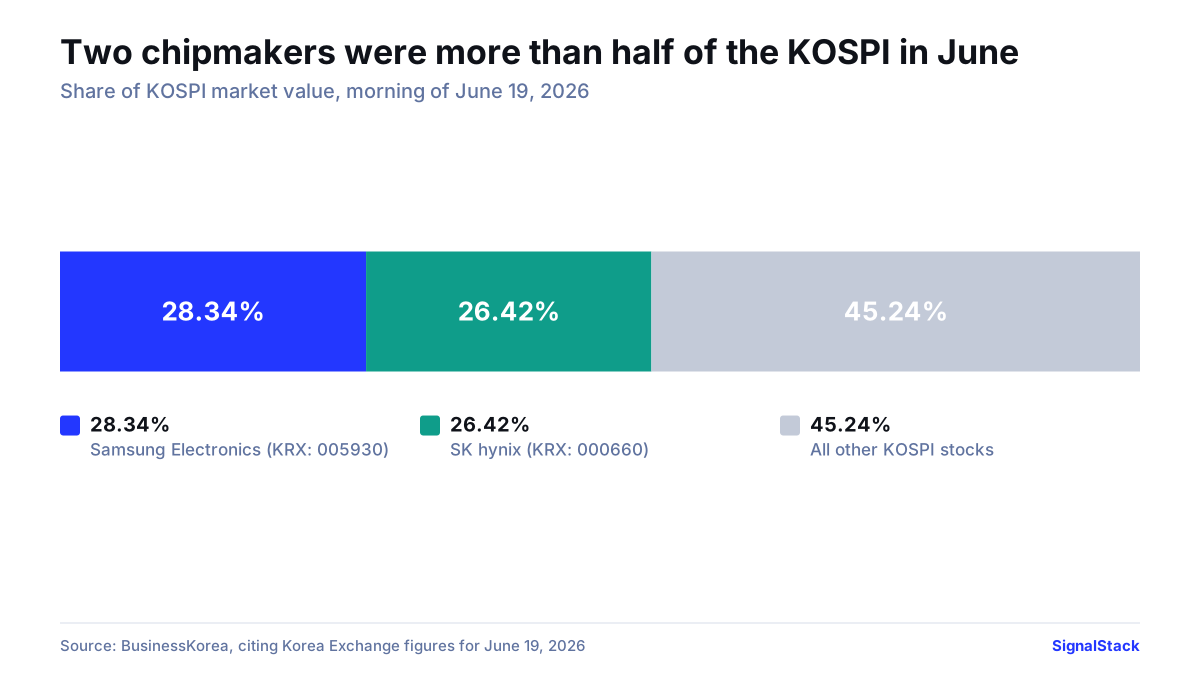
- Concentration: Two chipmakers made up 54.76% of KOSPI value on June 19 (BusinessKorea), so selling them moves the index.
- Structure: MSCI kept Korea in Emerging Markets in June; the new 8 p.m. KRX close is separate from the FX issues it cited.
What happened: September’s selling in numbers
Outlets reported slightly different flow figures, so each is named.
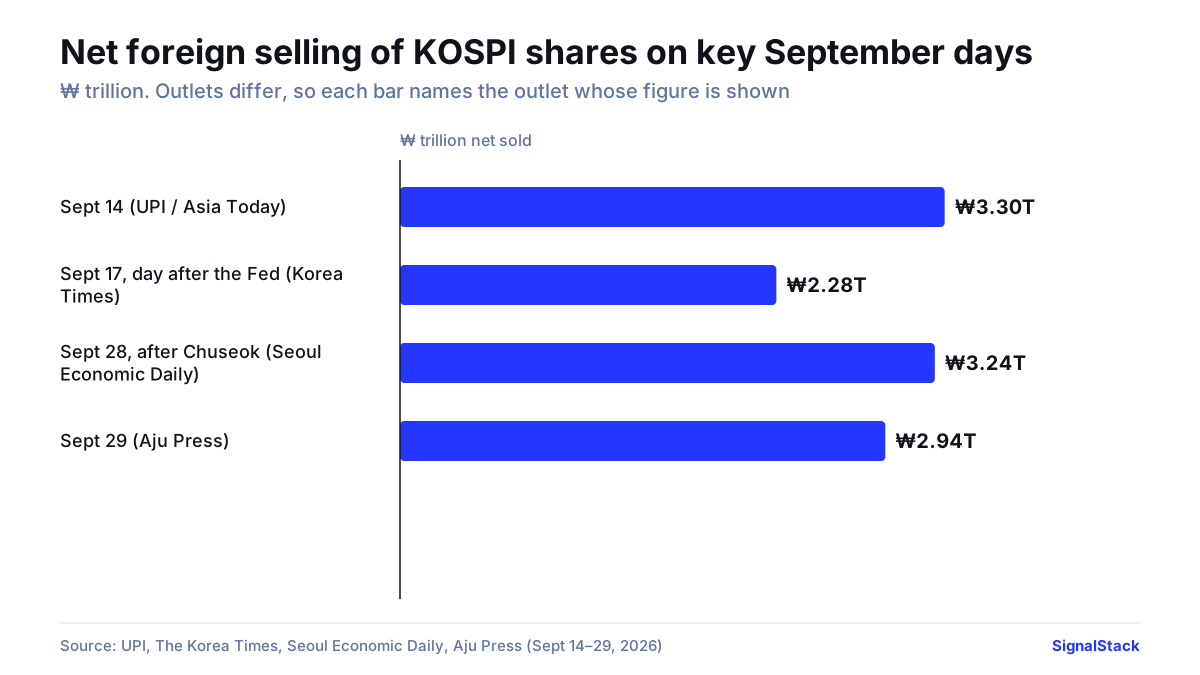
- Sept 14: The KOSPI fell 3.26% to 6,684.37. UPI (reporting Asia Today) put net foreign selling at ₩3.2995 trillion; Seoul Economic Daily said ₩3.9116 trillion. Both called it a fourth straight selling session.
- Sept 17 (day after the Fed): The index closed at 6,715.41, down 0.04%. The Korea Times reported ₩2.28 trillion of net foreign selling.
- Sept 28 (first session after Chuseok): The KOSPI dropped 2.70% to 6,889.74. Seoul Economic Daily reported ₩3.24 trillion of net foreign selling, with foreign and institutional selling concentrated in Samsung Electronics (KRX: 005930), down 5.43%, and SK hynix (KRX: 000660), down 5.05%.
- Sept 29: The index slipped 0.27% to 6,870.81. Aju Press reported ₩2.94 trillion of foreign net selling and called it a third straight session. Seoul Economic Daily (₩2.9030 trillion) and DigitalToday (₩2.9043 trillion) gave slightly smaller figures.
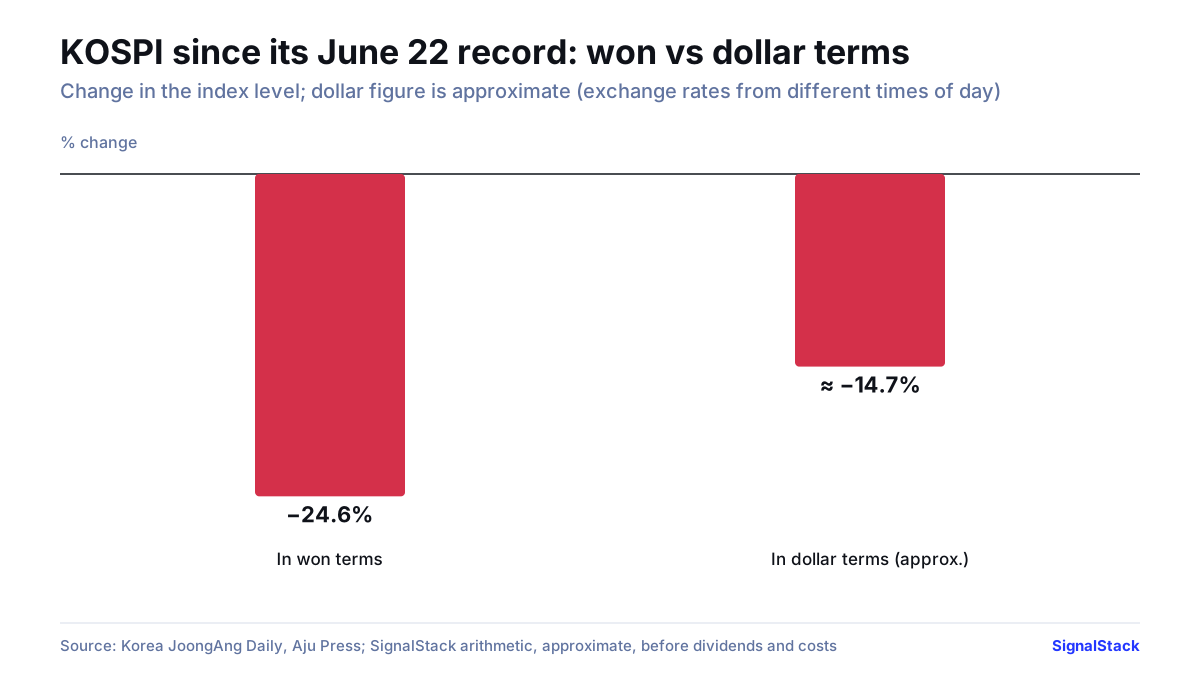
For scale, Korea JoongAng Daily reported the record close of 9,114.55 on June 22, 2026. That puts the Sept 29 close 24.6% lower in won terms.
The four drivers at a glance
| Driver | What happened | Source |
|---|---|---|
| Fed hike and US yields | Target range raised to 3.75%–4.00% on Sept 16 by a 12–0 vote; 10-year yield near 5.24% on Sept 28–29 | Federal Reserve; CNBC; Seoul Economic Daily |
| Chip concentration and AI debate | Two chipmakers at 54.76% of KOSPI value (June 19); calls to slow AI development hit chip stocks on Sept 14 | BusinessKorea; Seoul Economic Daily; UPI |
| MSCI classification | Korea left in Emerging Markets on June 23; won convertibility and FX liquidity cited | MSCI |
| KRX trading hours | Real-time after-market 16:00–20:00 from Sept 14 | Korea Exchange; The Korea Times |
Driver 1: The Fed’s first hike since 2023
The FOMC statement of Sept 16 raised the federal funds target range a quarter point to 3-3/4 to 4 percent by a 12–0 vote, saying “inflation remains elevated.” CNBC reported it was the first increase since July 2023 and that 16 of 18 participants projected another hike. We read the statement, rate changes and dot plot in detail in What the Fed’s September 2026 hike says; upcoming dates are on our FOMC calendar.
Treasury yields did much of the work. NPR noted the 10-year yield topped 5% that week. By Sept 28–29, Seoul Economic Daily cited 5.24%, and Aju Press said the yield hit its highest intraday level since 2007.
What it means for foreign holders: On Sept 17, the Korea Times reported the won lost 13.6 won to 1,382.2 per dollar as the Korea–US rate gap widened back above one percentage point. For anyone measuring returns in dollars, a weaker won cuts a holding’s value even when share prices are flat, as they roughly were that day.
Driver 2: Two chipmakers are half the index
BusinessKorea, citing Korea Exchange figures for the morning of June 19, reported Samsung Electronics at 28.34% of KOSPI market value and SK hynix at 26.42%. We could not find a published September figure. When foreigners sell these two names, the index falls with them, as it did on Sept 28.
In June, CNBC reported that Nomura strategist Chetan Seth and Man Group’s Nick Wilcox saw much of the foreign selling as mechanical: as Korea’s benchmark weight rose, active managers trimmed to stay within risk limits. The same report cited a Goldman Sachs estimate of about $62 billion in net foreign outflows through late May.
The AI debate added pressure. On Sept 14, Seoul Economic Daily linked the chip sell-off partly to AI leaders saying model development should slow. UPI quoted an NH Investment & Securities researcher: no sign yet of chip earnings turning down, but doubt over whether they last. See our Samsung Electronics and SK hynix hubs.
Driver 3: MSCI kept Korea in Emerging Markets
MSCI’s June 23, 2026 review offered Korea only “ongoing monitoring,” with no upgrade consultation. Korea therefore stays in emerging-market benchmarks, the same benchmarks where CNBC’s sources said its rising weight forced trimming.
MSCI’s reasons are specific: the won is not deliverable offshore, and won liquidity in Korea’s extended FX hours is too thin for tight execution. It also cited limited use of omnibus accounts and in-kind transfers, short-selling compliance burdens, and early pre-settlement funding.
What it means for foreign holders: MSCI describes a currency that is harder to convert and hedge than developed-market peers, one of the frictions often grouped under the Korea discount.
Driver 4: The KRX’s 8 p.m. close
The Korea Exchange’s English rule page now lists an after-market session from 16:00 to 20:00, after the 09:00–15:30 regular session. The Korea Times reported that it replaced 10-minute single-price auctions with continuous matching from Sept 14, accepts limit orders only, and initially excludes ETFs and ETNs. Our Korea stock market hours tool converts these times.
The launch fell on the day of the 3.26% drop, but no source we read linked the two. It does matter for reading prices: on Sept 29, Aju Press quoted Samsung Electronics at ₩274,500 and SK hynix at ₩1,786,000 at 5:25 p.m., above their regular-session closes of ₩272,500 and ₩1,765,000 (DigitalToday). MSCI’s June comments on thin evening FX liquidity predate the new session, and MSCI has not published a reassessment.
What the currency did to dollar returns
The won has moved a lot since the record. Korea JoongAng Daily put it at 1,537 per dollar on June 22; Aju Press reported 1,357.60 at 5:29 p.m. on Sept 29. By our arithmetic, the KOSPI’s 24.6% fall in won terms is about 14.7% in dollar terms, before dividends and costs; the rates are from different times of day, so treat this as approximate. The currency swings both ways: The Asia Business Daily reported the won opened at 1,530 on June 4, its weakest open since 2009.
What could go right / What could go wrong
What could go right: UPI’s NH Investment & Securities source said the KOSPI would need several things at once: signs that rates have peaked, calmer Middle East oil prices, and positive AI news. Progress on the FX and access points MSCI listed could, over time, change how index providers treat Korea.
What could go wrong: CNBC reported most Fed officials expect another hike, and a Korea Investment & Securities analyst told the Korea Times that pressure on the won could last until the US midterms in early November. Higher yields, a weaker won, or new doubts about AI spending could weigh most on the two heavyweights, given their combined 54.76% weight in June.
More coverage: Investing in Korea.
FAQ
Q Why are foreign investors selling Korean stocks in September 2026?
A Published explanations point to the Fed's Sept 16 rate hike, 10-year Treasury yields above 5%, and heavy exposure to Samsung Electronics and SK hynix amid an AI-spending debate. MSCI's June decision to keep Korea in Emerging Markets is a longer-running factor.
Q How much did foreign investors sell on September 29, 2026?
A Aju Press reported about ₩2.94 trillion ($2.17 billion at its conversion) of net foreign selling on the KOSPI. Seoul Economic Daily and DigitalToday reported about ₩2.90 trillion.
Q Why is South Korea still an emerging market in MSCI indexes?
A In its June 23, 2026 review, MSCI said the won is not deliverable offshore and FX liquidity in extended hours is thin. It also cited limited omnibus and in-kind transfers, short-selling compliance burdens, and pre-settlement funding.
Q What are the Korea Exchange trading hours now?
A The regular session runs 09:00–15:30 Korea time, and since Sept 14, 2026 a real-time after-market runs 16:00–20:00 for most listed stocks, with limit orders only.
Q How does the won affect returns for foreign investors in Korean stocks?
A Dollar returns combine price and exchange rate. The won rose from about 1,537 per dollar on June 22 to about 1,358 on Sept 29, which by our arithmetic trimmed the KOSPI's dollar loss to about 15%.
Companies in this report: Samsung Electronics , SK hynix
Sources
- Federal Reserve issues FOMC statement (Sep 16, 2026)
- MSCI Announces the Results of the MSCI 2026 Market Classification Review (Jun 23, 2026)
- KOSPI Market: General procedures of trading, trading hours
- KOSPI extends losses as U.S. yields jump, foreign selling weighs
- KOSPI Falls for Second Day as Foreigners Dump $2 Billion in Shares
- Foreign, Institutional Investors Dump $3 Billion; Chip Stocks Plunge 5%
- KOSPI closes at 6,870 despite foreigners selling 2.9 trillion won
- Kospi tumbles 3.3% as foreign investors extend selloff
- KOSPI Tumbles 3.3% on Rate, Oil and AI Slowdown Fears
- Seoul stocks shrug off Fed hike, but won weakens sharply
- Fed approves interest rate hike, signals one more to come this year
- The Fed raises interest rates for the first time in over three years
- Kospi closes at record high above 9,100 as SK hynix leads chip rally
- Samsung and SK hynix's Combined Weight Exceeds 54% in KOSPI
- Kospi, SK Hynix, Samsung Electronics: Why foreign investors are selling
- Korea Exchange to extend trading until 8 pm
- KRX to extend trading hours from Monday
- Won-Dollar Exchange Rate Opens at 1,530 Won for First Time in 17 Years and 3 Months