OpenRocket: Simulation-First Model Rocketry, CG/CP, and Digital Iteration
TLDR
SignalStack Tech Report · March 19, 2026 · Engineering / Simulation / Education
Why this is on SignalStack: we highlight simulation discipline in physical domains—tight feedback loops that mirror good software practice: measure, predict, compare to reality.
OpenRocket remains a practical hub for simulation-first rocketry: experimental optimization workflows and simulation-to-print exports (OBJ/STL) continue to matter as fabrication and launch planning tighten together.
OpenRocket is a Java-based tool for designing, simulating, and analyzing model rocket flights.
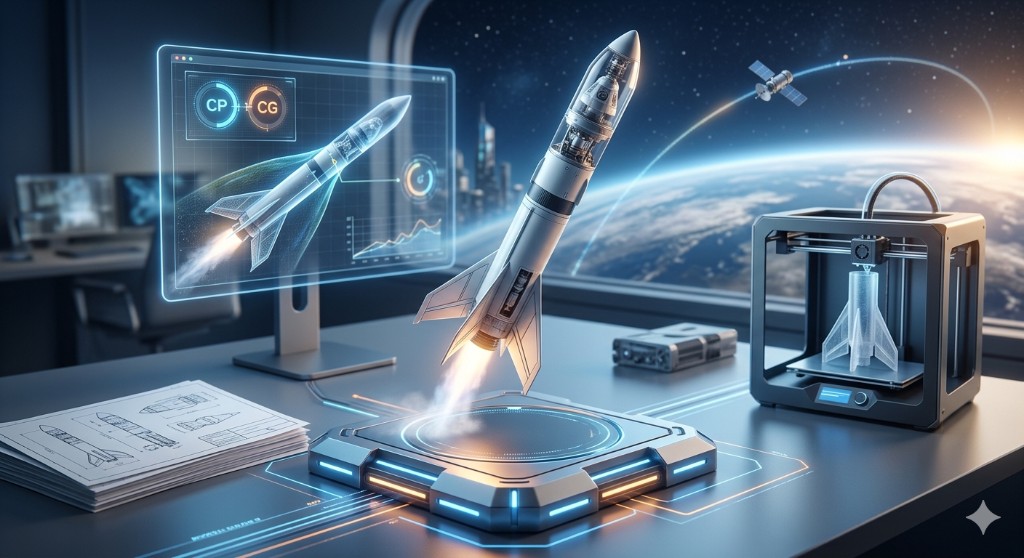
It helps you prototype virtually: configure components, check stability cues like CG and CP, and run simulations before you build.
After each run, you get detailed flight plots—so learning and iteration happen faster.
What happened
In model rocketry, the workflow has always been part science and part craftsmanship: measure, build, test, repeat.OpenRocket shifts that rhythm. It provides a digital lab where you can construct a rocket on screen, set parameters, and predict how it will behave in the air.
Modelers increasingly tie simulations to site-specific conditions: wind, temperature, and launch-site parameters so predicted stability and flight behavior can be stress-tested when weather changes—closer to a small-scale digital twin mindset than a single static design file.
Treat any informal “engine update” or roadmap rumor as unverified until it appears on openrocket.info or official project channels.
Instead of “guess → build → hope,” you move toward “design → simulate → refine,” using the same engineering instincts that drive good software work: feedback loops, repeatable configuration, and data-driven decisions.
Why it matters
OpenRocket matters because it reduces the friction between theory and practice.When you can see how design choices affect flight characteristics, you spend less time on expensive physical trial runs and more time understanding what’s really going on.
For students and hobbyists, that accelerates learning. For experienced builders, it shortens iteration cycles—especially when you’re tuning for stability, drag, and recovery behavior.
And since it’s Java-based, the tool remains broadly accessible across systems where a Java runtime is available.
The AI & Optimization Pivot
One active research angle is **ML-assisted** fin and geometry search: instead of manually nudging fin geometry until you hit the stability margin, prototype scripts and modules explore parameters that move you toward an ideal stability target—then you validate with your own simulations and real flights.The takeaway isn’t “autopilot that replaces engineering.” It’s that the iteration loop becomes faster: design intent → simulation feedback → refined geometry, with less trial-and-error.
Key details at a glance
OpenRocket runs as a Java-based application, so it works wherever Java is available.You start by naming your design, then configure core components like the nose cone, body sections, and transitions.
It comes with a preloaded library of components, materials, and motor options—so simulation choices can match the hardware you plan to fly.
During design, it surfaces stability-critical signals such as Center of Gravity (CG) and Center of Pressure (CP), along with dimensions, mass, and warning indicators.
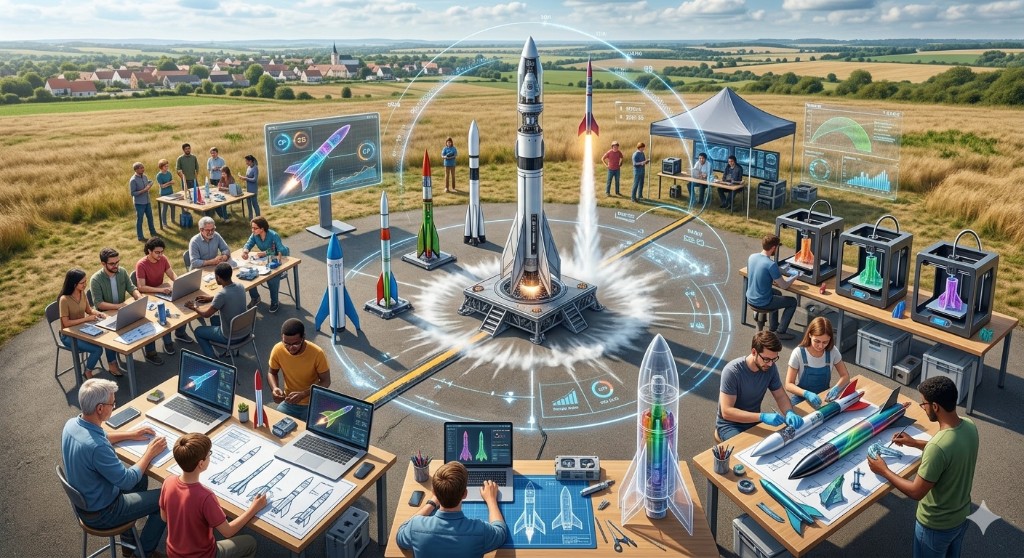
Simulation inputs can include environment and launch conditions like wind speed and launch-site parameters, helping you create more realistic flight predictions.
Closing the loop with 3D manufacturing: the workflow from CAD-like design to print-ready parts keeps improving. With OBJ/STL export and production-minded workflows (including high-temp filament choices where applicable), teams bridge complex fin and body concepts to files that can be sent to printing—before field iteration finishes.
Motor selection is handled via the tool’s motor database, enabling closer alignment between the simulated flight and the engine used in the real rocket.
After simulation, OpenRocket generates flight data plots that cover the timeline of the flight: vertical motion, flight path, altitude, distance, peak location, and parachute deployment.
Beyond trajectory, it also provides deeper dynamics such as stability and drag, including how motor ignition and burnout influence the flight profile.
The practical outcome is simple: iterate digitally to perfect your design, then build with more confidence.
What to watch next
- Disciplined iteration — Change one meaningful parameter, re-run, compare predictions to pad results.
- GSoC 2026 — Multi-stage separation physics and richer staging models on everyday hardware.
- Export and fabrication — OBJ/STL workflows and material choices as simulation-to-print tightens.
The SignalStack angle
What we are not doing: treating hobby software as toy software. What we are doing: praising closed-loop learning—digital-twin thinking at model scale.
1. Same loop as serious engineering
Configure → simulate → plot → revise mirrors how high-assurance teams work. SignalStack’s read: skills transfer—attention to units, assumptions, and validation.
2. AI belongs after physics literacy
Experimental fin-tuning scripts only help once you understand CG/CP and motor curves. Use models to accelerate search, not to skip first principles.
Disclaimer: Informal roadmap or “engine update” claims are not verified here; confirm releases and plans on openrocket.info and official project communications.
FAQ
Q What is OpenRocket used for? A Designing, simulating, and analyzing model rocket flights—by configuring rocket components and generating detailed flight predictions.Q What does OpenRocket show after a simulation? A Flight plots and key outcomes such as vertical motion, flight path, altitude, distance, peak location, and parachute deployment, along with stability and drag insights.
Q Do I need special hardware to run it? A No special rocket-specific hardware is required. OpenRocket is Java-based, so you mainly need a Java runtime on your computer.
Q Can beginners use it? A Yes. Preloaded components and a clear workflow help beginners move from an idea to a testable rocket configuration, while still supporting deeper simulation for advanced users.