Policy
Anthropic Closes the Subscription Backdoor for OpenClaw-Style Agents
TL;DR
SignalStack Tech Report · April 2026 · Policy / Developer tools / AI agents
Why this is on SignalStack: this is not a release note. It is a pricing-and-product boundary move: flat-rate consumer subscriptions were being used as cheap fuel for high-volume, third-party agent loops. Anthropic drew a line—effective April 4, 2026, 12:00 p.m. PT—and the ecosystem is still arguing about whether that line is fair, late, or inevitable.
If you ship or depend on Claude inside external harnesses (OpenClaw, OpenCode-style stacks, or similar), your unit economics just became a first-class engineering problem again.
What happened
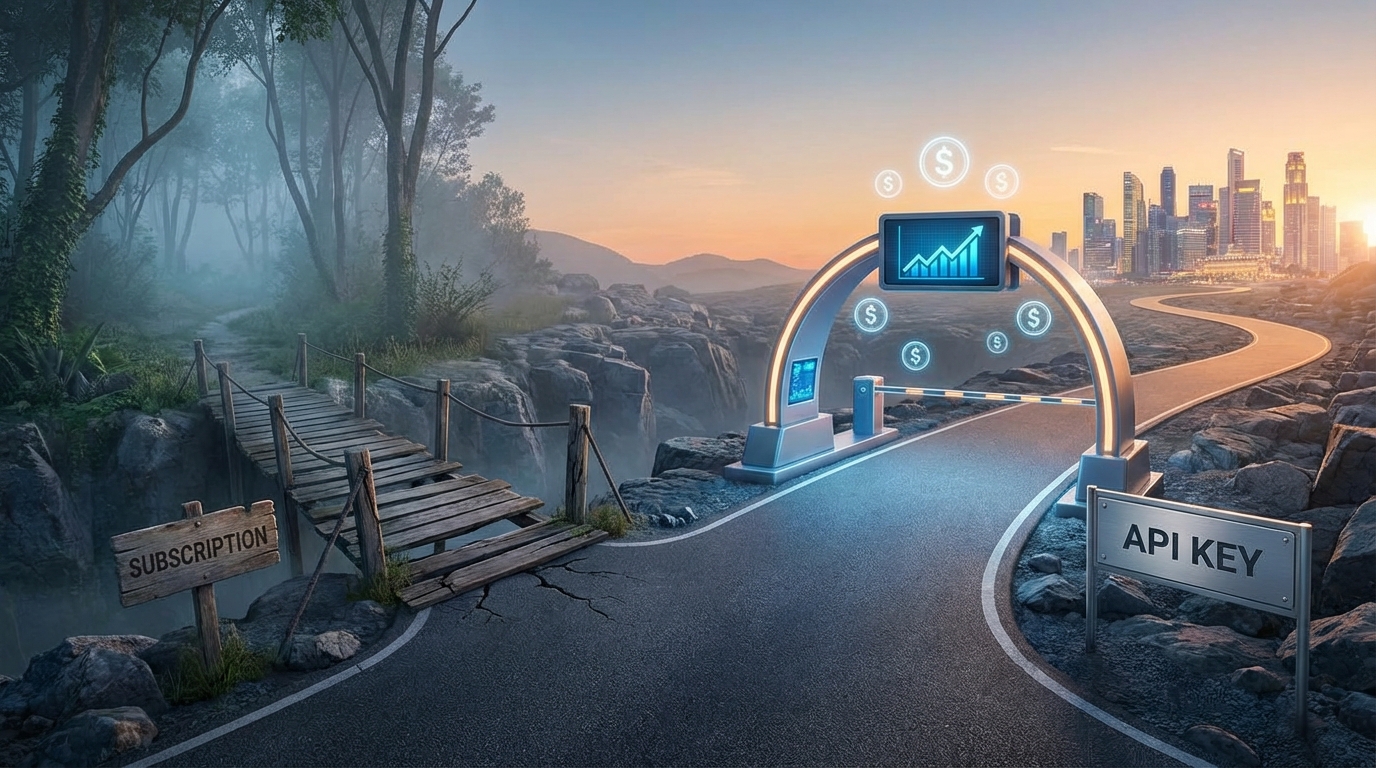
Anthropic stopped treating Claude Pro/Max subscription entitlements as a valid auth path for third-party tools that proxy Claude for heavy, automated use—OpenClaw is the name most people attach to the story, but the framing from Anthropic is broader: subscription SKUs were not built for those usage shapes.
Concrete shifts (cross-check Anthropic commercial terms and community threads such as this HN discussion):
- Cutoff time: enforcement tied to April 4, 2026, 12 p.m. PT (after a short delay following a Friday-evening disclosure—timing that drew criticism from some builders).
- What breaks: workflows that routed subscription-backed Claude through external agent platforms instead of official API / usage products.
- Where users are steered: developer API billing and/or “extra usage” bundles tied to a Claude account—i.e. paths that scale with tokens and load rather than a flat monthly cap.
- Goodwill mechanics (reported): one-time credits tied to subscription value, discounts on bundled usage, and refund options for people caught mid-workflow—details vary by tier and region; treat numbers as reporting, not a contract summary.
Boris Cherny (Claude Code leadership) was the visible voice on the product side; Peter Steinberger (OpenClaw upstream) pushed back publicly—including that Anthropic had granted roughly one week of extra runway after negotiation, and that many users had bought Claude specifically to power OpenClaw-style setups. Builder claims and workarounds are easiest to audit against the public repo and issues, not screenshots.
The real conflict: subscription fiction vs. agent reality
Ignore the brand names for a second. The structural fight is familiar:
SignalStack line: The era of treating flat subscriptions as unlimited inference fuel for third-party agent loops is closing—vendors are forcing a cleaner split between consumer convenience SKUs and metered platform economics.
- Subscriptions sell predictability: “pay $X, use the product like a human would.”
- Agents optimize for throughput: long contexts, tool calls, retries, background loops—often without the same caching and routing assumptions the provider baked into first-party clients.
When a third-party harness sits in the middle, the vendor loses telemetry, optimization levers, and pricing alignment. From Anthropic’s angle, that is not “a few power users”; it is capacity and margin walking out the door under a SKU that was never priced for it.
From a builder angle, the counter is emotional and practical: you encouraged subscriptions, integrations existed in the wild, and a Friday-night → Saturday enforcement window feels like avoiding daylight on a breaking change—especially when users had organized workflows and bills around the old assumption. HN and adjacent threads captured that temperature in real time.
SignalStack’s read: both sides are partly right. The economics were always going to crack; the manners and transition design are what people will remember.
Why it matters
For teams shipping agents
- Cost models: anything that assumed “Claude Max == cheap inference for my daemon” needs a spreadsheet, not a vibe.
- Architecture: official APIs, usage bundles, and first-party surfaces are now the durable integration points—plan for rate limits, billing alarms, and failover models.
For the industry
- This is another datapoint that frontier labs will tighten the seam between consumer subscriptions and platform-scale consumption—peer moves (e.g. other vendors scrutinizing CLI / third-party stacks) belong in the same mental file, even when the public rationale differs.
For trust
- How vendors sunset implicit affordances matters as much as the policy text. Abrupt enforcement windows create FOSS- and indie-tool skepticism even when the underlying math is harsh.
The SignalStack angle
When subscription arbitrage closes, metered inference becomes the budget line—and that pressure ultimately shows up in accelerator and power demand. The hyperscaler capex story in Amazon & NVIDIA — market bridge and the foundry/read-through lens in AMD & TSMC — earnings bridge are still the same macro conveyor: someone pays for every token at scale.
On-device and ecosystem-coupled AI—Apple’s hedge against pure server-side metering exposure—sits in a different risk box; see Apple — AI & China market bridge.
API is the business; subscription is the convenience product. Anthropic is not performing a morality play—it is unbundling SKUs so agent-shaped load rides the rails that match marginal cost. Builders who want durability should assume metering wins and design for it.
Policy Impact Snapshot
| Area | What changed | Why it matters |
|---|---|---|
| Access path | Subscription auth via third-party harnesses constrained | Teams must rewire to official API/usage flows |
| Cost model | Flat-fee assumptions no longer hold for loop-heavy agents | Unit economics and margin forecasts need re-baselining |
| Financial impact (planning band) | Flat ~$20–$200/mo consumer subs ≠ agent-scale token throughput | Community reports often cite multiples higher spend when moving loop-heavy workloads to pay-as-you-go API—treat 5×–10×+ as an illustrative stress band until you meter your own traces; not a quote from Anthropic. |
| Reliability | Transitional uncertainty for independent tooling | Production teams need provider failover and budget controls |
| Governance | Commercial terms now a hard technical constraint | Product planning must include policy-risk review, not just model quality |
What to watch next
- Migration stories: which teams absorb higher API spend, which switch models or vendors, and which architectures add local models or smaller models for loop control.
- Contract language: expect clearer, louder prohibitions and detection around subscription auth in third-party clients—verify against Anthropic commercial terms and API / usage pricing on each release; facts in posts age.
- Community temperature: follow discussion threads (e.g. HN — Tell HN / OpenClaw) for sentiment—not legal authority.
- Builder responses: forks, proxies, and “official-only” integrations—audit claims against OpenClaw GitHub; watch whether the ecosystem consolidates on APIs or splinters into gray-area clients.
Primary links for fact-checking: Primary sources & market bridge below.
General disclaimer. This article is for general information and education only. It is not legal advice and not an authoritative summary of Anthropic’s terms—read the live policies and talk to counsel for compliance. Community cost multiples are anecdotal unless you measure your workload.
Primary sources & market bridge
Issuer and first-party pages first; HN/GitHub for builder context only.
- Anthropic — commercial terms (official): Commercial terms — subscription vs. commercial use, resale, automation.
- Anthropic — API & usage pricing (official): Pricing — API usage — compare metered stacks to flat consumer SKUs.
- OpenClaw — project (developer perspective): github.com/openclaw/openclaw — implementation reality, issues, PRs.
- Hacker News — discussion (community): Tell HN: Anthropic / OpenClaw subscription enforcement — timing and fairness debates; not primary law.
Bridge to this article: Use commercial terms + pricing to interpret enforcement; use OpenClaw and HN to understand builder pushback and migration patterns. For macro silicon and on-device hedges, see the internal links in The SignalStack angle.