Security
Claude Sonnet 5: Anthropic's New Model Narrows AI Performance Gap
Claude Sonnet 5: Anthropic’s New Model Narrows AI Performance Gap
TLDR
Anthropic has released Claude Sonnet 5, a new general-purpose AI model significantly narrowing the performance gap with its top-tier Opus models. Sonnet 5 offers enhanced reasoning, coding, and autonomous agent capabilities at a substantially lower cost, making high-performance AI more accessible. It also features improved cybersecurity safeguards and reduced undesirable behaviors, positioning it as a safer choice for production deployments.
What happened
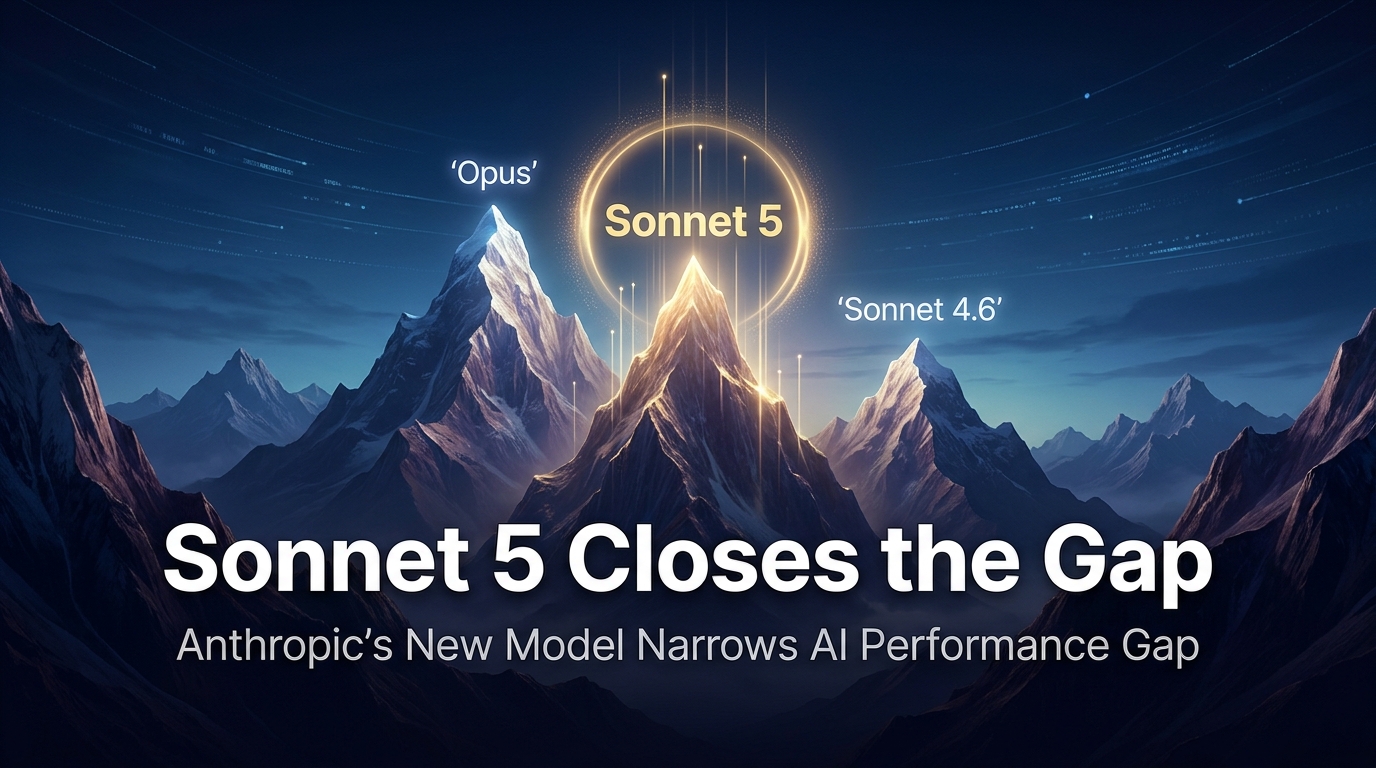
Anthropic released Claude Sonnet 5 on June 30, 2026, marking a significant advancement for its mid-tier artificial intelligence model. This latest iteration represents a substantial leap in capabilities, effectively collapsing the performance difference between Anthropic's more affordable offerings and its flagship Opus models. Sonnet 5 excels in areas like reasoning, coding, and complex tool use, enabling it to autonomously plan and execute multi-step tasks. Anthropic strategically positioned Sonnet 5 to provide near-Opus level performance at a significantly reduced cost, particularly targeting developers building AI agents. The model also integrates robust cybersecurity safeguards, inherited from Opus 4.7 and 4.8, designed to detect and block dangerous activities in real-time. Simultaneously, it demonstrates lower rates of hallucination, sycophancy, and overall undesirable behaviors compared to its predecessor, Sonnet 4.6. Its broad availability across all Claude plans, including as the default for Free and Pro users, underscores Anthropic's intent to democratize access to advanced AI capabilities.Why it matters
The release of Claude Sonnet 5 fundamentally reshapes the economic calculus for enterprises and developers deploying AI in production. By delivering performance approaching that of the premium Opus models at a fraction of the cost, Sonnet 5 enables organizations to implement sophisticated AI agents for tasks like code review, customer support, and autonomous research without incurring prohibitive expenses. This shift democratizes access to advanced AI capabilities, potentially accelerating the adoption of agentic workflows across industries. Furthermore, the enhanced safety features, including real-time cybersecurity safeguards and reduced malicious request fulfillment, address critical concerns around AI governance and responsible deployment. This makes Sonnet 5 a more secure and reliable option for sensitive applications, fostering greater trust in AI systems. The competitive pricing strategy, with an introductory window, also puts pressure on other AI providers to offer similar value, driving innovation and accessibility across the broader AI ecosystem.Key details
Claude Sonnet 5 was released by Anthropic on June 30, 2026. It achieves a 63.2% score on SWE-bench Pro for agentic coding, compared to Opus 4.8's 69.2% and Sonnet 4.6's 58.1%. The model shows an 81.2% score on OSWorld-Verified for computer-use tasks, up from Sonnet 4.6's 78.5%. On the GDPval-AA v2 knowledge-work benchmark, Sonnet 5 scored 1,618, slightly surpassing Opus 4.8's 1,615. Introductory API pricing is $2 per million input tokens and $10 per million output tokens through August 31, 2026, increasing thereafter. Sonnet 5 includes cybersecurity safeguards enabled by default, detecting and blocking dangerous activities in real-time. It exhibits lower rates of hallucination, sycophancy, and undesirable behaviors than its predecessor, Sonnet 4.6. The model is the default for Free and Pro users on Claude.ai and available to Max, Team, and Enterprise customers. Sonnet 5 features a 1 million token context window, crucial for long agentic tasks. While capable of routine security work, it scores lower than Opus 4.8 on dangerous cybersecurity tasks and cannot develop working exploits.
What to watch next
The immediate impact will be observed in how quickly development teams migrate existing agentic workflows to Sonnet 5 or build new ones, especially before the introductory pricing window closes. We should monitor the adoption rates among enterprise customers and the types of applications that emerge leveraging its improved cost-performance ratio. Furthermore, the response from competing AI providers, particularly Google and OpenAI, will be crucial. Will they lower their own mid-tier model pricing or release new, more capable models to counter Anthropic's move? Long-term, watch for how Sonnet 5's enhanced safety features influence the industry's approach to responsible AI deployment and whether this model becomes a new baseline for secure agentic development.The SignalStack angle
SignalStack is highlighting Claude Sonnet 5 now because it represents a pivotal moment for builders, security, and product teams grappling with the cost-capability trade-off in AI deployment. The dramatic reduction in the performance gap between mid-tier and frontier models means that sophisticated AI agents are no longer exclusively for those with top-tier budgets. For security teams, the embedded safeguards and lower propensity for harmful outputs in Sonnet 5 offer a more reliable foundation for integrating AI into critical systems, reducing the attack surface often associated with less constrained models. Product teams can now envision and execute on more ambitious AI features, knowing they can achieve near-Opus performance at a price point that scales for production volumes. This release effectively resets the competitive landscape, urging all teams to reassess their current AI strategies and consider how Sonnet 5 can unlock new efficiencies and product capabilities immediately.FAQ
Q What is Claude Sonnet 5?
A Claude Sonnet 5 is the latest general-purpose AI model from Anthropic, released on June 30, 2026. It is designed to offer significantly improved reasoning, coding, and tool-use capabilities, bringing its performance closer to Anthropic's top-tier Opus models but at a much lower cost. Q How does Claude Sonnet 5 compare to Opus 4.8?
A Sonnet 5 achieves near-Opus 4.8 performance in several benchmarks, notably matching or slightly exceeding it in knowledge-work tasks (GDPval-AA v2). While Opus 4.8 still holds an edge in some complex coding and dangerous cybersecurity tasks, Sonnet 5 offers comparable capabilities for many agentic workflows at a substantially lower price point. Q What are the key safety features of Claude Sonnet 5?
A Claude Sonnet 5 includes cybersecurity safeguards enabled by default, which detect and block dangerous cybersecurity activities in real-time, similar to Opus 4.7 and 4.8. It also shows lower rates of undesirable behaviors, such as hallucination and sycophancy, and is designed to be safer for agentic contexts compared to its predecessor. Q What is the pricing for Claude Sonnet 5?
A Through August 31, 2026, API pricing for Claude Sonnet 5 is $2 per million input tokens and $10 per million output tokens. After this introductory period, the price will increase to $3 per million input tokens and $15 per million output tokens. Q Can Claude Sonnet 5 be used for cybersecurity research?
A While Sonnet 5 has built-in cybersecurity safeguards and can perform routine, non-harmful security work, Anthropic recommends Opus 4.8 for advanced cybersecurity tasks that require fewer restrictions. Sonnet 5 scores lower than Opus 4.8 on dangerous cybersecurity tasks and cannot develop working exploits.