

AI-generated illustration
TL;DR
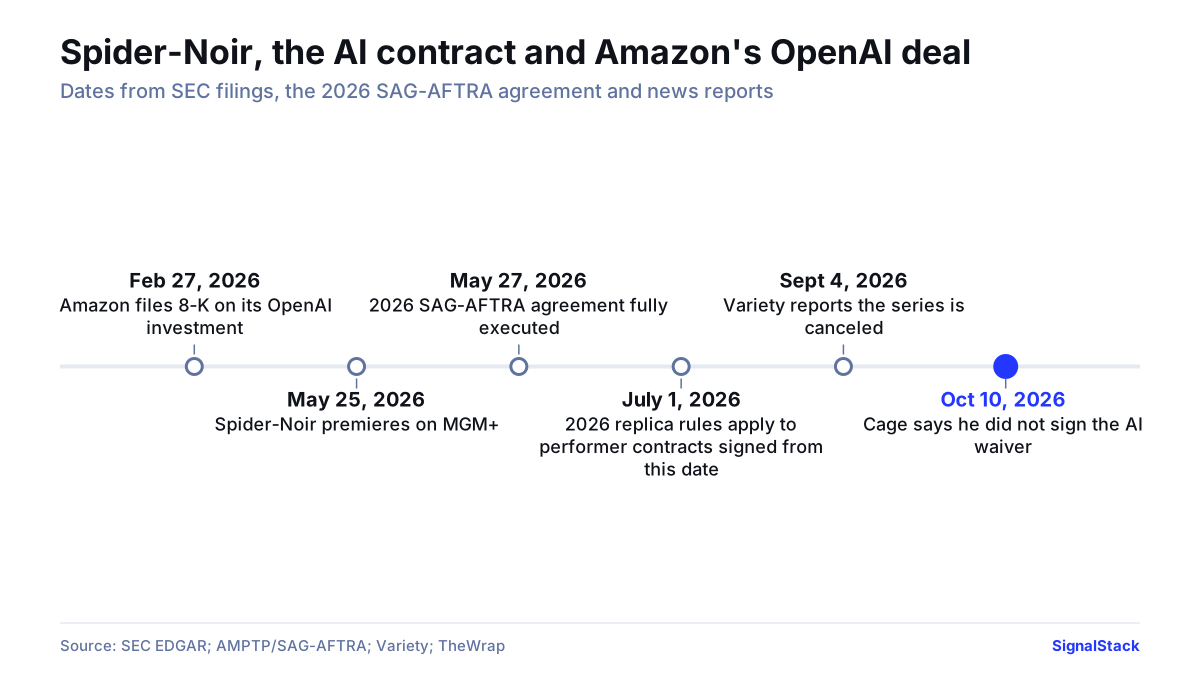
- At New York Comic Con on Saturday, Oct. 10, Nicolas Cage said he “didn’t sign the waiver to let them use AI on ‘Spider Noir’” and is “probably not going to be working with that studio again,” TheWrap reported. He did not describe the waiver’s terms, and Prime Video did not immediately respond to TheWrap.
- The digital-replica rules in the actors’ union contract (Section 64) do not use the word “waiver.” They require the performer’s consent: consent to a scan must be “clear and conspicuous,” and consent to use a replica, where consent is required, must include “a reasonably specific description of the intended use.” SAG-AFTRA’s own FAQ says a producer can still refuse to hire someone who won’t consent to being scanned.
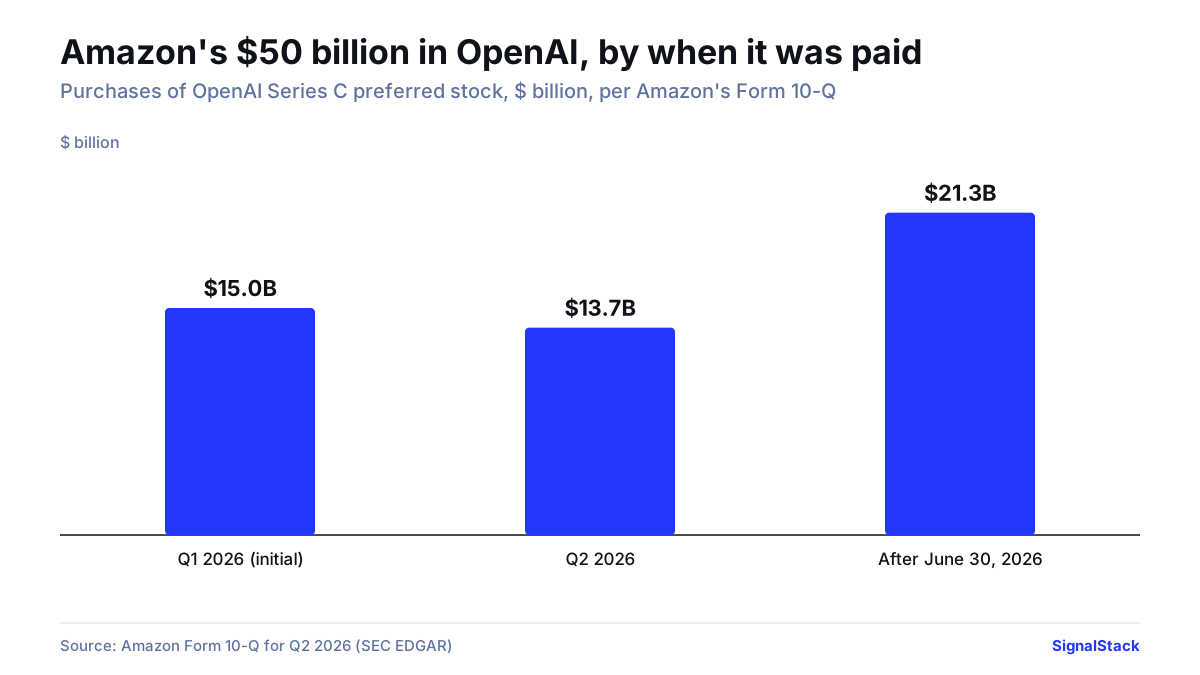
- Cage’s figure of “$50 billion invested in OpenAI” matches Amazon’s filings: $15.0 billion in Q1 2026, $13.7 billion in Q2 and the remaining $21.3 billion after June 30, 2026.
What happened
Cage played Ben Reilly in Spider-Noir, a Prime Video and MGM+ series that premiered on MGM+ on May 25, 2026. Variety reported on Sept. 4 that it had been canceled after eight episodes. The Television Academy lists 11 Emmy nominations and 5 wins for the show, and Variety reported 2.6 billion minutes viewed in its first six weeks, citing Nielsen. When the series was canceled, Cage told Deadline: “For me, one season is perfect.”
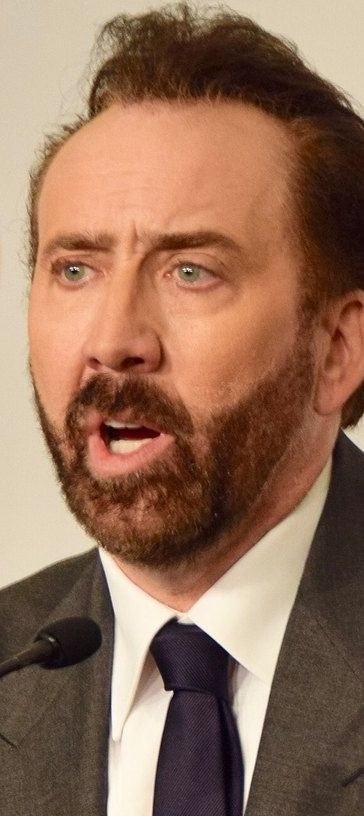
At a Comic Con panel on Oct. 10, he spoke about his relationship with the studio. “Amazon is a very AI-friendly company, to the tune of $50 billion invested in OpenAI,” he said, according to TheWrap. “I am not an AI-friendly actor, so it’s like, connect those dots!” Outlets transcribed his words slightly differently; Variety, The Hollywood Reporter and Deadline carry versions of the same remarks.
Cage did not say whether AI was used on the show, and he did not say the waiver caused the cancellation. He still has another Amazon project: Deadline reports he plays John Madden in the streamer’s film Madden, which premieres Nov. 18. In 2024, Variety reported, citing The New Yorker, that Cage had to “go get a scan done for the show” and said he was terrified of AI.
What the actors’ contract actually says
The AI rules for film and TV actors sit in the SAG-AFTRA TV/Theatrical contracts with the Alliance of Motion Picture and Television Producers (AMPTP). The 2023 contracts first set them; the 2026 Memorandum of Agreement, signed May 27, 2026, keeps the structure and adds to it. Amazon Studios LLC and Metro-Goldwyn-Mayer Pictures Inc. are on its list of producers. Its digital-replica section never uses “waiver”; it speaks of consent. For a replica made from an actor’s own job (an “Employment-Based Digital Replica”), consent comes up at three points; the section also requires consent for digital alteration and for replicas created independently of the actor’s job. Its employment-based replica rules apply to performer contracts entered into on or after July 1, 2026; the 2023 version covered contracts from March 10, 2024. Spider-Noir was made before the 2026 terms, and Cage’s contract date is not public, so it is not known which version, if any, governed his waiver.
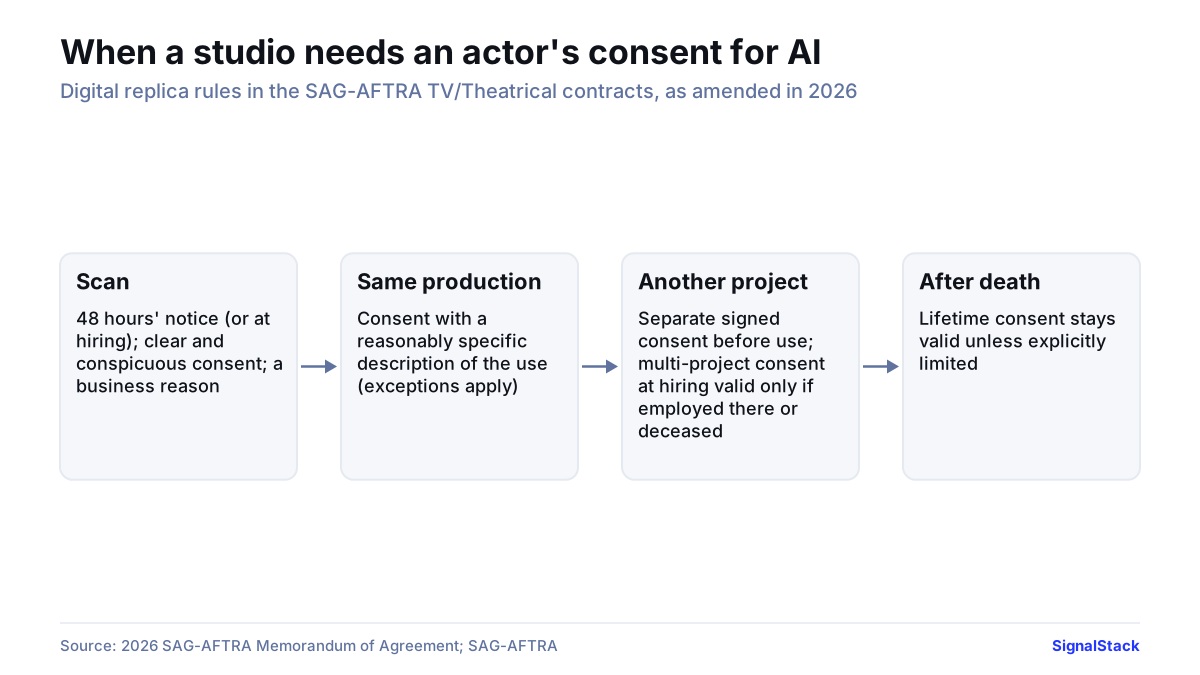
1. Scanning an actor (an “Employment-Based Digital Replica”). This is a digital copy of a performer’s voice or likeness made in connection with their job, with their physical participation, to portray them in scenes they did not actually perform. The producer must give notice at least 48 hours before the scan (or at hiring, if the performer is hired later than that) and get the performer’s consent. The consent “must be clear and conspicuous” and can be “separately signed or initialed” in the employment contract or given in a separate signed writing. The 2026 agreement adds that a producer “must have an articulable business reason” when asking to scan.
2. Using the replica in the same production. Consent “must include a reasonably specific description of the intended use.” No consent is needed when the photography or sound track “remains substantially as scripted, performed, and/or recorded.” The parties confirmed in 2026 that “scripted” means described in a script the performer had on or before the last day they performed the scene.
3. Using it anywhere else. For any other project, consent “must be obtained prior to use in a writing signed by the performer, but not at the time of employment,” except that, for projects identified in advance as a multi-project use, consent may be given at hiring with a description for each project, and it is valid only if the performer is also employed on the other project or has died by the time it starts production. SAG-AFTRA’s explainer on the 2023 contracts, Digital Replicas 101, sums it up: “The producer cannot obtain blanket consent to use your digital replica.”
Separately, digital alteration: a producer must get consent to digitally alter a recorded performance, unless it stays substantially as scripted, performed or recorded. And any consent given in life stays valid after the performer’s death “unless explicitly limited otherwise.”
Uses that need no consent. The contract lists routine post-production changes, such as cosmetics, timing, continuity and added visual or sound effects, as well as dubbing or doubles where the contract already allows them. A footnote also takes replica use out of the use-consent rule when it depicts activities a human could not perform “without serious risk to life or health,” or scenes where the performer is not recognizable, “e.g., a masked character.”
Can a studio refuse to hire an actor who won’t consent to a scan? SAG-AFTRA’s FAQ on the 2023 contracts asks this and answers: “The short answer is yes. Producers have always been able to refuse to hire any person for any reason (except for those covered under applicable law).” What the contract adds is notice in advance and consent that cannot be buried in fine print.
| Step | What the contract requires | Exception |
|---|---|---|
| Scan | 48 hours’ notice; clear and conspicuous consent; (2026) an articulable business reason | Notice at hiring if hired less than 48 hours ahead |
| Use in the same production | Consent with a reasonably specific description of the use | Not needed if substantially as scripted; activities too risky for a human; unrecognizable (masked) scenes |
| Use in another project | Separate signed consent before use, not at hiring | Consent may be given at hiring for projects identified up front as a multi-project use (e.g., a trilogy), with a description for each, valid only if the performer is also employed on the other project or has died by the time it starts production; the too-risky and masked exceptions also apply |
| After death | Lifetime consent continues | Unless explicitly limited |
State law sits on top. California’s AB 2602 makes a contract clause unenforceable for new digital-replica performances fixed on or after Jan. 1, 2025, if three things are all true: it lets a replica replace work the person would have done in person, it lacks “a reasonably specific description of the intended uses” (with a limited exception), and the person had neither a lawyer who negotiated those rights (with the commercial terms set out clearly and conspicuously in a contract or other writing the person signed or initialed) nor a union representing workers who do the proposed work whose contract “expressly addresses uses of digital replicas.”
What Amazon’s filings show
Amazon’s Feb. 27, 2026 Form 8-K described an agreement to invest $15.0 billion and a separate $35.0 billion commitment, and the joint press release furnished as Exhibit 99.1 said Amazon “will also invest $50 billion in OpenAI, starting with an initial $15 billion investment and followed by another $35 billion in the coming months when certain conditions are met.” Amazon’s 10-Q for the second quarter says it invested $13.7 billion of that $35.0 billion commitment in Q2 2026, and “Subsequent to June 30, 2026, we invested the remaining $21.3 billion Commitment Amount in shares of Series C Preferred Stock of OpenAI.” That adds up to the $50 billion Cage cited.
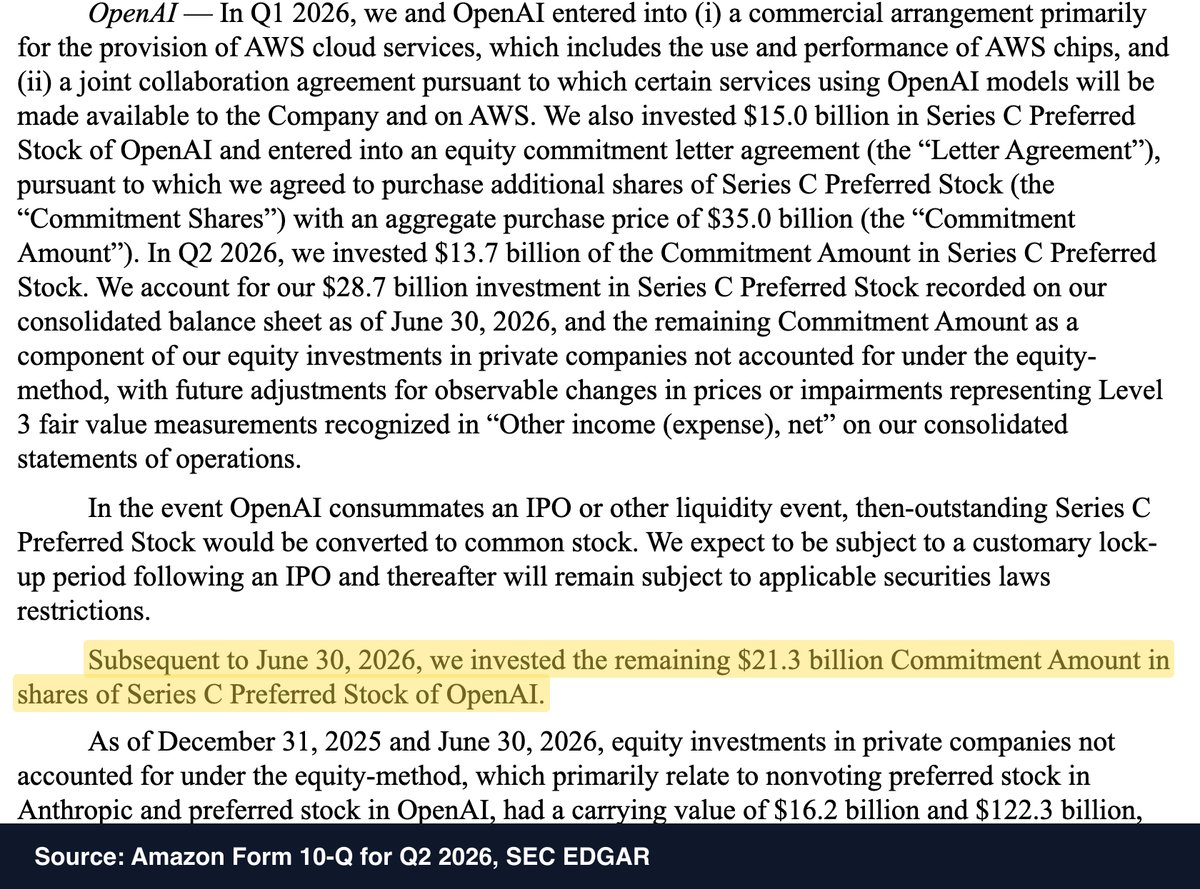
The same filing says Amazon “also invested $10.0 billion in Anthropic nonvoting preferred stock” in Q2 2026. For another entertainment-business story told through filings, see our report on Warner Bros. Discovery’s executive payouts, and more in Entertainment & Media.
What could go right
- For performers, the contract requires advance notice and clear and conspicuous consent, separately signed or initialed (or in a separate signed writing), before a scan, and a reasonably specific description of any replica use that requires consent. The 2026 terms add the “articulable business reason” for scans and cover replicas made without a scan.
- For studios, signed consent with a specific description lets them use the replica as described, subject to the contract’s payment terms.
What could go wrong
- Consent to a scan is a condition the producer can set for hiring. SAG-AFTRA’s own FAQ says producers can refuse to hire someone who won’t be scanned, which leaves actors with a choice between the job and the consent.
- The details of Cage’s waiver are not public, so his account cannot be checked against the document. Prime Video did not immediately respond to TheWrap.
FAQ
Q What did Nicolas Cage say about Amazon and AI?
A At New York Comic Con on Oct. 10, 2026, Cage said he "didn't sign the waiver to let them use AI on 'Spider Noir'" and is "probably not going to be working with that studio again," TheWrap reported. He did not describe what the waiver covered.
Q Did Amazon invest $50 billion in OpenAI?
A Yes, according to Amazon's filings: $15.0 billion in Q1 2026, $13.7 billion in Q2 2026 and the remaining $21.3 billion after June 30, 2026, in OpenAI Series C preferred stock.
Q Can a studio use AI on an actor without permission?
A Under the SAG-AFTRA contract, scanning a performer, using the replica in new scenes and digitally altering a performance generally require the performer's consent. Exceptions include scenes that stay substantially as scripted, performed or recorded and routine post-production fixes; replica use for activities too risky for a human, or for unrecognizable (e.g., masked) characters, is also outside the use rules.
Q Can a studio refuse to hire an actor who won't agree to AI scanning?
A Yes. SAG-AFTRA's FAQ says producers "have always been able to refuse to hire any person for any reason (except for those covered under applicable law)," but they must give at least 48 hours' notice of a scan (or notice at hiring, if hired later) and get clear and conspicuous consent.
Q Why was Spider-Noir canceled?
A None of the reports cited here gives a reason from Amazon; Deadline wrote that the show's "high price tag and respectable but not blockbuster viewership may have led to the cancellation." Variety reported the cancellation on Sept. 4, 2026, after eight episodes, and Cage did not say his refusal of the waiver caused it.
Companies in this report: Amazon
Sources
- 2026 SAG-AFTRA Memorandum of Agreement (fully executed May 27, 2026)
- What We Won on AI: 2026 TV/Theatrical Contracts
- FAQs on AI (2023 TV/Theatrical contracts)
- Digital Replicas 101
- California AB 2602 (2024), Labor Code § 927
- Amazon Form 10-Q for the quarter ended June 30, 2026
- Amazon Form 8-K (Feb 27, 2026)
- Exhibit 99.1, press release (Feb 27, 2026)
- Spider-Noir: nominations and awards
- Nicolas Cage Says He 'Probably' Won't Work With Amazon Again After Refusing to Sign an AI Waiver for 'Spider-Noir'
- Nicolas Cage Says He's 'Probably Not' Working With Amazon Again After Refusing to Sign AI Waiver for 'Spider-Noir,' Teases Joining 'True Detective'
- Nicolas Cage on True Detective, AI and Amazon after Spider-Noir
- 'Spider-Noir' Canceled by Amazon Prime Video After One Season
- Nicolas Cage Won't Work With "AI-Friendly" Amazon; Teases 'True Detective'
- Nicolas Cage Reacts To 'Spider-Noir' Cancellation (Exclusive)
- Nicolas Cage Is 'Terrified' of AI, Got Digitally Scanned for Spider-Man Noir




_(cropped).jpg)