

AI-generated illustration
TL;DR
- On Oct. 9, 2026, Deno creator Ryan Dahl said the entire Deno team is joining Cloudflare. Cloudflare’s post is tagged “Acquisitions”; The New Stack reports that terms were not disclosed.
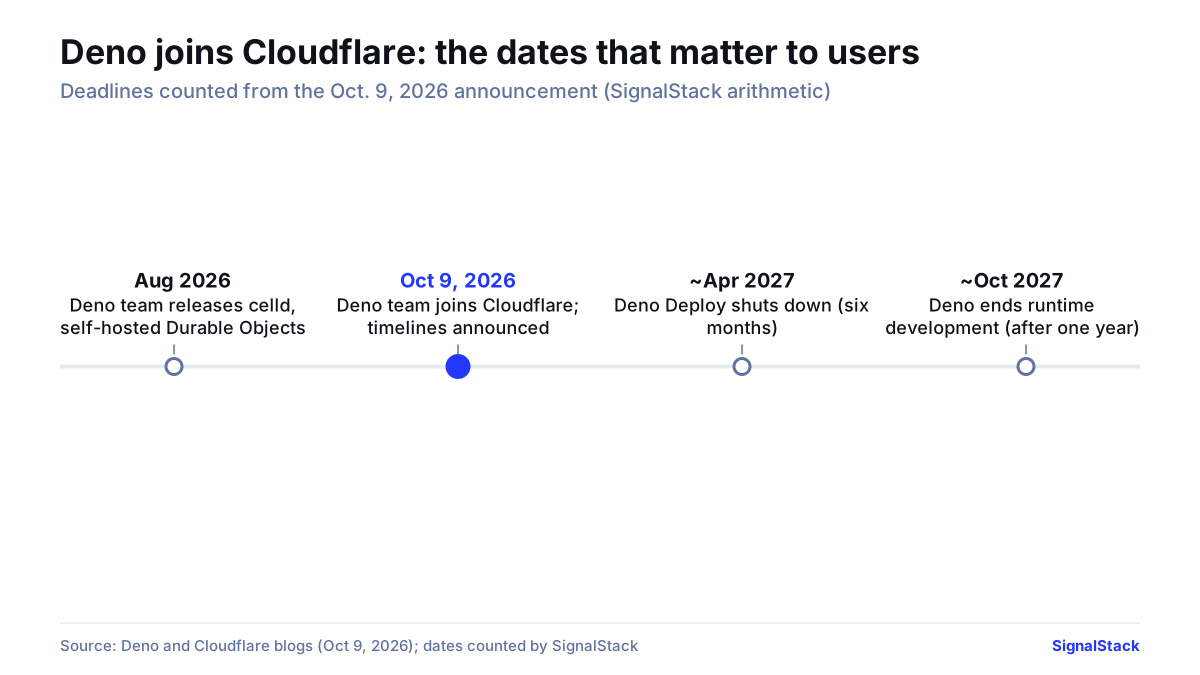
- Deno’s post sets the timelines: the Deno runtime gets monthly bug-fix and security releases for one more year, after which Deno will end its development of it (it stays open source); Deno Deploy runs for six more months, then shuts down; JSR will keep operating, with its infrastructure moving to Cloudflare.
- By SignalStack’s count from the Oct. 9 announcement (Deno gave no calendar dates), that puts the Deno Deploy shutdown around April 2027 and the end of Deno’s runtime development around October 2027. Per the joint Cloudflare post, the team’s new work is merging its self-hosting project, celld, into Cloudflare’s open-source workerd runtime.
What happened
Two posts went up on Oct. 9. On the Deno blog, Dahl wrote that the whole team is joining Cloudflare and that Deno will put its future development into a shared platform with Cloudflare’s Workers and Durable Objects teams “rather than continuing to develop a separate runtime and hosting service.” He acknowledged that this is “a consequential change for people who have built on Deno.”
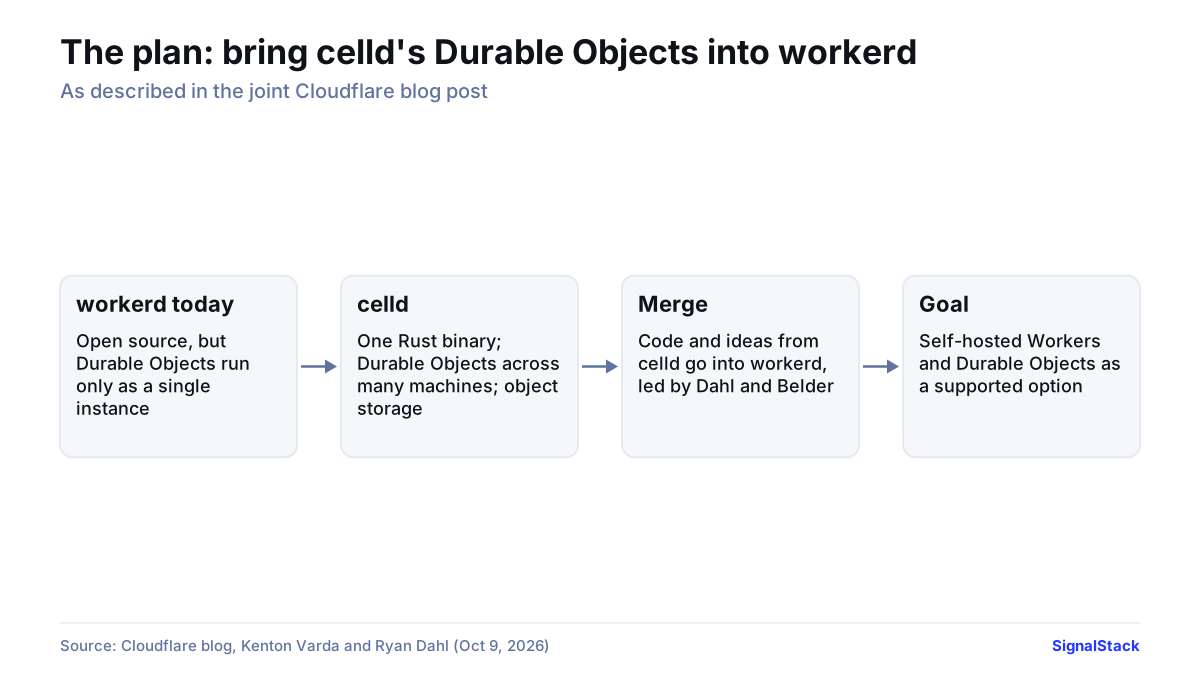
A joint post on Cloudflare’s blog, by Dahl and Cloudflare engineer Kenton Varda, says Dahl and Deno co-creator Bert Belder will lead an effort to make self-hosting workerd “a first-class supported way” to run apps written for the Workers programming model, by merging code and ideas from celld into workerd. The New Stack reports that the terms were not disclosed and that Deno had raised about $26 million across two rounds.
What happens to each Deno product
Deno’s post lists the commitments. The dates in the right-hand column are SignalStack’s arithmetic from the Oct. 9 announcement, not dates Deno or Cloudflare gave.
| Product | What Deno’s post says | Counting from Oct. 9, 2026 |
|---|---|---|
| Deno runtime | Supported for one more year with monthly bug-fix and security releases; then Deno ends its development. It remains open source, and others may continue it | Around October 2027 |
| Deno Deploy | Keeps operating for six months, then shuts down; migration support for paying customers moving to Cloudflare Workers | Around April 2027 |
| JSR (package registry) | Continues operating; its infrastructure moves to Cloudflare | No end date given |
| rusty_v8 (Rust bindings to V8) | Support continues, with work toward integrating it into workerd | No end date given |
| celld | Being merged into workerd, per Cloudflare’s post | No end date given |
What the two posts say about why
Deno’s side. Dahl’s Cloudflare post says building and running Deno Deploy showed him how complex cloud infrastructure can get, with “multiple public clouds, multiple databases, and deeply entangled services.” With celld he wanted the opposite: one Rust binary whose only external dependency is object storage, running Durable Objects across many machines. On the Deno blog he says the need for better abstractions is “especially acute with AI,” and that Durable Objects bring together capabilities “particularly useful for agent harnesses”: inexpensive serverless execution, persistent state and WebSockets.
Cloudflare’s side. Varda writes that workerd, the open-source Workers runtime, is “the same code we run in production,” but that its Durable Objects support has only ever worked as a single instance, fine for local testing but unable to scale. Cloudflare’s own production routing for Durable Objects, he writes, is not something a self-hoster would want, and the company never found time to build a separate version for self-hosters. celld, released by the Deno team in August, was “designed to be fully compatible” with Workers and Durable Objects while focused on being self-hostable and scalable, which is why Cloudflare was “delighted.”
Varda also addresses the claim that Workers is designed for lock-in. He says customers like Shopify told Cloudflare they could not build on it unless the Workers runtime was open source, and that some former customers have left Cloudflare by running workerd themselves.
The licenses
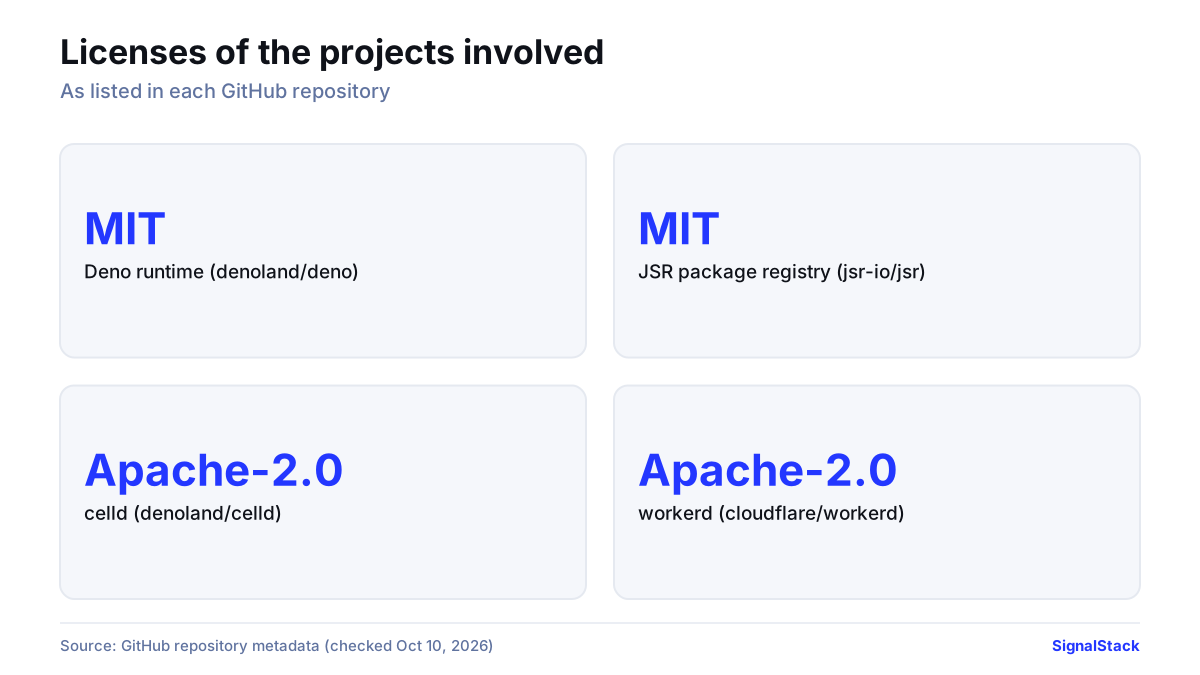
GitHub lists the Deno runtime (denoland/deno) and JSR (jsr-io/jsr) under the MIT license, and both celld (denoland/celld) and workerd (cloudflare/workerd) under Apache-2.0. Both are open-source licenses that let others fork and continue the code, which is what Deno’s post invites for the runtime.
Background
Deno was Dahl’s second JavaScript runtime after Node.js. According to The New Stack, it launched in 2018 as his answer to Node.js’s security and dependency-management problems, and Deno Deploy later made it a direct rival to Cloudflare Workers. The same outlet points out that Anthropic bought Bun, another Node.js alternative, in December 2025 and pledged to keep developing it as open source, a contrast with the planned end of Deno’s runtime work. (The New Stack discloses that its owner, Insight Partners, is an investor in Deno and Anthropic.)
For other developer-ecosystem stories, see our reports on the Axios npm supply-chain attack and the glossary entry on software supply-chain attacks. More is in Tech & Security.
What could go right
- Deno’s post commits to a year of monthly bug-fix and security releases for the runtime, and says paying Deno Deploy customers get migration help to Cloudflare Workers.
- JSR keeps running, and rusty_v8 support continues.
- Cloudflare says Dahl and Belder will lead work to make self-hosted workerd a first-class supported option, with “more announcements” in the coming months.
What could go wrong
- Deno Deploy users have six months to move; Deno’s post commits migration support to paying customers moving to Workers and does not mention free-tier users.
- After the one-year window, the runtime’s future depends on others continuing it; Deno’s post says it welcomes that but names no successor.
- Cloudflare’s post calls the self-hosting push “a new effort” and promises more announcements in the coming months; Varda wrote that his own attempt last spring at self-hosted Durable Objects routing, before celld, “didn’t work.”
FAQ
Q Is Deno being discontinued?
A Deno says it will support the runtime with monthly bug-fix and security releases for one more year and then end its development. The runtime remains open source under the MIT license, and Deno says others are welcome to continue it.
Q When does Deno Deploy shut down?
A Deno's Oct. 9, 2026 post says Deno Deploy will keep operating for six months before shutting down, which is around April 2027 by SignalStack's count from the announcement (Deno gave no calendar date). Paying customers get migration support to Cloudflare Workers.
Q What happens to JSR?
A JSR will keep operating, with its infrastructure moving to Cloudflare, according to Deno's announcement.
Q How much did Cloudflare pay for Deno?
A Neither Deno's nor Cloudflare's post discloses terms; Cloudflare tagged its post "Acquisitions." The New Stack reports that terms were not disclosed and that Deno had raised about $26 million across two funding rounds.
Sources
- Deno is joining Cloudflare (Oct 9, 2026)
- Deno is joining Cloudflare (Kenton Varda and Ryan Dahl, Oct 9, 2026)
- denoland/deno repository (license)
- denoland/celld repository (license)
- jsr-io/jsr repository (license)
- denoland/rusty_v8 repository
- cloudflare/workerd repository (license)
- Cloudflare acquires Node.js creator's startup that copied its serverless playbook
- Deno is joining Cloudflare