# YouTube's AI Music Label: What It Says and Who Gets It
> YouTube Music began labeling songs created primarily with generative AI on Oct. 14, 2026. What the label says, how tracks get it, and what YouTube left unsaid.
**TL;DR**
- YouTube Music started rolling out labels on Oct. 14, 2026 for songs "created primarily using generative AI," YouTube said on its official blog. The label sits on the player page; YouTube says it will also come to the main YouTube app, with no date given.
- The badge reads "AI" and opens a "How this was made" panel saying "Made with AI: This audio was altered or fully generated using AI," according to 9to5Google. Labels draw on music partners' declarations and on YouTube's own signals, which it says it will rely on alone when a partner declares nothing.
- The announcement says nothing about earning eligibility or recommendations; YouTube's rules for labeled videos say a label alone changes neither. By contrast, Spotify said on Aug. 11 that it would leave "AI Persona" artists out of recommendations by default, and Deezer excludes detected AI tracks from its recommendations.
## What did YouTube announce on Oct. 14?
YouTube's post, "YouTube Music adds new labels for AI music," makes four points:
- **What gets labeled:** songs created primarily with generative AI. Its one example is a generative model producing both the composition and the vocals.
- **Where:** a label on the YouTube Music player page for tracks where, in YouTube's words, "AI played a significant role." Tapping it opens a short menu with more information. The labels "will also expand to the main YouTube app."
- **How tracks are identified:** YouTube says it is working with music partners and using its own detection tools, under the labeling principles it already applies across YouTube.
- **Why:** YouTube says listeners told it they want transparency when they are hearing an AI-generated track.
The post names no countries, no schedule beyond "starting today," and nothing about Shorts or payments.
9to5Google, which showed the label in the app, places it below the song name, next to the artist or channel. The Verge wrote that it doesn't appear to cover every use of AI tools in music. The "Made with AI" wording matches a disclosure type in YouTube's Help Center for content "meaningfully altered or synthetically generated" with generative AI tools.
## How does a song get the label?
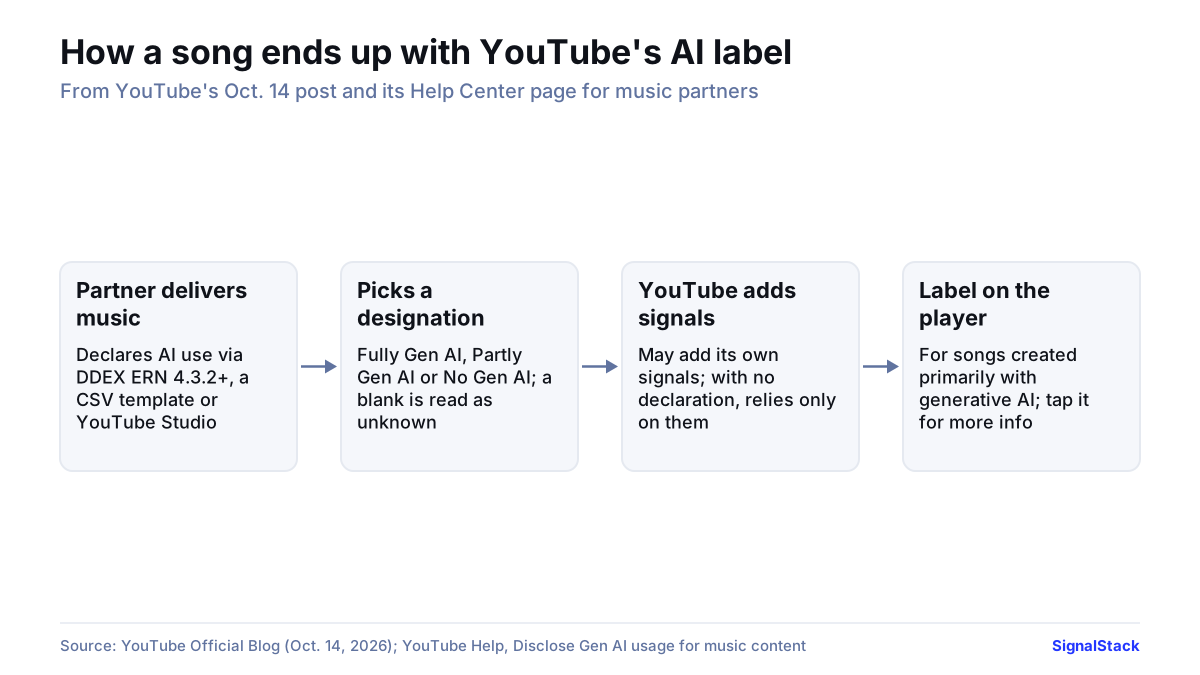
The mechanics are in a YouTube Help Center page for music partners, "Disclose Gen AI usage for music content":
- **How to declare:** music partners flag AI use in DDEX ERN 4.3.2 or later, in YouTube's CSV delivery templates under their SRAV terms, or in YouTube Studio's attributes section.
- **Three choices:** Fully Gen AI (all of the content), Partly Gen AI (part of it) or No Gen AI (none). A blank is read as unknown, unless YouTube can decide from other signals.
- **YouTube's own signals:** YouTube may add signals to partners' declarations. If a partner gives no generative AI information at all, YouTube says it will rely only on those signals and may mark the content fully or partly Gen AI.
- **Who decides what counts:** the page leaves it to partners to apply the DDEX definitions to their own content, with example cases:
| Designation | YouTube's example cases |
|---|---|
| Fully Gen AI | A user prompts an AI music generator and downloads the result; an artist has a model generate composition, instrumental performance and vocals |
| Partly Gen AI | An artist generates one or more layers, such as a bassline, then records live vocals and instruments; fully human audio with an AI-generated music video |
| No Gen AI | Standard pitch correction such as Auto-Tune on a live vocal; automated AI mastering |
Neither the Oct. 14 post nor the partner page says which designation puts a label on the player. The post's test is a song created "primarily" with generative AI.
Partners apply the DDEX definitions to their own tracks; YouTube may add its own signals; it has not said which designation triggers the label. Source: YouTube Official Blog (Oct. 14, 2026); YouTube Help, Disclose Gen AI usage for music content.
## What changes for artists, labels and creators?
YouTube's rules for creators uploading their own videos cover music: its Help page "Disclosing use of GenAI content" requires disclosure when AI-made music is the main focus of a video. For AI-generated music, the page says a label may also appear in the video player. It also says:
- YouTube may label content automatically if it was made with YouTube's own AI tools, carries C2PA metadata, or is detected by its internal systems as AI-generated or altered.
- Creators who consistently choose not to disclose may get a label applied manually, or penalties up to content removal or suspension from the YouTube Partner Program.
On money, the Oct. 14 post is silent. The Help page says disclosing AI content alone won't limit a video's audience or affect its eligibility to earn money. YouTube's May 27, 2026 post on AI labels said a disclosure label by itself changes neither a video's recommendations nor whether it can earn money. Both statements are about videos; the music post does not say whether they extend to tracks on YouTube Music.
That May 27 post also moved the label for photorealistic content that is meaningfully AI-altered or AI-generated to just below the player, or onto the video itself for Shorts; for unrealistic, animated or slightly altered content, viewers can find the disclosure in the expanded description.
On voices, YouTube's likeness detection tool, which YouTube said on May 19 was expanding to all creators 18 and older, currently matches only enrolled creators' faces, its Help page says. It says some users can now record a speaking voice sample, and that it aims to extend detection to audio in the near future.
## How do Spotify, Deezer, Apple Music and Bandcamp compare?
Each row comes from the company's own post, except Apple Music (The Hollywood Reporter, from an email to partners):
| Platform | What is marked or limited | Recommendations | Source |
|---|---|---|---|
| YouTube Music | Songs created "primarily" with generative AI; player label, main YouTube app later | Not addressed in the Oct. 14 post | YouTube blog, Oct. 14, 2026 |
| Spotify | "AI Persona" badge, announced for mid-September, on artist profiles whose identity may be AI-generated | Spotify says it will leave them out of editorial and algorithmic recommendations by default | Spotify Newsroom, Aug. 11, 2026 |
| Deezer | Tags AI-generated music; a toggle to drop fully AI-generated music from search is due before the end of 2026 | Detected AI tracks excluded from algorithmic recommendations and editorial playlists | Deezer Newsroom, Oct. 13, 2026 |
| Apple Music | Labels "later this year"; tags will be required where AI created a material portion | Not stated in the reported email | The Hollywood Reporter, Aug. 20, 2026 |
| Bandcamp | Music generated wholly or in substantial part by AI is not permitted | Not applicable | Bandcamp blog, Jan. 13, 2026 |
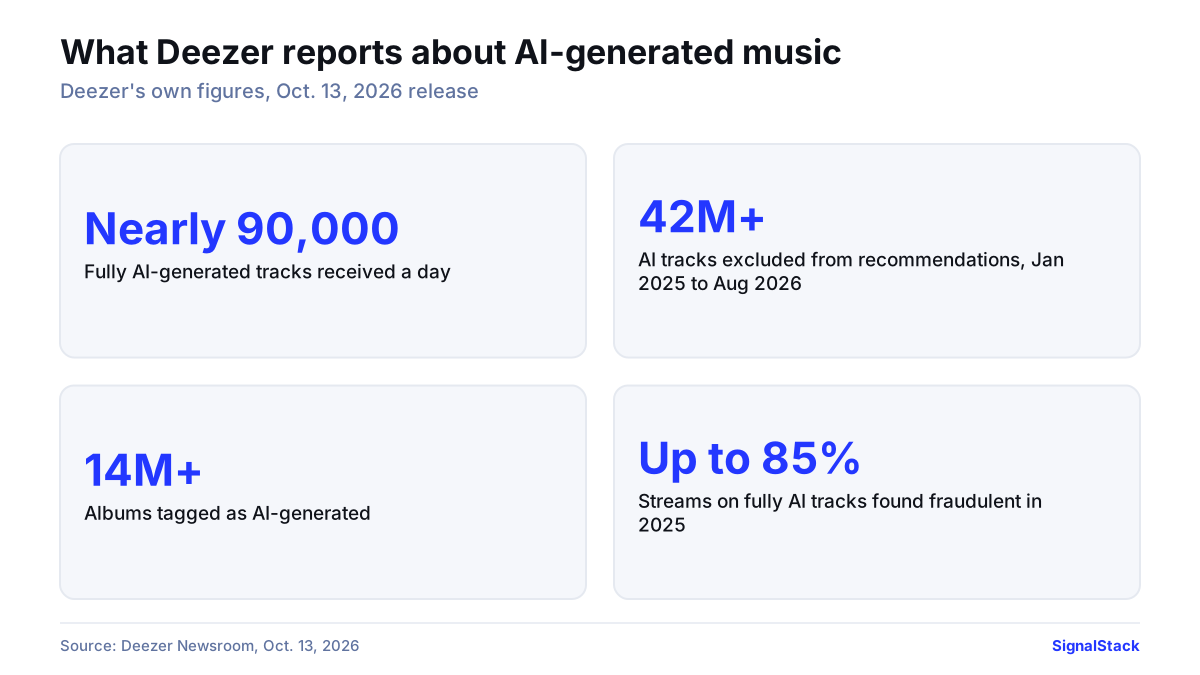
Deezer's Oct. 13 release says it receives nearly 90,000 fully AI-generated tracks a day, more than half of daily deliveries on peak days. It says it kept over 42 million tracks it detected as AI-generated out of recommendations from January 2025 to August 2026, and has tagged more than 14 million albums. Deezer says fully AI-generated music makes up 1% to 3% of its streams, and that up to 85% of streams on those tracks in 2025 were fraudulent; it excludes manipulated streams from royalty payments. On July 21, Deezer said it would take down AI tracks used for streaming fraud and those not streamed for six months or more.
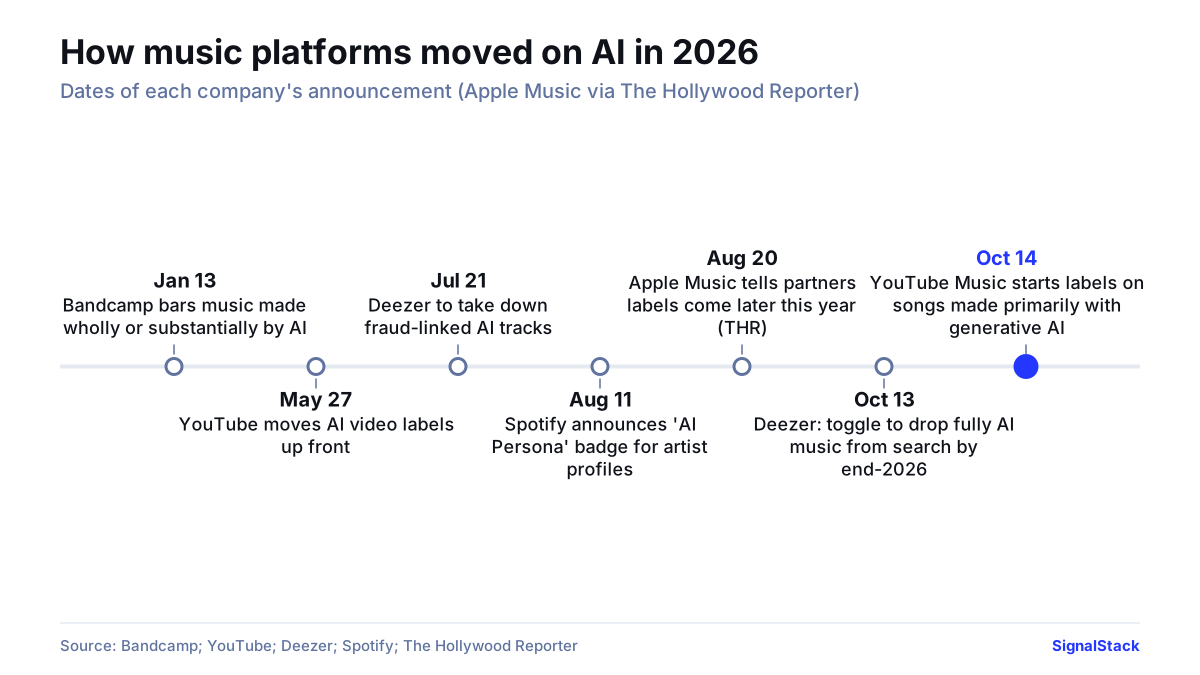
Deezer says fully AI-generated music is 1% to 3% of its streams. Source: Deezer Newsroom, Oct. 13, 2026.YouTube Music's label arrived the day after Deezer announced its AI filter. Source: Bandcamp; YouTube; Deezer; Spotify; The Hollywood Reporter.
## What could go right / What could go wrong
What could go right, by YouTube's stated aims:
- YouTube says the goal is clear information for listeners, one tap from the player.
- Partners get standard fields (DDEX, CSV, Studio) to declare AI use, and YouTube says it may designate undeclared tracks from its own signals.
What could go wrong, on the published record:
- YouTube leaves it to partners to apply the definitions, and has not published which designation leads to a label or how its own signals work.
- The Oct. 14 post gives no date for the main YouTube app and lists no countries.
- YouTube's Help page says voice matching in likeness detection is still being rolled out.
Related: [Netflix's generative AI use in about 300 titles](/blog/netflix-generative-ai-300-titles-what-filings-say/), [Nicolas Cage's AI waiver under SAG-AFTRA rules](/blog/nicolas-cage-ai-waiver-amazon-spider-noir-sag-aftra-rules/), YouTube owner [Alphabet's earnings page](/earnings/alphabet/) and our [entertainment section](/category/entertainment/).
## FAQ
Q Does YouTube label AI-generated music?
A Yes. YouTube Music began rolling out labels on Oct. 14, 2026 for songs created primarily with generative AI, shown on the player page. YouTube says the labels will also come to the main YouTube app; it has not given a date.
Q What does the YouTube Music AI label say?
A According to 9to5Google, an "AI" badge below the song name opens a "How this was made" panel reading "Made with AI: This audio was altered or fully generated using AI," with a link to more information.
Q How does YouTube know if a song is AI-generated?
A Music partners can declare Fully Gen AI, Partly Gen AI or No Gen AI when delivering tracks. YouTube says it may add its own signals, and if a partner declares nothing it relies only on those signals.
Q Can AI-generated songs still make money on YouTube?
A The Oct. 14 announcement does not address payments. YouTube's Help Center says disclosing AI content alone won't affect a video's eligibility to earn money; YouTube has not said whether that applies to tracks on YouTube Music.