# NYC's Click-to-Cancel Rule: What Changes for Subscriptions
> New York City's Click-to-Cancel rule took effect Oct. 1, 2026. What the rule requires, who is exempt, the fines, and how it compares with state and FTC rules.
**TL;DR:** Since Oct. 1, 2026, any business that sells a subscription to a consumer in New York City must let that person cancel in the same way they signed up, and just as easily. The city calls itself the first U.S. municipality to adopt a Click-to-Cancel rule. Violations start at a $525 fine, and a business found in violation also owes back anything it charged after the customer's first attempt to cancel. Most of the core wording copies New York State's existing auto-renewal law. DCWP says the city rule follows the state law except in three areas it expanded or changed: penalty amounts, refunds measured from the customer's first cancel attempt, and the channels for cancelling. In practice, the city requires an online cancel option for in-person sign-ups, while state law accepts either an online or a phone option. Banks, companies regulated by New York's Department of Financial Services and a few other categories are exempt. Wireless carriers asked to be exempted and were turned down.
## What happened
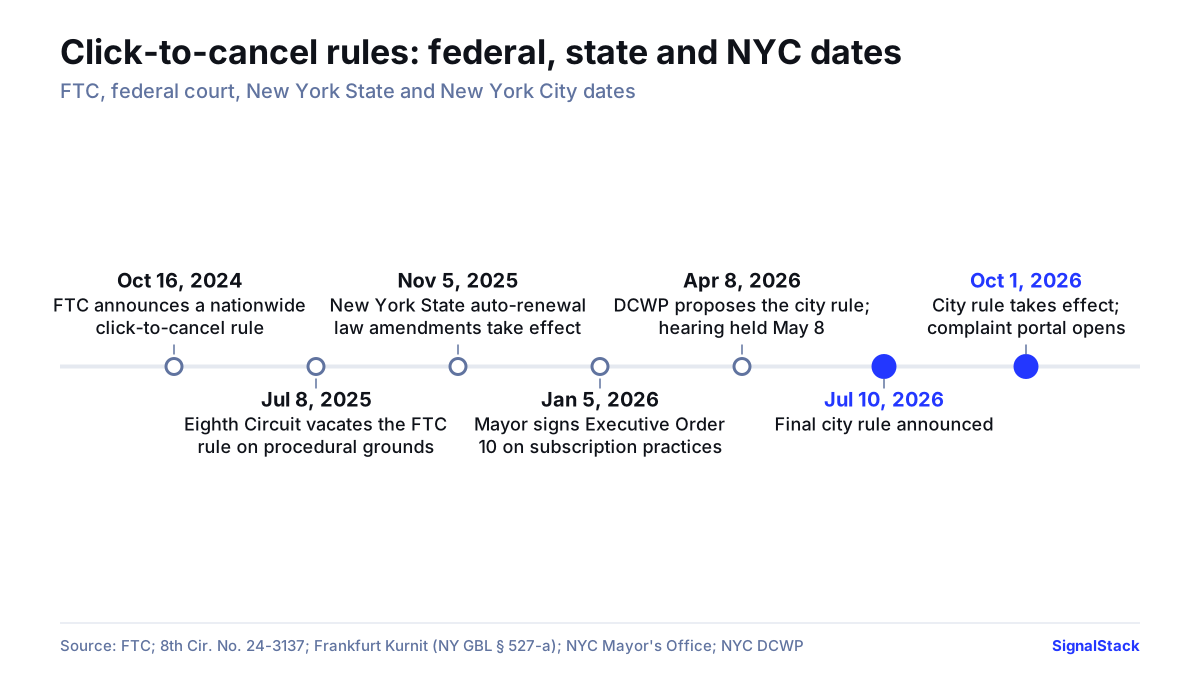
DCWP adopted the rule under its own rulemaking power (City Charter § 1043); it is not a City Council law. Mayor Zohran Mamdani's Executive Order 10, signed Jan. 5, 2026, told the Department of Consumer and Worker Protection (DCWP) to prioritize enforcement against subscription practices and to consider actions including new rules. DCWP published the proposed rule on April 8, held a public hearing on May 8, announced the final rule on July 10 and put it into effect on Oct. 1. It now sits in the Rules of the City of New York as a new "Part 8: Click to Cancel" (6 RCNY §§ 5-110 to 5-110.3).
The city rule was proposed nine months after the federal rule was vacated. Source: FTC; 8th Cir. No. 24-3137; Frankfurt Kurnit (NY GBL § 527-a); NYC Mayor's Office; NYC DCWP.
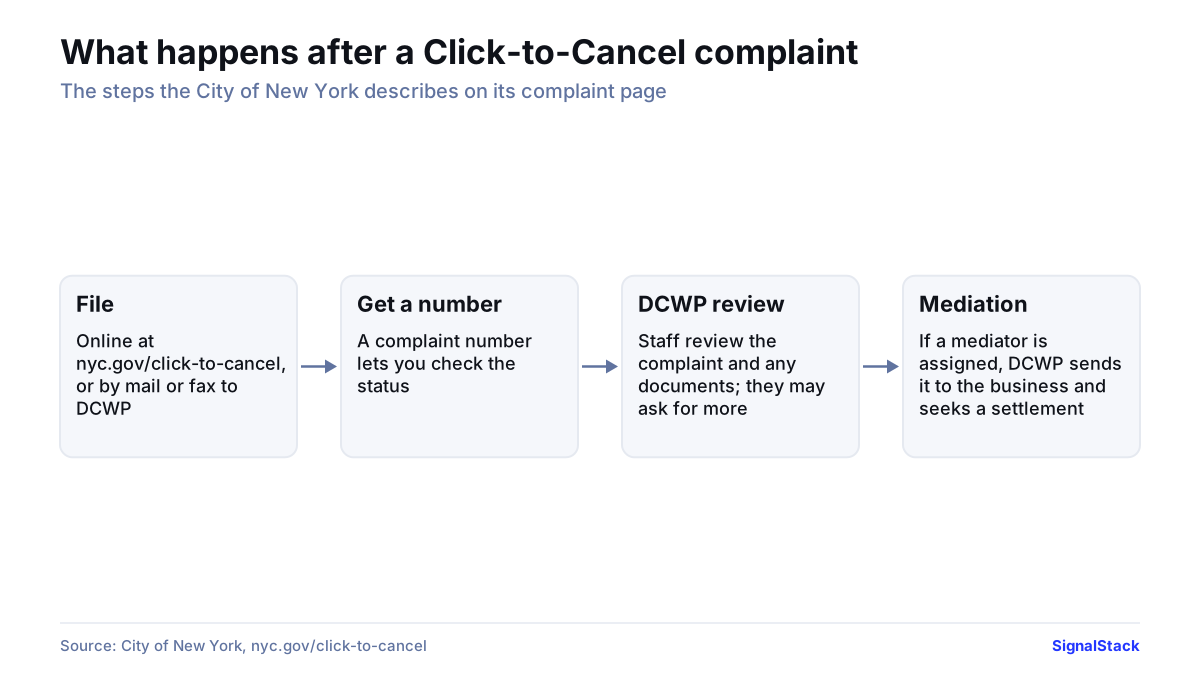
On Oct. 1 the city also opened a complaint portal at nyc.gov/click-to-cancel. It says the portal was built in 10 weeks by its in-house technology team. Complaints can also be made by mail or fax. The city says a mediator may be assigned to work out a settlement between the customer and the business.
Mediation is one path the city describes; it says a mediator may be assigned. Source: City of New York, nyc.gov/click-to-cancel.
DCWP said it received more than 100 complaints about hard-to-cancel subscriptions in 2025 alone.
## What the rule text requires
The rule covers any subscription for goods or services that is an "automatic renewal" (a paid plan that renews for another term at the end of each term) or a "continuous service" (one that runs until the customer cancels). Offering either outside the rule's requirements is declared "a deceptive and unconscionable trade practice." The requirements are:
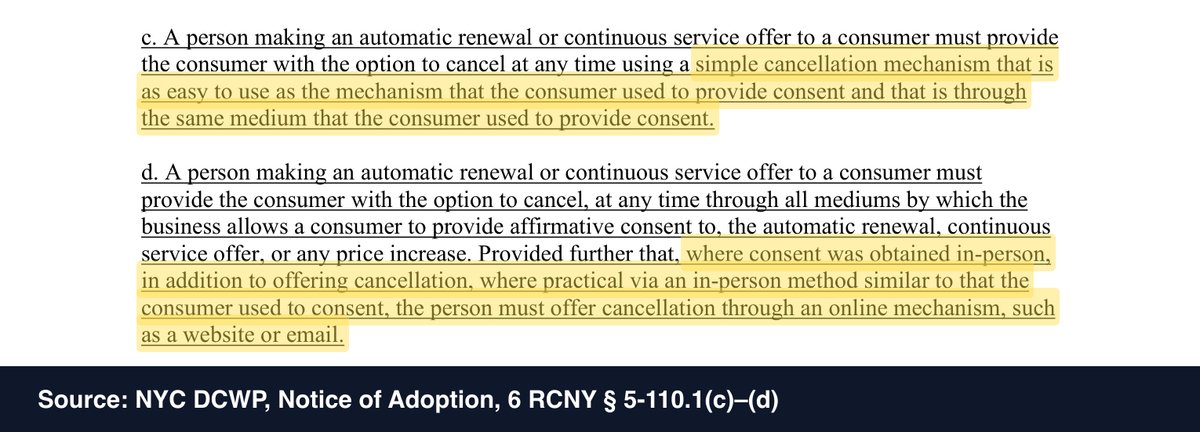
- **Same medium, same ease (§ 5-110.1(c)).** The cancel mechanism must be "simple" and "as easy to use as" the sign-up, and it must use the same medium the customer used to consent. Sign up in an app, cancel in the app.
- **Every channel, plus online for in-store sign-ups (§ 5-110.1(d)).** A customer must be able to cancel through every channel the business accepts sign-ups through. If they signed up in person, the business must also offer an online route, such as a website or email.
- **No obstruction (§ 5-110.1(e)).** The rule names specific tactics: hanging up on people who call to cancel, hiding or misstating how to cancel, misstating what cancelling costs, and giving false reasons for delays.
- **Retention offers are allowed.** A business may still present a discount or other "save" offer, as long as it doesn't put unreasonable conditions on cancelling or unreasonably delay it.
- **Disclosure first (§ 5-110.1(b)).** The price, how often it is charged, the deadline to stop the next charge and how to cancel must all appear before the customer gives consent or billing details. A free trial or intro price must explain clearly when and how the price changes.
- **Reminders.** A plan of a year or longer that renews for six months or more needs a notice 15 to 45 days before the cancel deadline. A material change or price increase needs notice 5 business days to 30 days ahead. A free trial or gift longer than a month needs notice 3 to 21 days before the first charge deadline.
- **Unordered goods are gifts (§ 5-110.1(f)).** Anything sent without consent is "deemed an unconditional gift," and the customer doesn't pay to ship it back.
Subsections (c) and (d) of the adopted rule. Source: NYC DCWP, Notice of Adoption (cropped, highlight added by SignalStack).
## The fines, and the refund rule
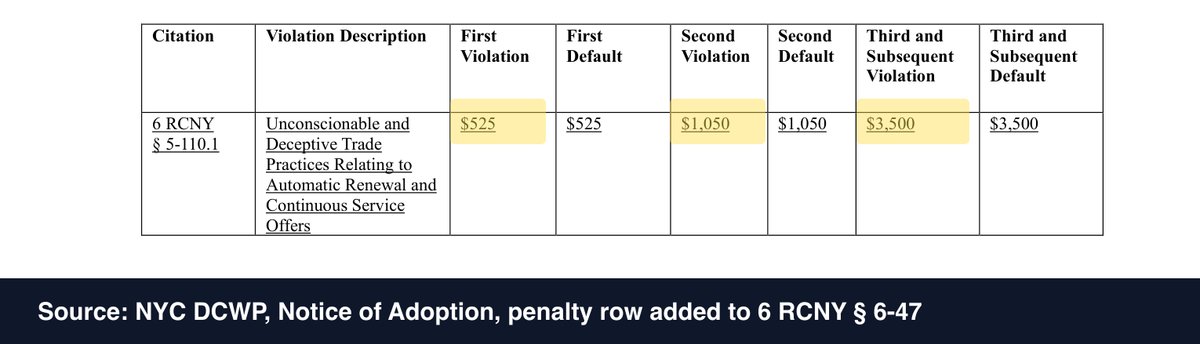
A new row in the city's penalty chart (6 RCNY § 6-47) sets three fine levels: $525 the first time, $1,050 the second time, and $3,500 each time after that. If a business is found to have violated the rule, § 5-110.2 also makes it liable for whatever it charged after the customer's first attempt to cancel. Law firms Skadden and Davis+Gilbert both note that each deceptive statement or omission may count as a separate violation.
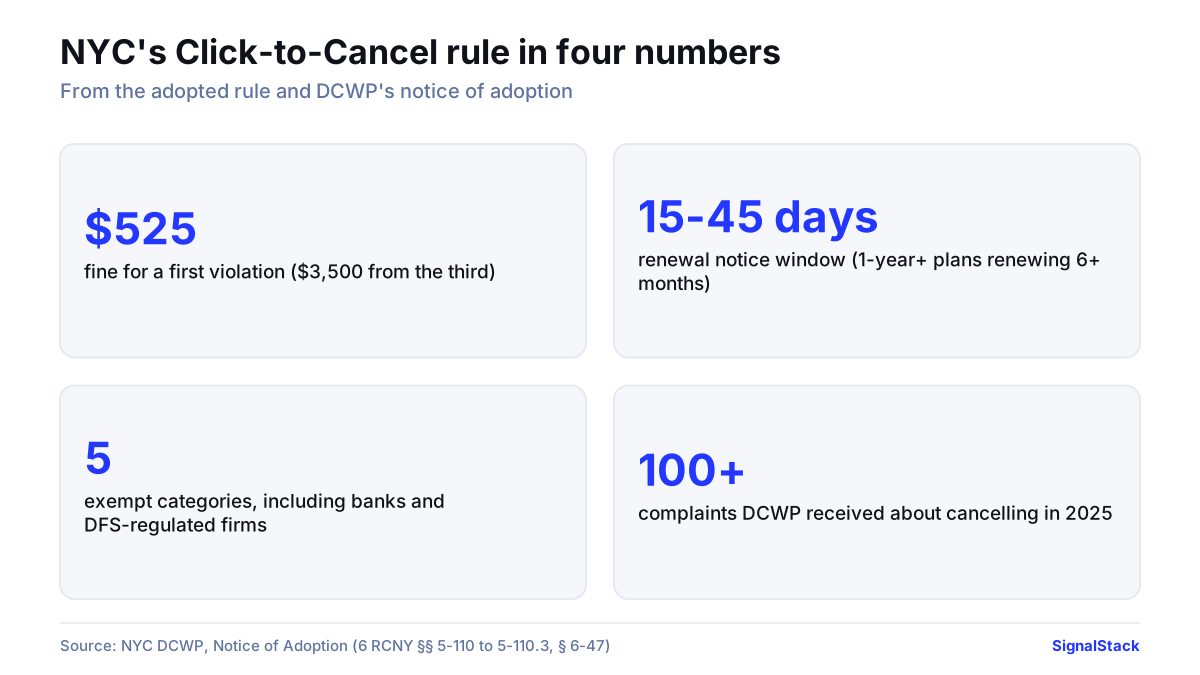
All four figures come from the rule text and DCWP's statement of basis and purpose. Source: NYC DCWP, Notice of Adoption (6 RCNY §§ 5-110 to 5-110.3, § 6-47).The penalty row the rule adds to the city's fine schedule. Source: NYC DCWP, Notice of Adoption (cropped, highlight added by SignalStack).
## Who is exempt, and who asked to be
Section 5-110.3 exempts five groups:
- services provided under a franchise from a political subdivision of New York State
- companies supervised by New York's Department of Financial Services (DFS)
- alarm operators holding a state license
- banks, credit unions and other licensed financial institutions
- sellers and administrators of service contracts as defined in the state Insurance Law
Wireless and telecom companies asked for an exemption, arguing that federal rules already protect their customers. DCWP said the comments did not point to "any federal law or regulation" requiring click-to-cancel, and it refused.
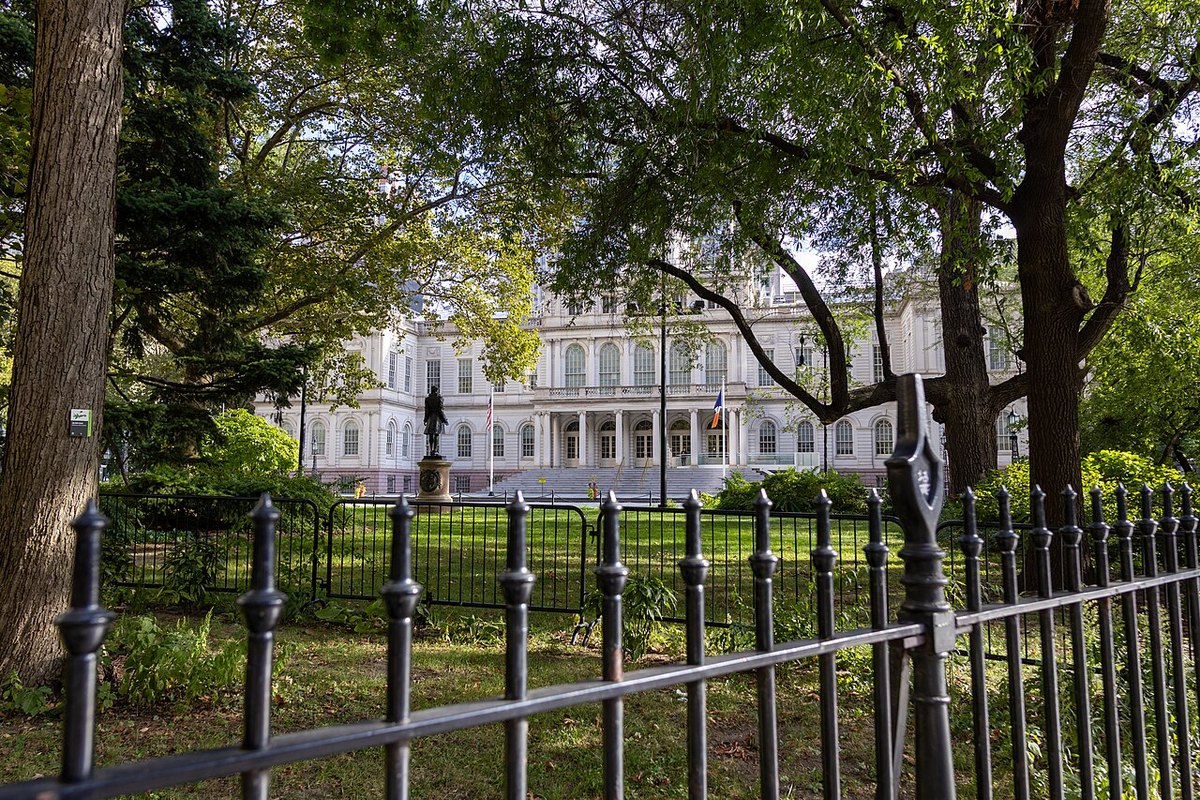
New York City Hall, September 2025. Photo: Nielsoncaetanosalmeron, CC BY 4.0, via Wikimedia Commons.
## How it compares: city, state, California, FTC
The rule's core cancellation sentence is word for word the one in New York General Business Law § 527-a, which state budget amendments made effective on Nov. 5, 2025. DCWP itself says the city rule matches the state approach except for three things: penalty amounts, restitution, and the channels available to cancel.
| | New York City (6 RCNY § 5-110) | New York State (GBL § 527-a) | California (AB 2863) | FTC rule |
|---|---|---|---|---|
| Status | In effect Oct. 1, 2026 | Amendments in effect Nov. 5, 2025 | In effect July 1, 2025 | Adopted 2024; vacated by court July 8, 2025 |
| Cancel the same way you signed up | Yes | Yes | Same medium or the one the customer usually uses; online sign-ups can cancel online (per Cooley) | Rule no longer in force |
| Online cancel for in-person sign-ups | Required | Phone or online allowed (per Skadden) | Not covered in our sources | n/a |
| Save offers | Allowed if not obstructive | Allowed | Allowed (per Cooley) | n/a |
| Fines | $525 / $1,050 / $3,500, plus refunds from the first cancel attempt | Up to $100 per violation, $500 for multiple; higher for knowing violations; bona fide error defense | Not covered in our sources | n/a |
| Enforcer | NYC DCWP | NY Attorney General | Not covered in our sources | FTC |
On the federal side, the FTC adopted a nationwide click-to-cancel rule in October 2024. On July 8, 2025, the Eighth Circuit vacated it, holding that the Commission "failed to follow procedural requirements" under the FTC Act. In March 2026 the FTC opened a new rulemaking with an advance notice. As of Oct. 12 we found no proposed rule.
## What could go right / What could go wrong
**What could go right**, according to the rule's backers:
- The Roosevelt Institute's comment, which uses the FTC's own method, estimated benefits of $21.5 million to $162.5 million a year for New Yorkers and at least 600,000 hours saved. The mayor's Oct. 1 release cites only the top of that range.
- Consumer groups including the Consumer Federation of America and the Legal Aid Society backed the rule in DCWP's July release.
**What could go wrong**, according to its critics:
- The Partnership for New York City wrote that the proposal "is unnecessary, risks creating inconsistency with state law" and said it opposed it.
- The Motion Picture Association said the city's fines "significantly" exceed the state's and asked for a safe harbor. The adopted text contains no safe-harbor provision.
- NetChoice, CTIA, the Business Council of New York State and the News/Media Alliance also raised objections to the proposed rule.
- These positions come from comment letters filed in May. We found no new business-group statement after the rule took effect.
For subscribers, the practical test is simple. If you signed up online and a company says you must call, the rule says that's not allowed in New York City, and a complaint goes to DCWP. For other policy changes that affect consumers, see our [markets and policy coverage](/category/markets-policy/). For how subscription terms can shift at tech companies, see our report on [Gemini's plan changes](/blog/gemini-app-model-access-free-ai-plus-ai-pro-changes).
## FAQ
Q When did NYC's Click-to-Cancel rule take effect?
A October 1, 2026. DCWP adopted the rule on July 10, 2026, after proposing it on April 8 and holding a hearing on May 8.
Q What does NYC's Click-to-Cancel rule require?
A Businesses selling auto-renewing or continuous subscriptions must let consumers cancel through the same medium they used to sign up, and as easily. They must also offer an online cancel option to people who signed up in person, and must not obstruct cancellation.
Q What are the fines under NYC's Click-to-Cancel rule?
A A first violation costs $525 and a second $1,050; from the third on, each costs $3,500. A business found in violation is also liable for any charges made after the customer's first attempt to cancel.
Q Who is exempt from NYC's Click-to-Cancel rule?
A Five groups: services under a franchise from a New York political subdivision, DFS-supervised companies, state-licensed alarm operators, banks and other licensed financial institutions, and service-contract sellers. Wireless carriers asked for an exemption and were refused.
Q Is the FTC's Click-to-Cancel rule still in effect?
A No. The Eighth Circuit vacated the FTC's 2024 rule on July 8, 2025, on procedural grounds. The FTC opened a new rulemaking with an advance notice in March 2026.
Q How do I file a Click-to-Cancel complaint in New York City?
A Online at nyc.gov/click-to-cancel, or by mail or fax to DCWP. You get a complaint number to track it, and DCWP may assign a mediator.