Security
Tesla Model 3 on a Desk: Salvage Bring-Up, Rosenberger Cables, and Security Research
TLDR
SignalStack Tech Report · March 27, 2026 · Security / Hardware / Automotive
Why this is on SignalStack: we cover offline research surfaces when they change blast radius—here, a bench setup that separates security work from live-vehicle risk.
A security researcher built a “Tesla-on-a-desk” by extracting a Model 3 computing stack from crashed vehicles.
This bench setup enables deep bug bounty research and reverse engineering without needing a full, drivable car.
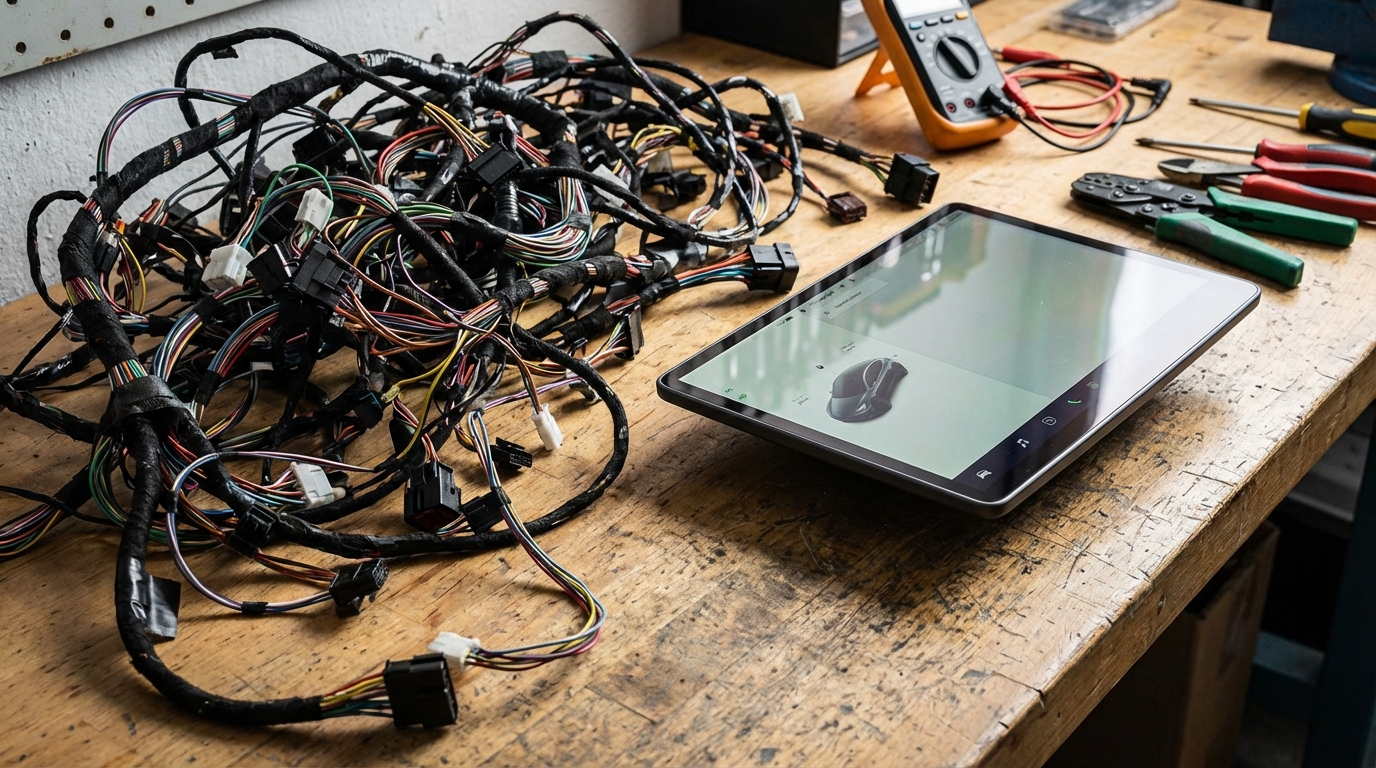
The biggest blockers were hardware-level: sourcing a proprietary display cable, recovering from a shorted power chip, and eventually buying a full dashboard harness to get reliable connector paths.
What happened
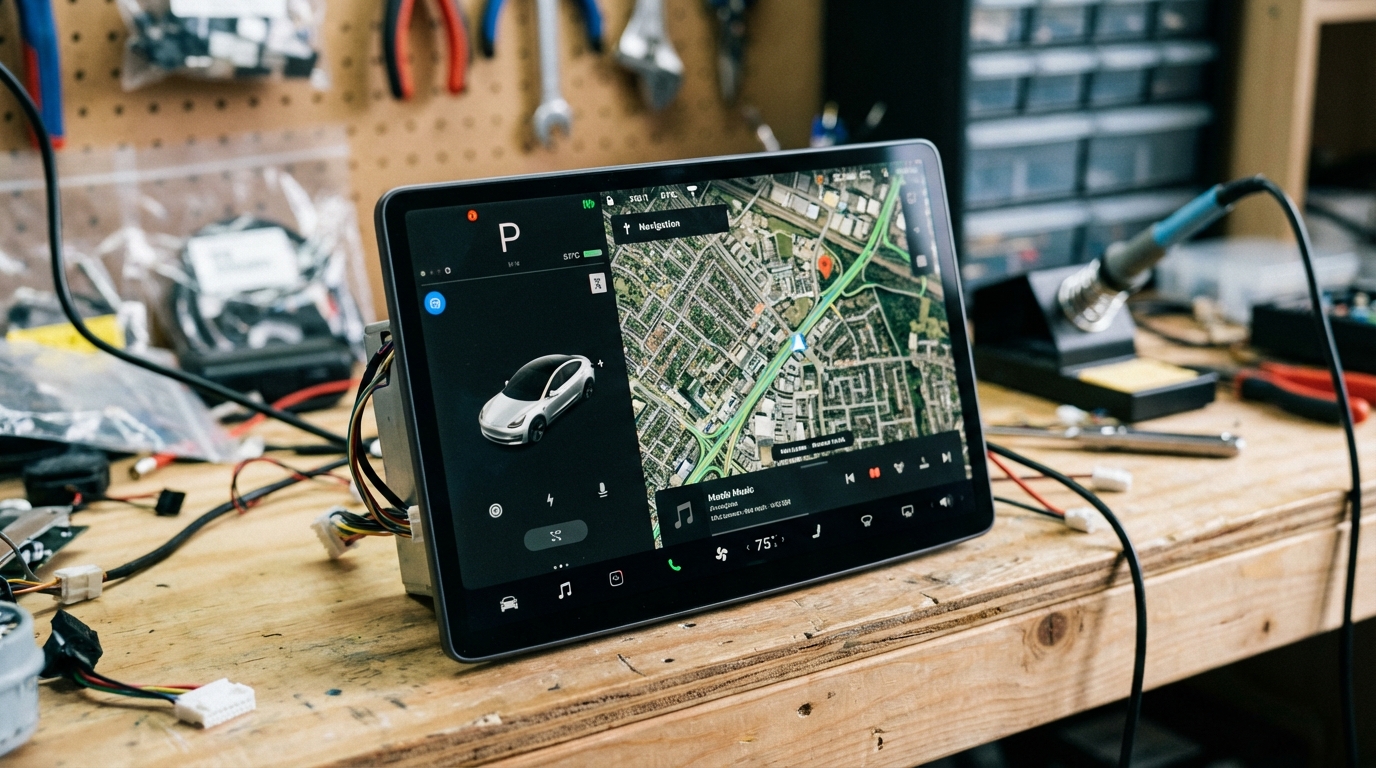
The project goal was to recreate a realistic Tesla environment for security work in the bug bounty context.Core parts were sourced from eBay salvage channels, including Model 3 hardware removed from crashed cars. The stack included the Media Control Unit (MCU), the Autopilot (AP) computer mounted with it, and the 15-inch touchscreen.
A 12V adjustable DC supply rated up to 10A was used, with boot-time peaks near 8A.
The hardware: sourcing from salvage
- MCU (Media Control Unit): infotainment and display core. - Autopilot (AP) computer: mounted as part of the compute stack. - 15-inch touchscreen: primary interaction surface for Tesla OS. - 12V DC power supply (up to 10A): necessary for stable bring-up and boot peaks.The implementation hurdles
The hardest blocker was the proprietary 6-pin Rosenberger display cable between MCU and screen. Salvage dismantling often leaves these lines cut, making intact cable paths difficult to source.An early bypass wiring attempt caused a short and damaged a MAX16932 power controller. Recovery required component-level SMD repair and replacement work.
The stable fix was to buy a complete dashboard harness from a scrapped vehicle and extract the needed connector path rather than forcing ad-hoc cable substitutions.
Why it matters
This proves modern EV compute stacks can be isolated for offline vulnerability research, firmware work, and UI debugging.For researchers, bench testing is safer and more controllable than live vehicle testing, and it lowers the risk of bricking a functional car during experiments.
It also surfaces a repairability gap: even one cable can require purchasing a full harness, showing how closed and bundled modern automotive hardware has become.
For developers exploring CAN interactions, diagnostics, and third-party integrations, reproducible “car computer on desk” environments are highly practical.
Key details at a glance
- Purpose: build a desk testbed for Tesla bug bounty and reverse engineering.
- Power: 12V supply up to 10A; observed peak around 8A at boot.
- Compute stack: MCU + AP computer + 15-inch display brought up outside vehicle chassis.
- Main blocker: proprietary 6-pin Rosenberger display path, rarely available intact in salvage listings.
- Failure and fix: short during early cable workaround damaged a MAX16932 power controller; repaired via component-level work.
- Final wiring approach: full dashboard harness from a scrapped car provided stable connector routing.
What to watch next
- Network surfaces — ODIN on port 8080 and restricted SSH (Tesla-signed keys) as research entry points after successful boot.
- Deeper buses — CAN mapping, firmware extraction, structured documentation of diagnostic flows.
- Community replication — Reliability of the bring-up path, tooling, and ethics of downstream use cases.
The SignalStack angle
What we are not doing: glamorizing unauthorized vehicle modification. What we are doing: noting how automotive stacks become repairable research targets when hardware is bundled and cables are scarce.
1. Bench beats bricking a daily driver
Isolated hardware lowers the risk of disabling a working car during experiments. SignalStack’s read: reproducible “car computer on desk” environments matter for defensive research and preservation—not only exploits.
2. Repairability is a security story
When one proprietary cable forces buying a whole harness, the ecosystem tilts toward closed maintenance paths. That affects long-term ownership and independent research access.
Disclaimer: Follow vendor terms, local law, and bug bounty rules when researching.
FAQ
Q What is the 'car computer' in a Tesla Model 3? A In this context, it is effectively a "sandwich" of the MCU (infotainment/display) and the Autopilot computer in a shared liquid-cooled enclosure.Q Why was the display cable hard to get?
A The needed connector path is usually part of a larger dashboard harness, not commonly sold as a standalone cable in salvage listings.
Q What is ODIN?
A ODIN is described as an onboard diagnostic interface used with Tesla service tooling, exposed in this setup via network endpoints.
Q Could anyone just SSH into the unit?
A No. The SSH service was present, but access still depended on Tesla-signed credentials.
Q Why not just test on a real car?
A Bench testing is safer, easier to probe, and reduces the risk of disabling a working vehicle during low-level experiments.
Q Is the bench system actually usable?
A Yes. It boots into Tesla OS and allows practical UI and network-surface exploration for research workflows.